Laser systems are widely used across manufacturing, research, healthcare, and education, delivering exceptional precision and efficiency. However, they also present significant hazards if the laser beam is not properly contained. One of the most effective ways to create a safe working environment is by using the appropriate laser barriers.
Laser barriers are designed to contain stray laser radiation, define controlled areas, and protect personnel from accidental exposure. The right solution depends on several factors, including the laser’s power, wavelength, operating mode, enclosure requirements, and the level of access required.
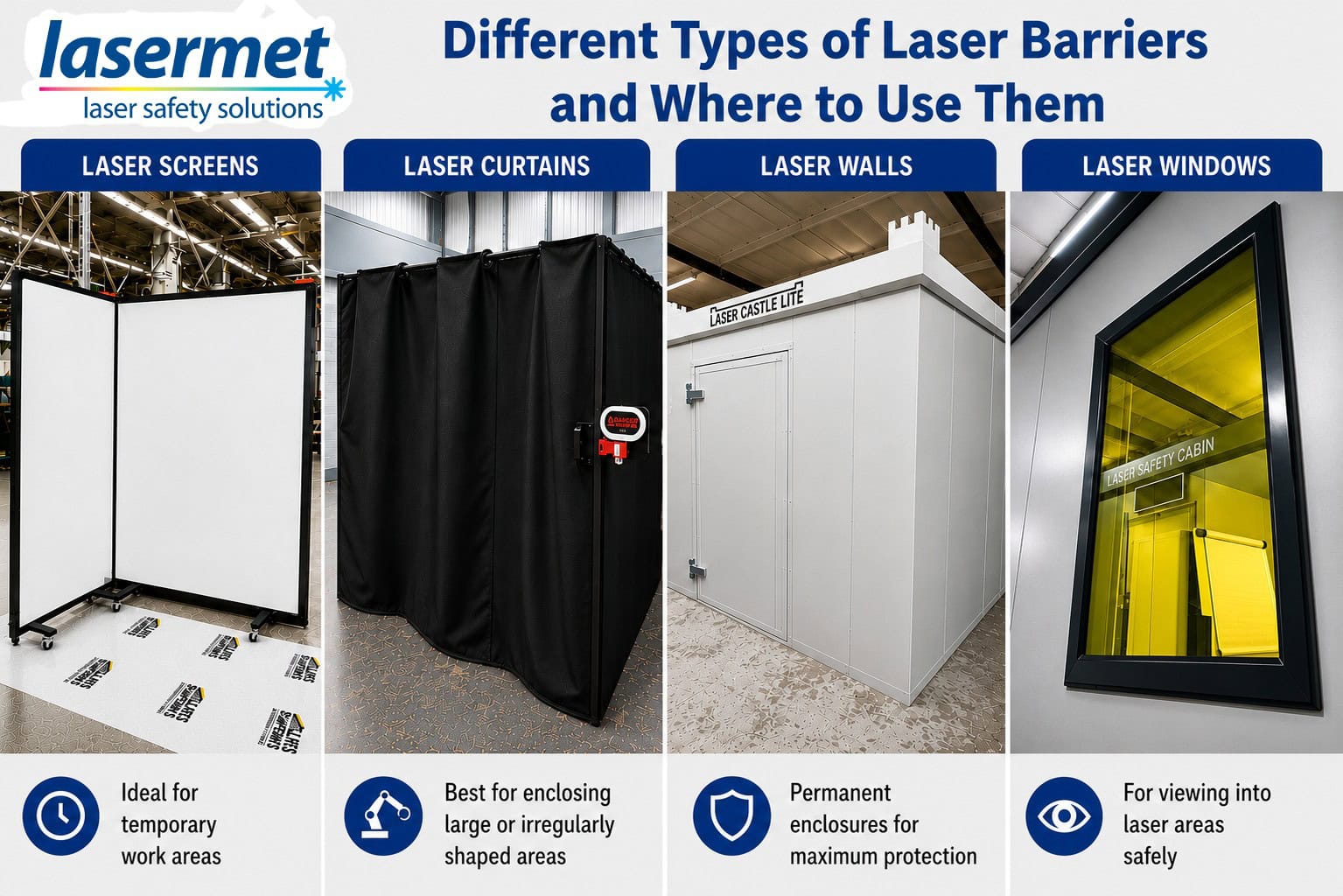
At Lasermet, safety is at the heart of everything we do. With decades of experience in laser safety solutions, we understand the importance of selecting the right protective barrier for every application. In this guide, we explore the most common types of laser barriers : laser screens, laser curtains, laser walls, and laser safety windows highlighting their purpose, advantages, and ideal applications. Whether you’re designing a new laser facility, upgrading an existing installation, or simply looking to improve workplace safety, understanding these barrier options will help you choose the most effective solution for creating a safe, compliant, and productive laser environment.
Why Laser Barriers Are Essential for Laser Safety
Laser barriers are a fundamental part of any comprehensive laser safety system. They are designed to contain hazardous laser radiation, protect personnel, and help maintain a safe working environment around laser equipment.
The key benefits of laser barriers include:
- Containing direct and reflected laser beams to prevent hazardous laser radiation from escaping the designated laser-controlled area.
- Protecting personnel from accidental exposure to hazardous laser radiation during normal operation and maintenance activities.
- Defining controlled laser areas to help restrict access to potentially hazardous environments.
- Supporting compliance with applicable laser safety standards and workplace safety regulations.
- Creating a safer working environment for operators, maintenance personnel, and anyone working in the vicinity of laser systems.
Choosing the appropriate laser barrier is a critical part of any laser safety strategy and should always be based on a comprehensive laser risk assessment. Factors such as the laser wavelength, maximum output power or pulse energy, beam characteristics, operating mode (continuous wave or pulsed), and the intended application must all be carefully evaluated. Selecting the correct barrier ensures it provides the required level of protection while supporting safe and compliant laser operations.
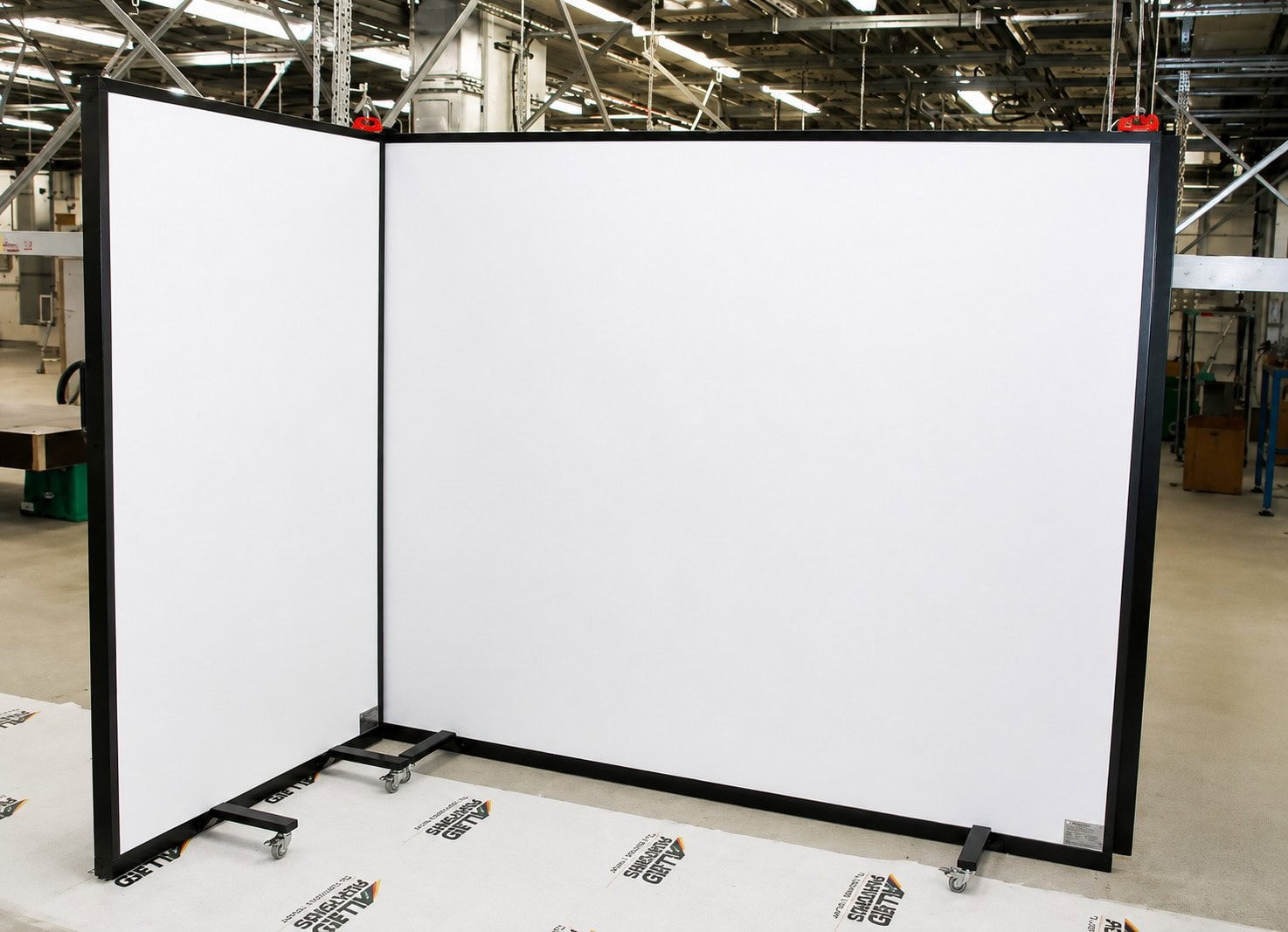
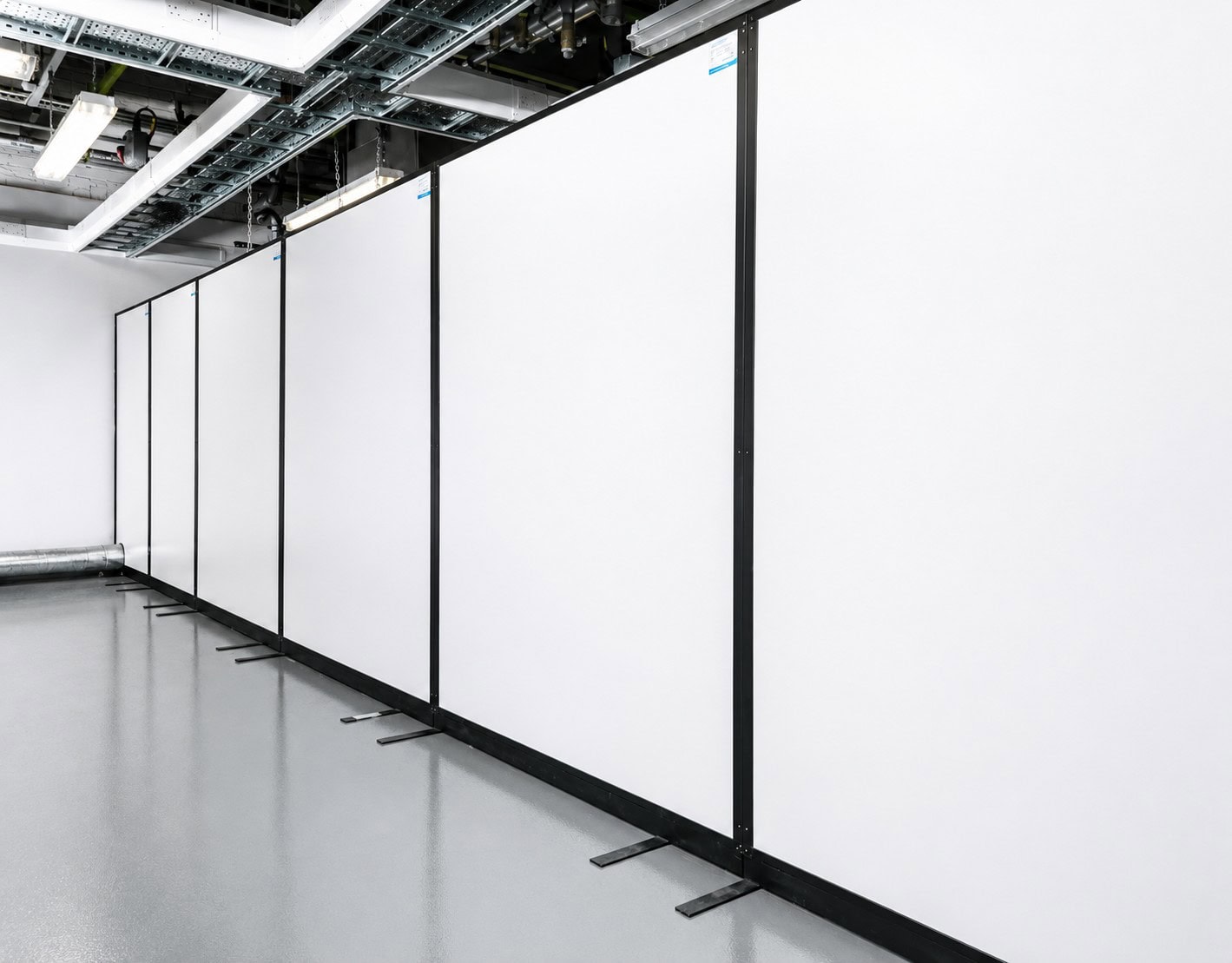
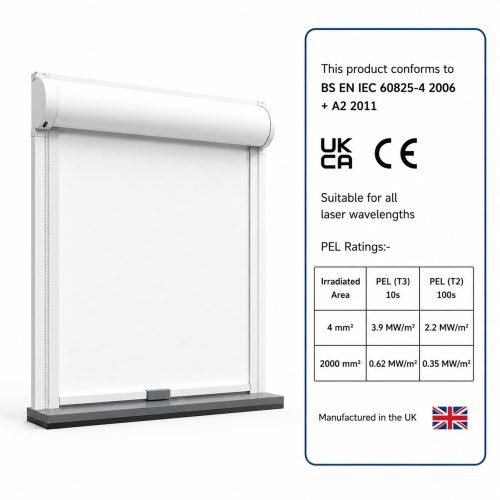
Laser Safety Screens
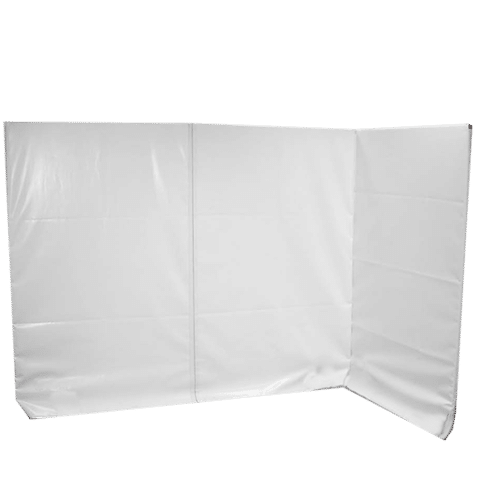
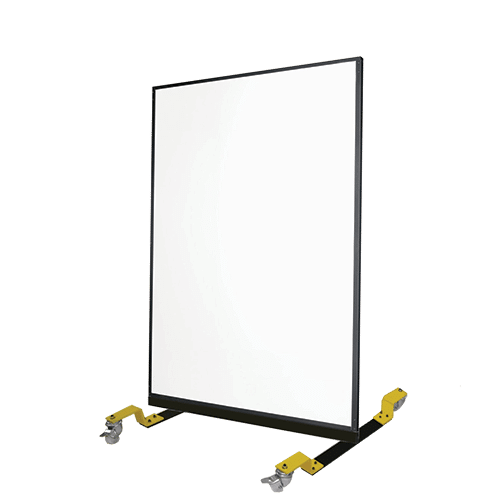
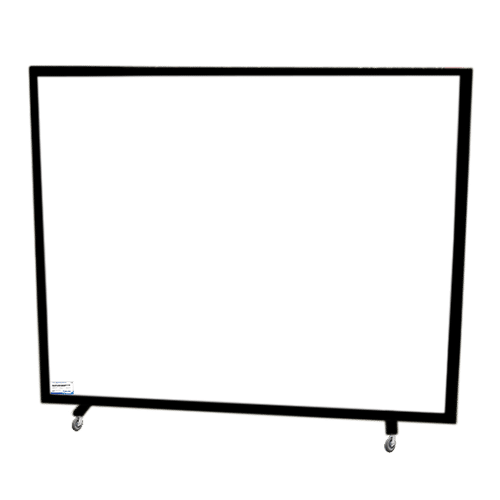
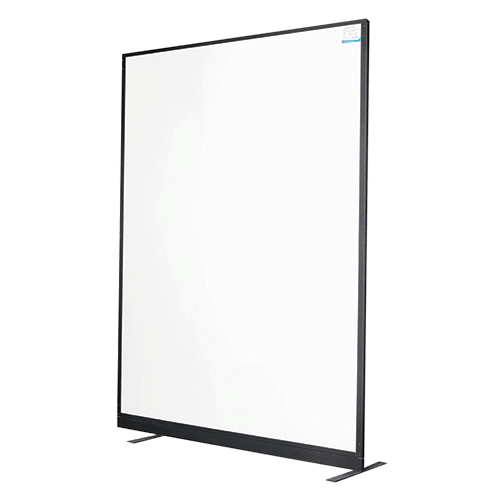
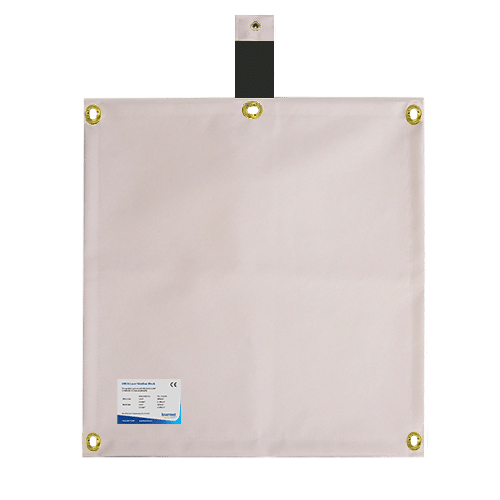
Laser safety screens are portable or modular protective panels designed to provide localized protection around laser equipment. They are commonly used to create temporary or flexible laser-controlled areas where permanent barriers are not practical.
Best Applications
- Research and development laboratories
- Prototype development and testing
- Shared laboratory environments
- Temporary laser workstations
- Flexible manufacturing and production areas
Advantages
- Easy to reposition as workspace requirements change
- Modular design allows flexible configurations
- Quick and straightforward installation
- Cost-effective for temporary or evolving layouts
- Reduces exposure to stray or reflected laser radiation.
Key Considerations
Laser safety screens are ideal for applications where flexibility is required. However, they may not provide the same level of containment as permanent laser enclosures or fixed barriers. Their suitability should always be determined through a comprehensive laser risk assessment, taking into account factors such as laser wavelength, output power, beam characteristics, and the potential for direct or reflected beam exposure.
Laser Safety Curtains
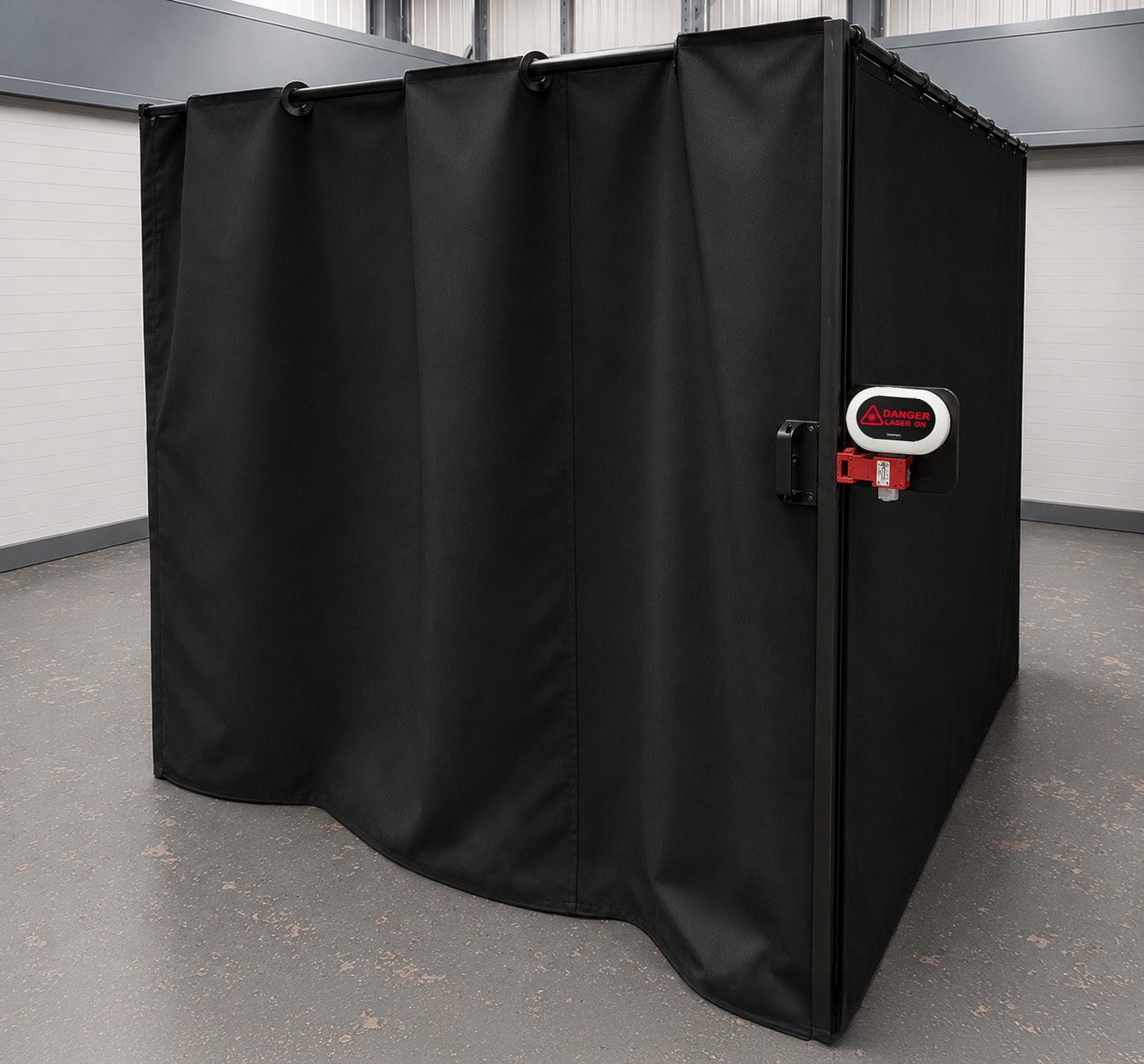
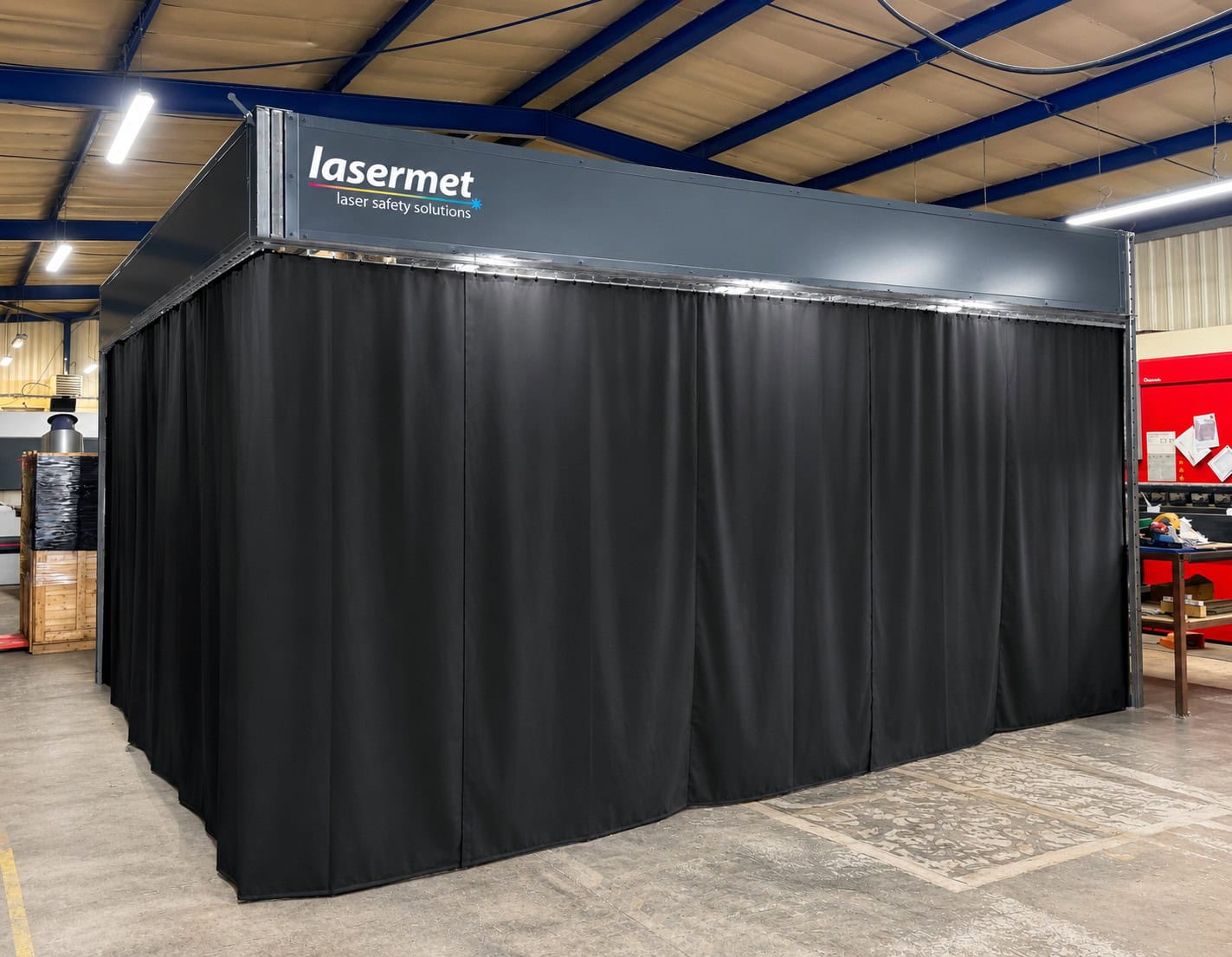
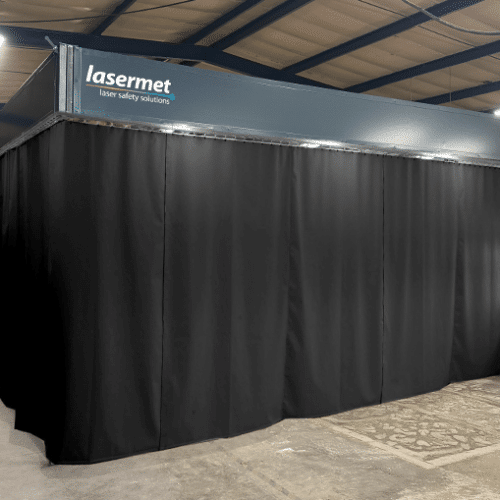
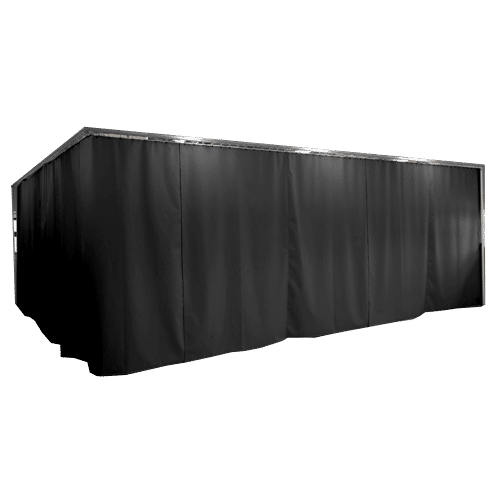
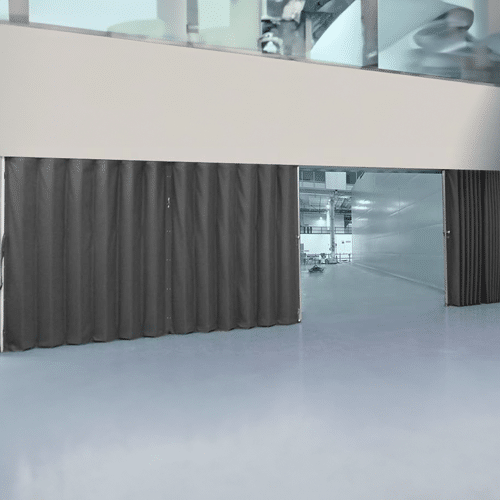
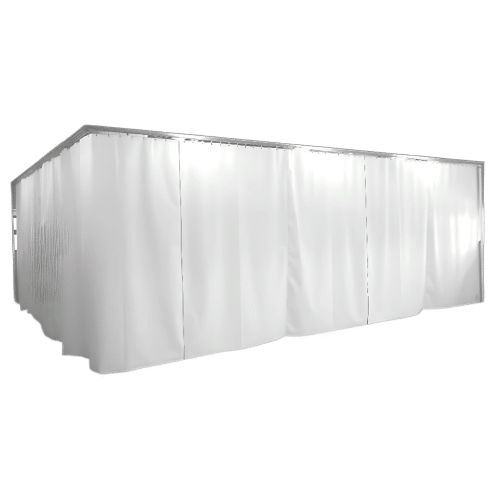
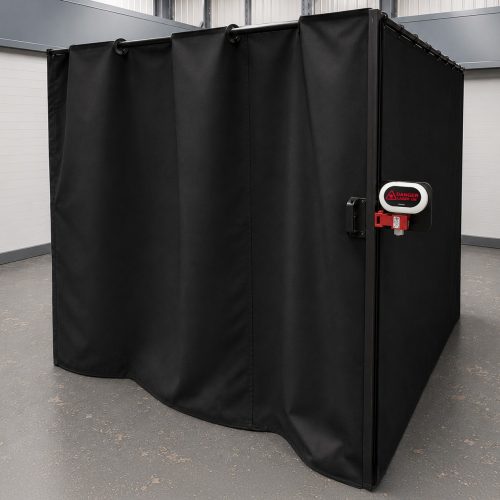
Laser safety curtains are flexible protective barriers designed to enclose laser processes while allowing convenient access to equipment and work areas. They are an effective solution where permanent walls are impractical or where machinery requires frequent maintenance, adjustments, or operator access.
Best Applications
- Laser welding cells
- Laser marking stations
- Robotic laser applications
- Training facilities
- Temporary or modular laser enclosures
Advantages
- Flexible and lightweight construction
- Provides convenient access around equipment
- Space-saving compared to permanent barriers
- Ideal for modular and reconfigurable workspaces
- Faster and easier to install than permanent structures
Key Considerations
Laser safety curtains must be certified and appropriately rated for the laser wavelength, maximum power or pulse energy, and operating conditions of the application. They should never be selected based solely on their appearance or material. As with any laser safety solution, curtain selection should form part of a comprehensive laser risk assessment to ensure the required level of protection and compliance with applicable laser safety standards.
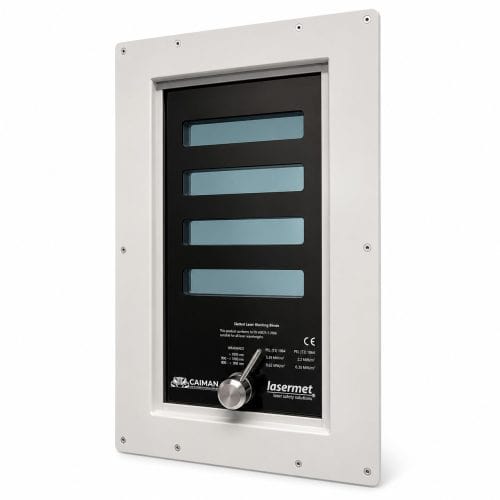
Laser Safety Walls
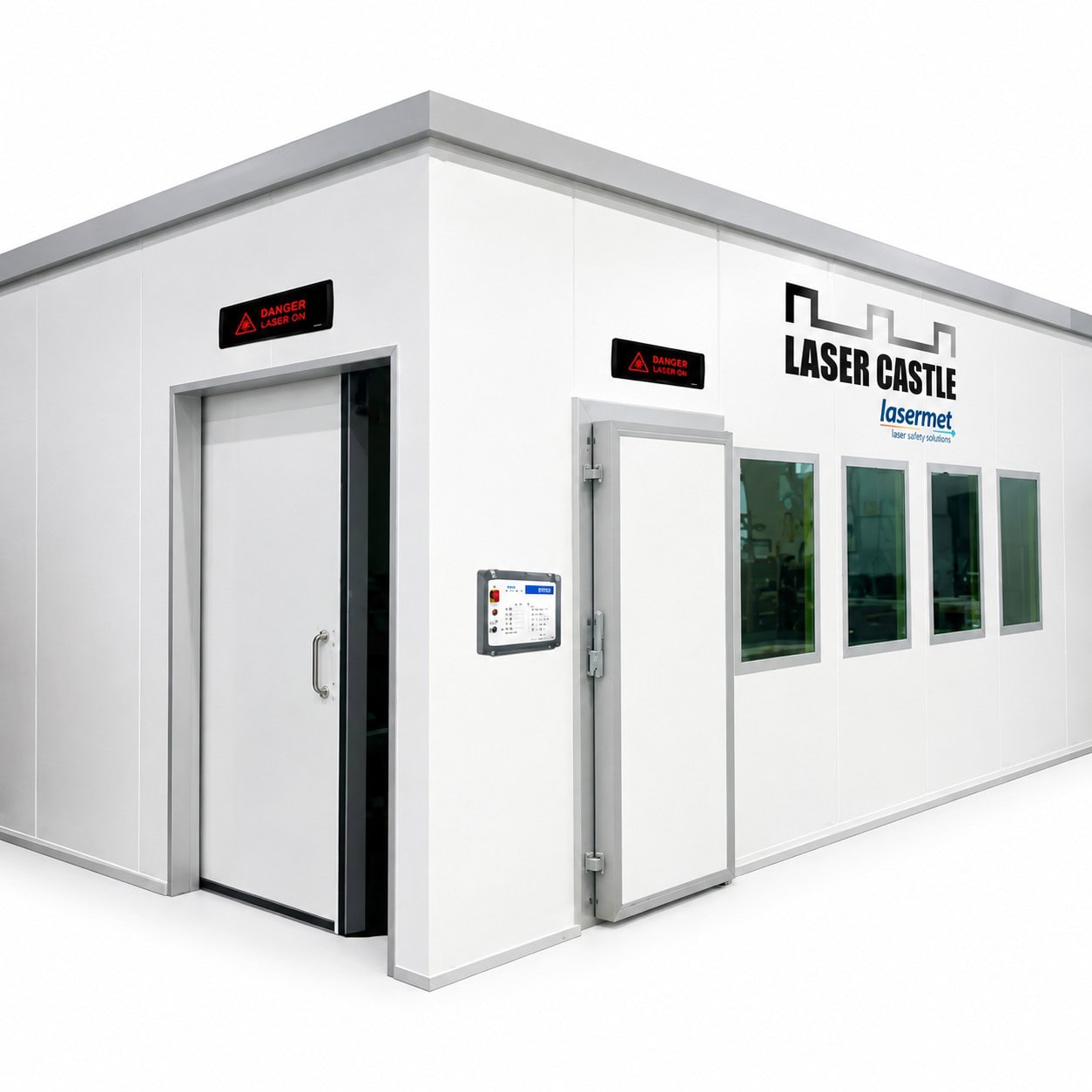
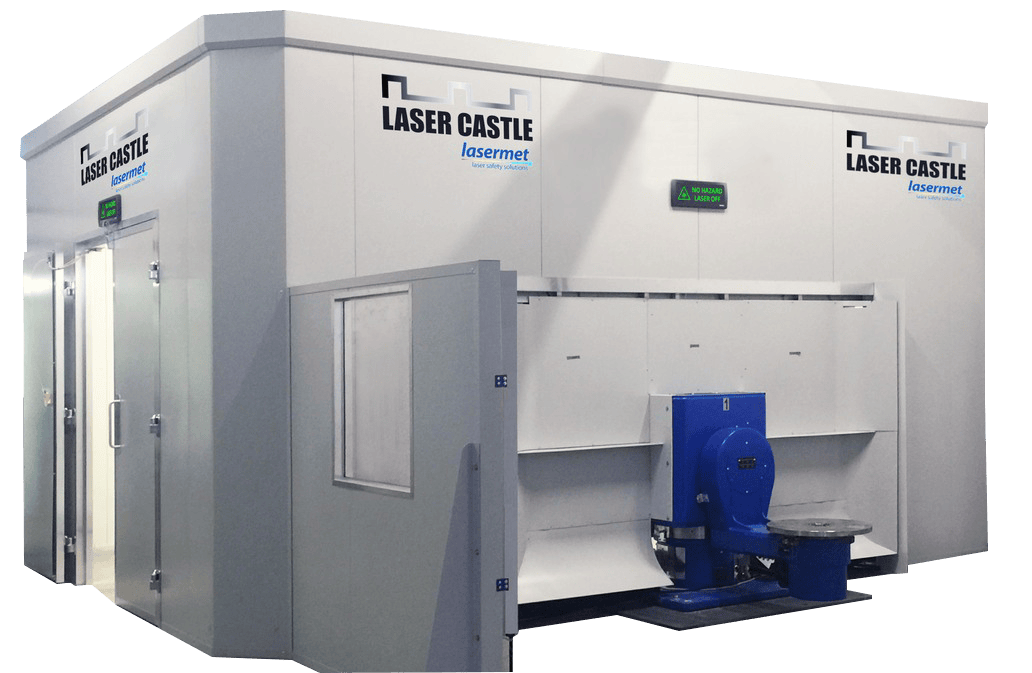
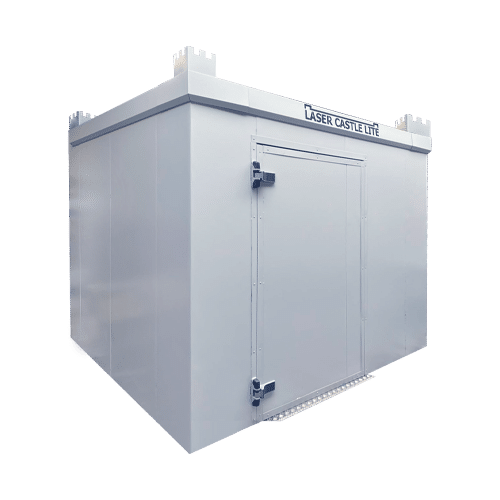
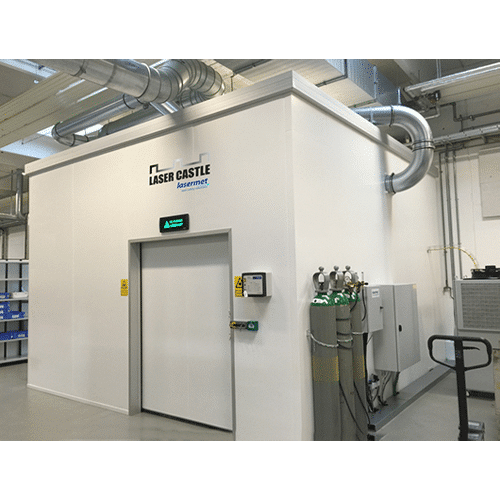
Laser safety walls are permanent protective structures designed to fully enclose hazardous laser operations and prevent laser radiation from escaping the designated controlled area. They are commonly used in industrial and research environments where high-power laser systems operate continuously or where a dedicated laser facility is required.
Best Applications
- Industrial laser processing
- High-power laser laboratories
- Manufacturing facilities
- Dedicated laser rooms
- Research institutions
Advantages
- Provides maximum protection against laser radiation.
- Durable, long-term solution for permanent installations
- Suitable for high-power and continuous operation.
- Ideal for fully enclosed Class 1 laser applications.
- Compatible with laser interlock systems.
Key Considerations
Laser safety walls should be designed as part of a complete laser safety system, not as a standalone solution. Their construction and protective performance should be determined through a comprehensive laser risk assessment, considering factors such as laser wavelength, output power or pulse energy, beam characteristics, and the intended application. Integration with laser interlock systems, access control, and other safety measures is essential to ensure compliance with applicable laser safety standards and provide reliable long-term protection.
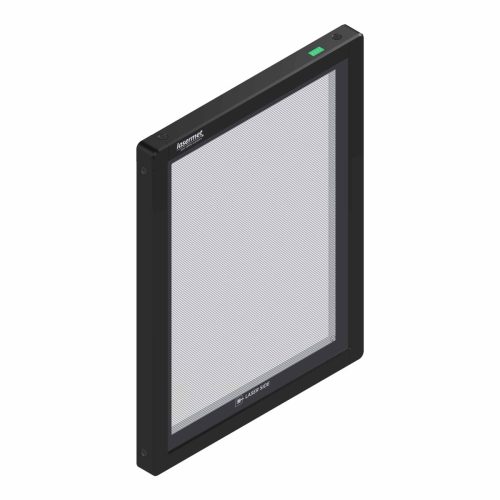
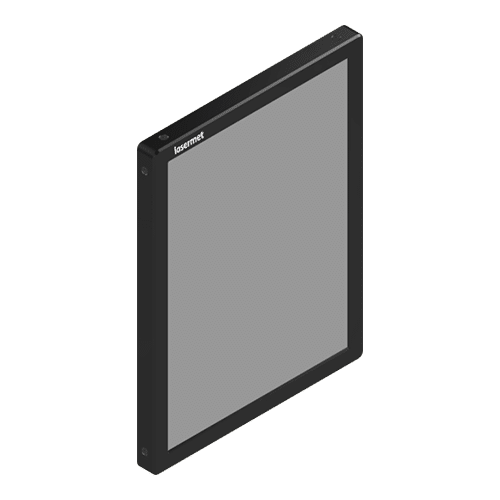
Laser Safety Windows
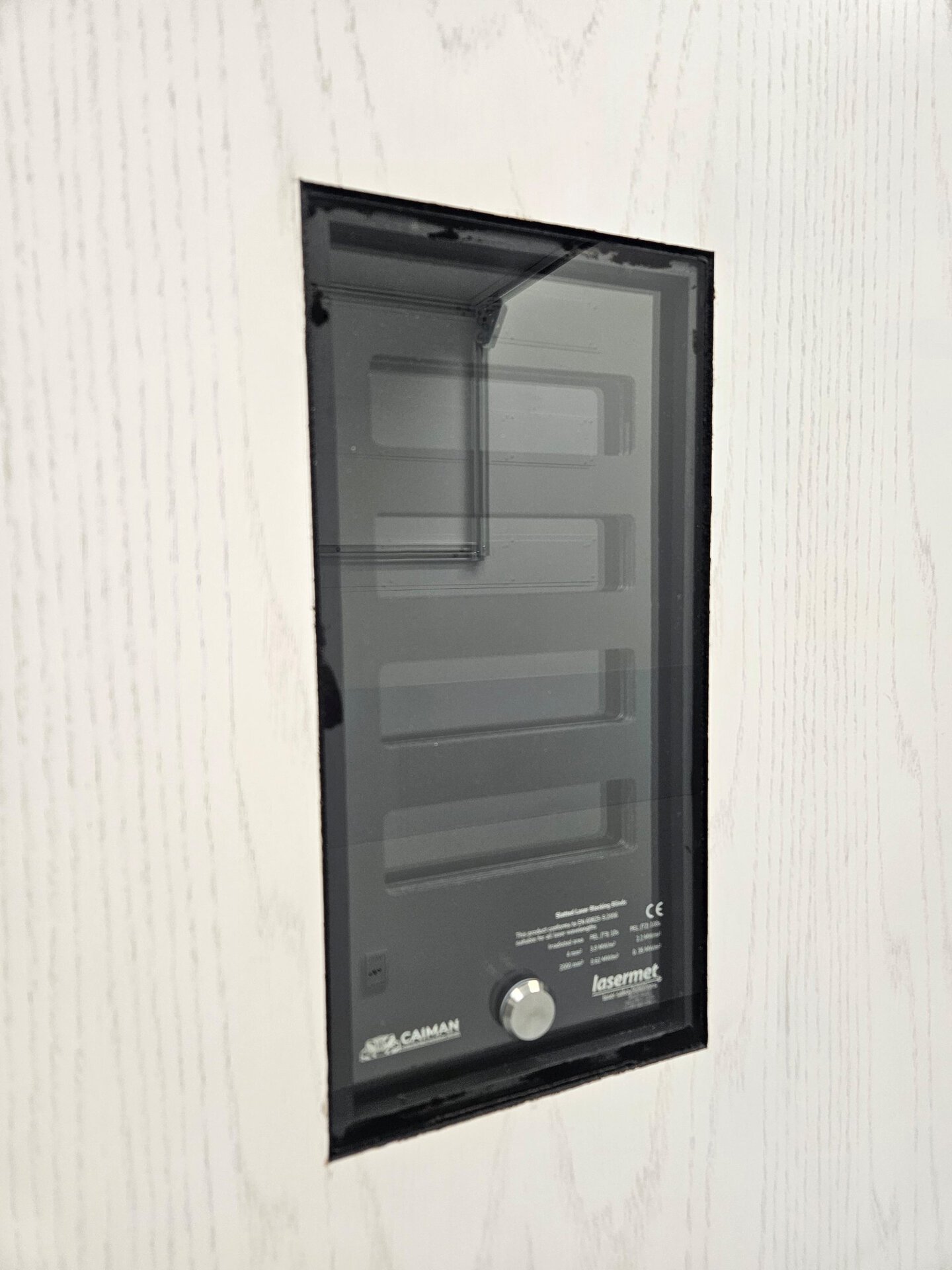
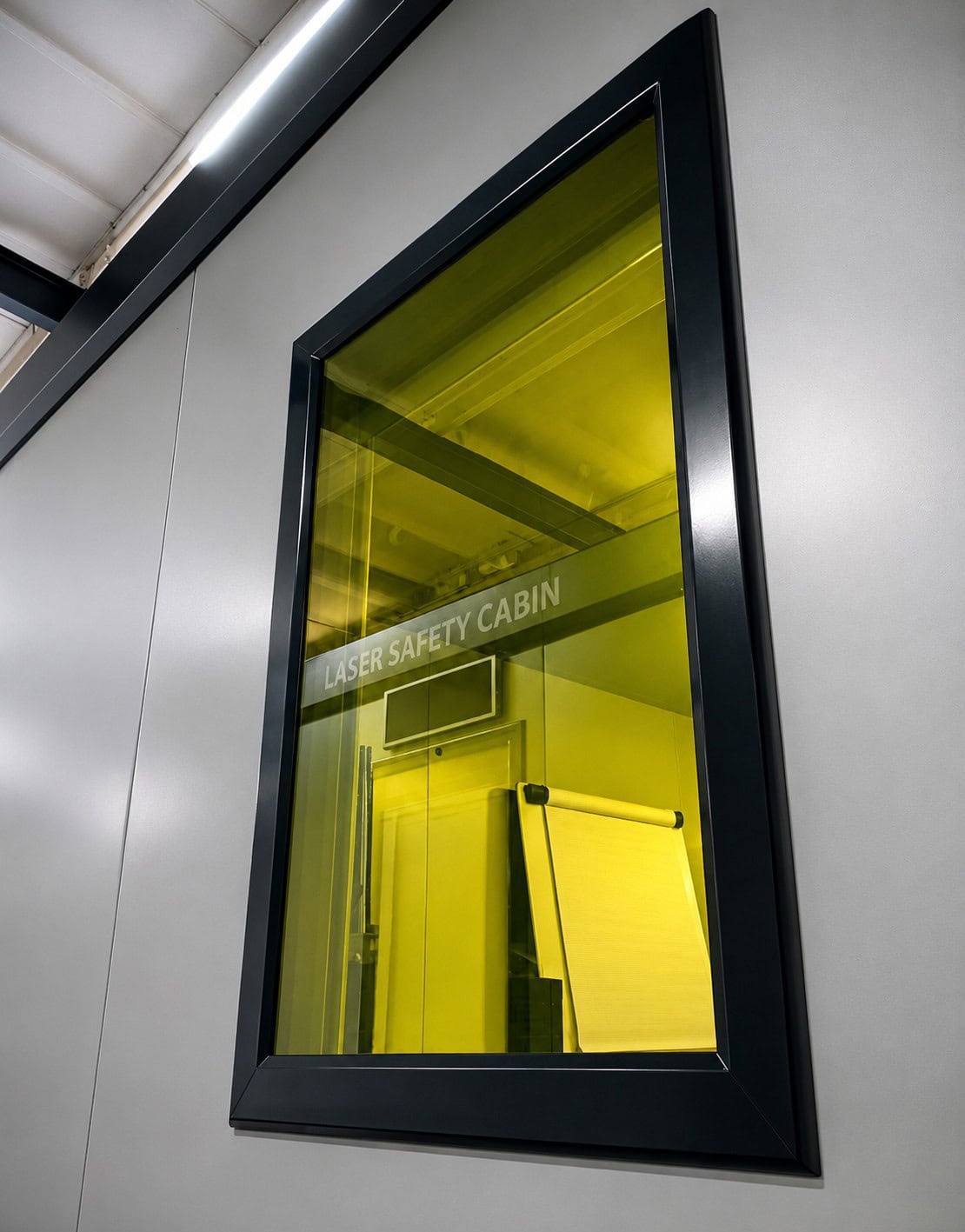
Laser safety windows are specialized viewing panels that use optical filtering materials to block specific laser wavelengths while maintaining clear visibility into the laser-controlled area. They enable operators to safely monitor laser processes without being exposed to hazardous laser radiation.
Best Applications
- Laser enclosures
- Machine observation panels
- Laboratory viewing areas
- Industrial laser systems
- Educational and training demonstrations
Advantages
- Allows safe observation of laser processes
- Provides excellent visibility while maintaining protection
- Available for a wide range of laser wavelengths.
- Integrates into doors, enclosures, and machine guards.
- Improves productivity through safe process monitoring.
Key Considerations
Laser safety windows must be selected to match the specific laser application. Key factors include the required optical density (OD), laser wavelength or wavelength range, maximum power or pulse energy, operating mode (continuous wave or pulsed), and the material’s laser damage threshold. Choosing the correct laser safety window should always be part of a comprehensive laser risk assessment to ensure effective protection and compliance with applicable laser safety standards.

Which Laser Barrier Is Right for Your Application?
Choosing the right laser barrier depends on your laser application, workspace layout, and the level of protection required. Each type of barrier is designed for different environments and operational needs, so selecting the most appropriate solution should always form part of a comprehensive laser risk assessment.
| Barrier Type | Best For | Mobility |
|---|---|---|
| Laser Safety Screens | Flexible workstations, research laboratories, and temporary work areas | High |
| Laser Safety Curtains | Temporary or modular laser enclosures requiring convenient access | Medium |
| Laser Safety Walls | Permanent industrial installations and dedicated laser rooms | Fixed |
| Laser Safety Windows | Safe observation of laser processes within enclosures | Fixed |
In many facilities, the most effective approach is to combine multiple types of laser barriers to create a complete laser safety solution. For example, a permanent laser enclosure may incorporate laser safety walls for structural protection, laser safety windows for safe process observation, and laser safety curtains at maintenance or service access points where flexibility is required.
No single barrier is suitable for every application. The optimal solution should always be determined through a comprehensive laser risk assessment that considers factors such as laser wavelength, maximum output power or pulse energy, beam characteristics, operating mode (continuous wave or pulsed), and the intended application. Selecting the appropriate combination of laser barriers helps ensure effective protection, regulatory compliance, and a safer working environment for everyone operating in or around laser-controlled areas.
Selecting the Right Laser Barrier
Choosing the right laser barrier is essential for ensuring effective laser safety. Rather than selecting a barrier based solely on its material or appearance, it should be chosen according to the laser application and the hazards identified through a comprehensive laser risk assessment.
When selecting a laser barrier, consider the following factors:
Every laser installation has unique requirements, so there is no single barrier suitable for all applications. A comprehensive laser risk assessment should always be carried out before selecting or installing a laser barrier to ensure the appropriate level of protection, compliance with applicable laser safety standards, and a safer working environment.
What to Remember
Laser safety screens, curtains, walls, and windows each play a vital role in protecting personnel from hazardous laser radiation. The right solution depends on the specific laser application, facility layout, operational requirements, and the findings of a comprehensive laser risk assessment.
Whether you’re establishing a flexible laboratory workspace, upgrading an existing laser facility, or designing a fully enclosed high-power laser cell, selecting certified laser barriers that are matched to your laser parameters is essential. The correct barrier solution helps protect personnel, supports compliance with applicable laser safety standards, and contributes to a safer and more efficient working environment.
At Lasermet, we offer a comprehensive range of certified laser safety barriers, including laser safety screens, curtains, walls, and windows, designed to meet the needs of industrial, medical, research, and educational applications. Combined with our laser safety interlock systems, risk assessment expertise, and technical support, our solutions help organizations create safe, compliant, and reliable laser-controlled environments.
Click the button below to contact us and learn more.