In a laser-controlled environment, knowing whether a laser is operating is only part of the picture. A door may open, an E-Stop may be activated, or a shutter may change position. Each of these conditions contributes to the overall state of the installation.
As more devices and controlled areas become part of a laser installation, keeping track of these conditions becomes increasingly important.
But how can operators understand what is happening across the entire environment?
This is where centralised monitoring plays an important role.
Lasermet’s CaLM (Control and Laser Monitoring) system brings monitored device information together into a central graphical interface, providing operators with a clearer view of the conditions across their laser environment.
Monitoring is not simply about knowing whether a laser is on or off. It is about understanding what is happening around it.
What’s Happening Behind the Door?
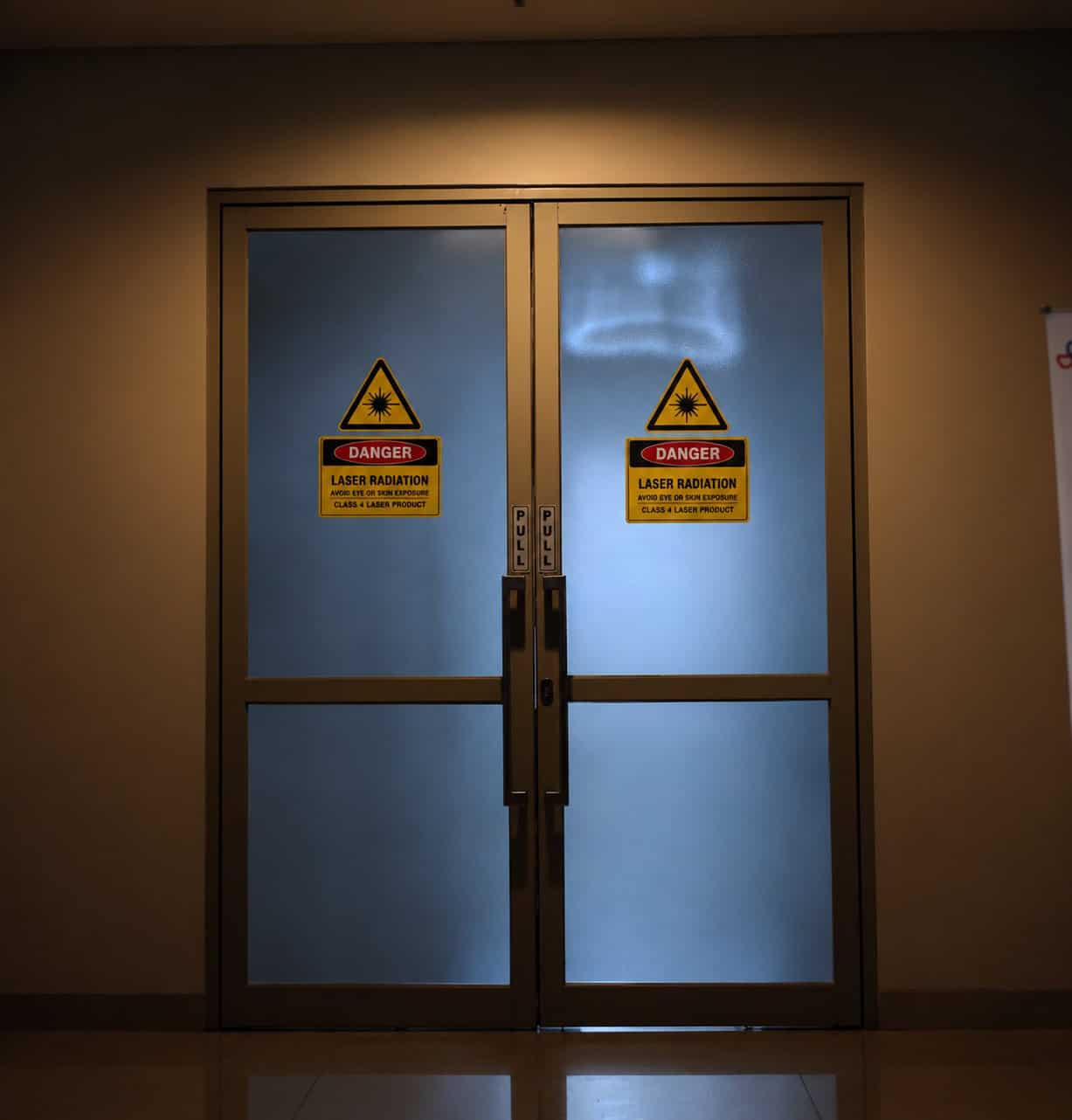
Imagine standing outside a laser-controlled area. The doors are closed and, from the outside, everything may appear normal.
But what is actually happening inside?
Is the laser operating? Are all doors and windows secure? Has an E-Stop been activated? Is a shutter open or closed? Has an interlock changed state?
In an environment with multiple connected devices, these conditions are not always obvious from outside the room. Checking each device individually can also make it difficult to understand the overall condition of the area.
A closed door tells you very little about what is happening behind it. CaLM helps make those monitored conditions visible.
Seeing the Bigger Picture
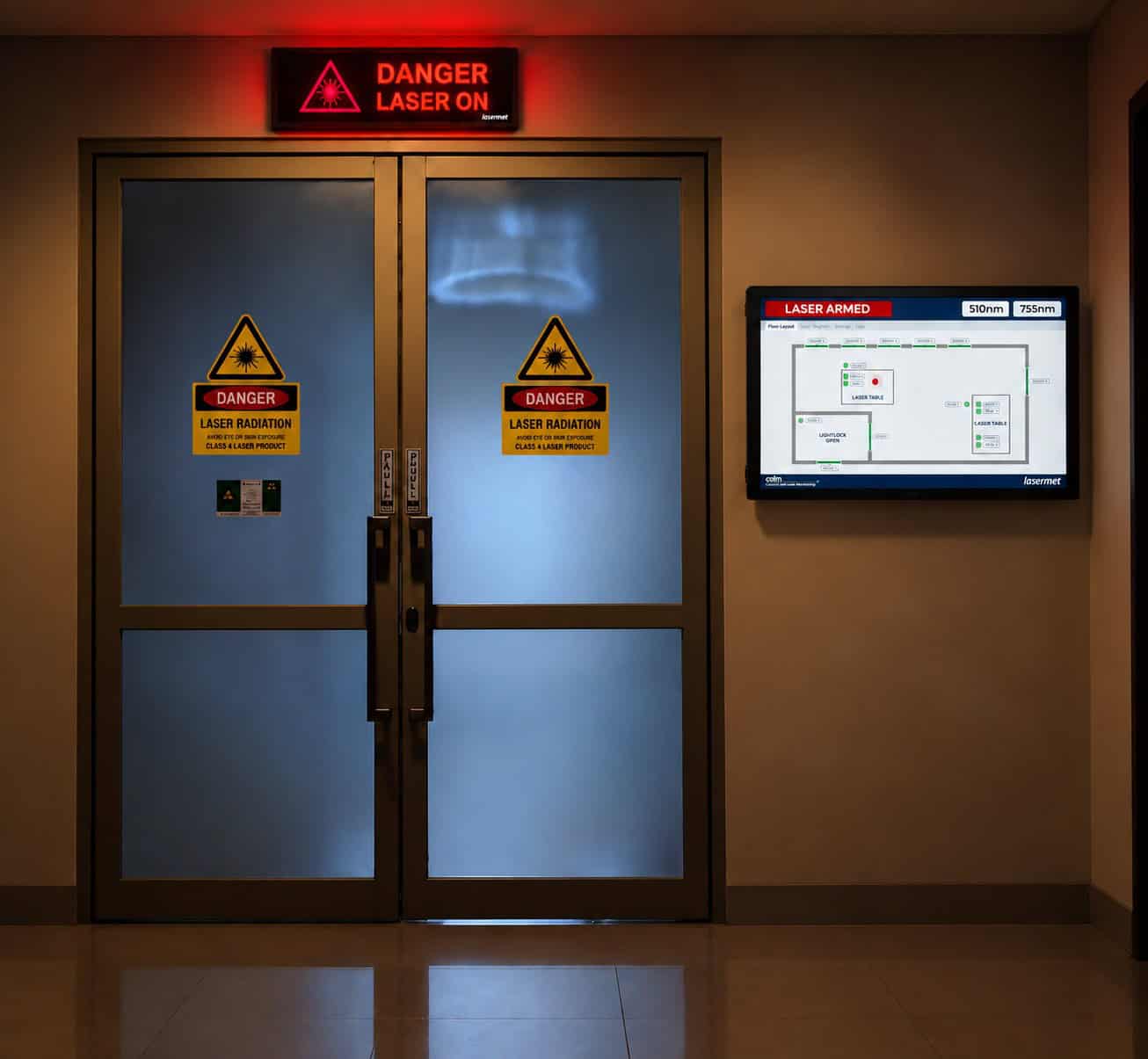
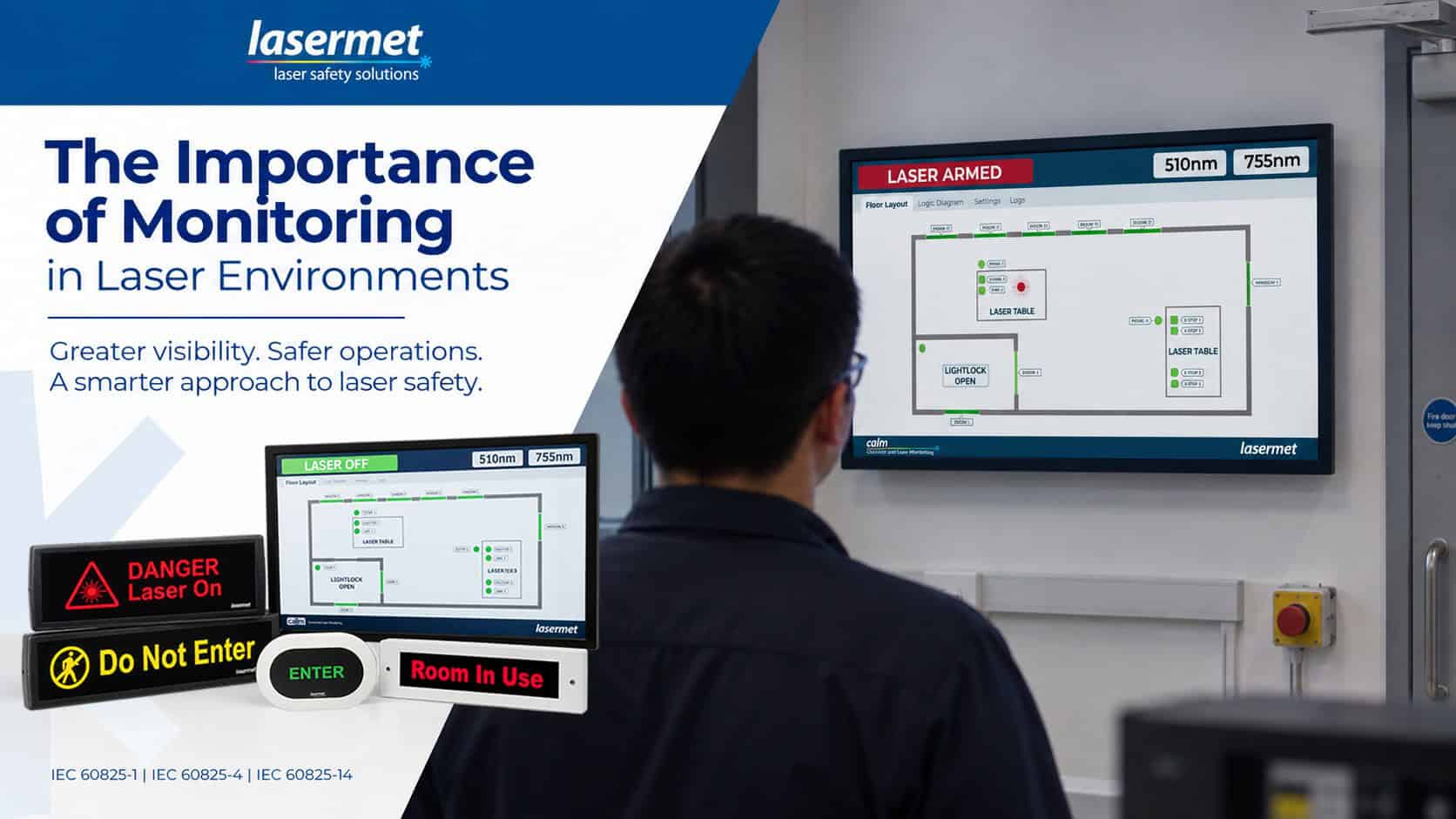
Lasermet’s CaLM (Control and Laser Monitoring) System provides a graphical interface for bringing monitored information together in one place. Instead of relying on individual indicators or checking different locations, operators can view the condition of the monitored environment from a central interface.
Devices are represented within a graphical floor layout, helping operators identify what has changed, where it is located, and its current state.
CaLM can be configured for a wide range of laser installations, from a single controlled area to more complex multi-room environments, providing a monitoring view suited to the layout and requirements of the installation.
What Can CaLM Monitor?
The information displayed by CaLM depends on the devices and systems connected to the installation. This can include doors, windows, E-Stops, shutters, distribution boxes, interlock systems and other monitored equipment.
Rather than viewing these as separate indicators, CaLM represents their status and location within a graphical floor layout. This allows operators to identify individual devices and understand their current monitored state.
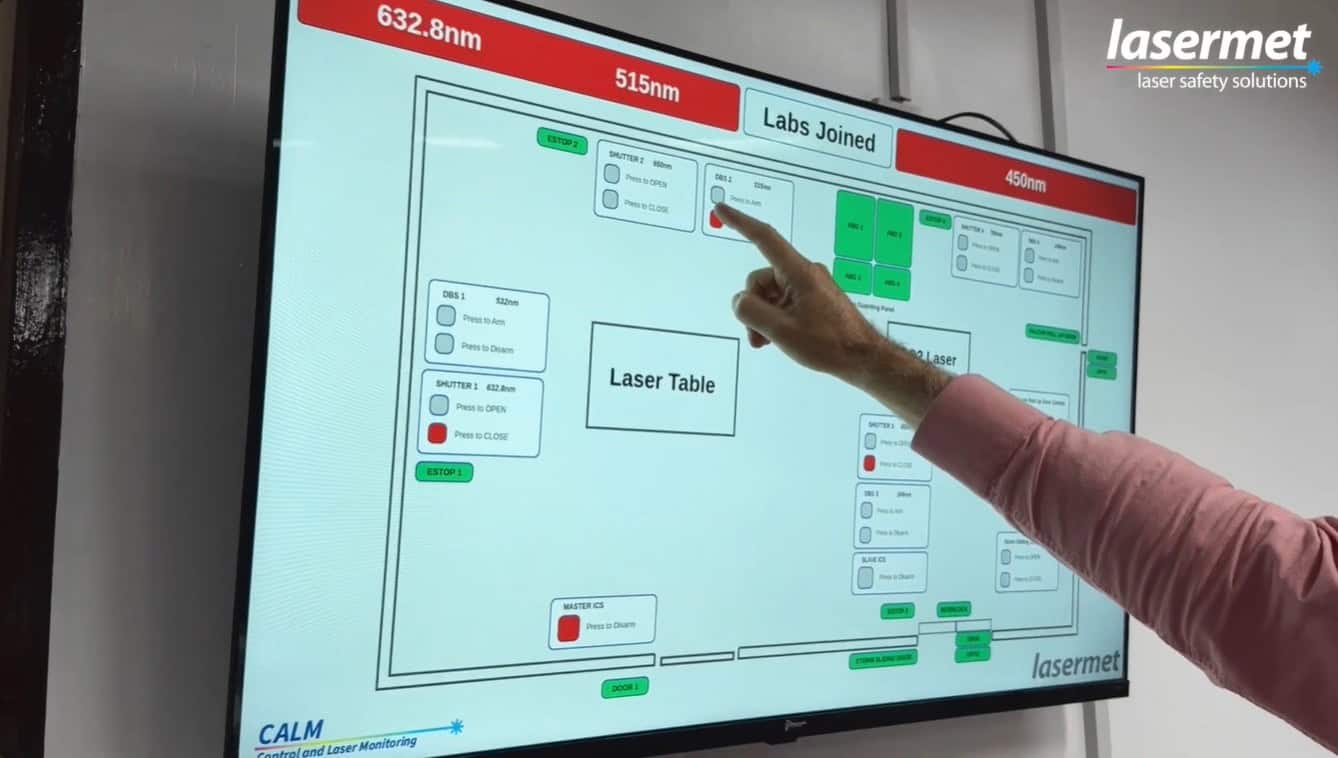
CaLM can be integrated with systems such as MuLeX to bring information from multiple laser-controlled areas and interlock systems into a central monitoring view. This can be particularly useful in facilities operating multiple lasers, different wavelengths or several controlled rooms.
CaLM provides the monitoring and visualisation layer, while the associated laser safety interlock systems remain responsible for the required safety functions and responses.
Monitoring Within a Standards-based Laser Safety System
Laser safety installations combine engineering controls, interlocks, warning systems and monitoring to help manage laser-related risks.
Recognised standards such as IEC 60825-1 provide a framework for laser product safety and the implementation of appropriate protective measures. Monitoring complements these measures by providing operators with clear information about the condition of connected devices and controlled areas.
IEC 60825-1
Laser product safety and classification requirements
When a System Condition Changes
Monitoring becomes particularly valuable when a connected device changes state.
A door may open, an E-Stop may be activated, or a shutter may change position. These changes can be reflected on the CaLM monitoring interface, allowing operators to quickly identify what changed and where it occurred.
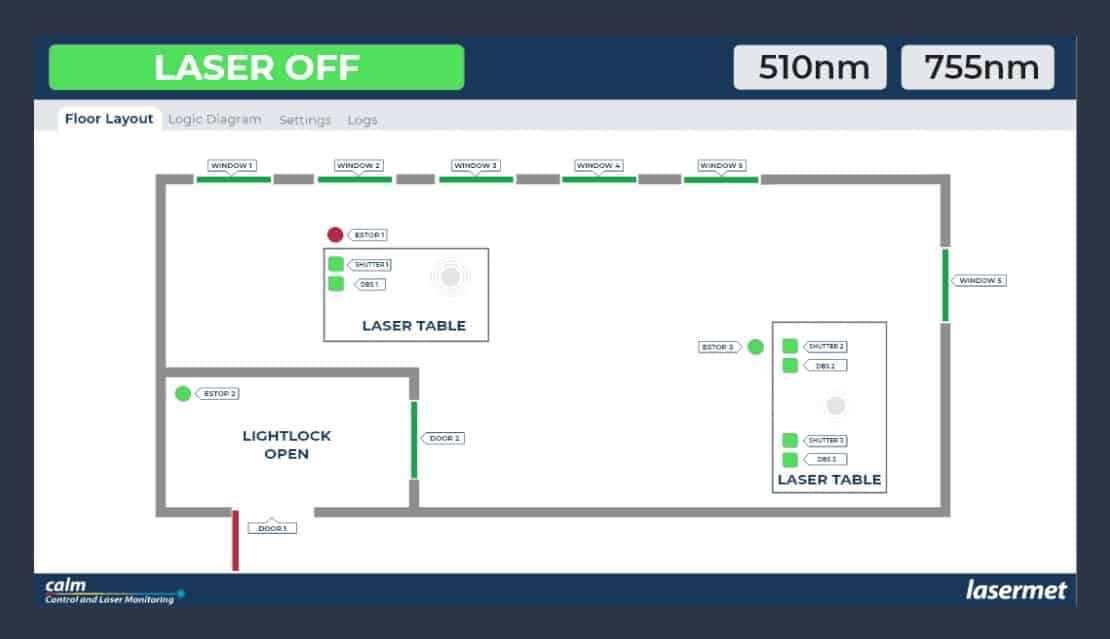
Depending on the interlock design, a change may also result in a warning, removal of a laser permissive, system trip, or transition to a safe state. These responses are determined by the configured interlock system, while CaLM provides visibility of the resulting conditions.
Knowing Before You Enter
Central monitoring provides operators with a wider view of the laser environment. However, personnel approaching a controlled area may not have access to the monitoring screen.
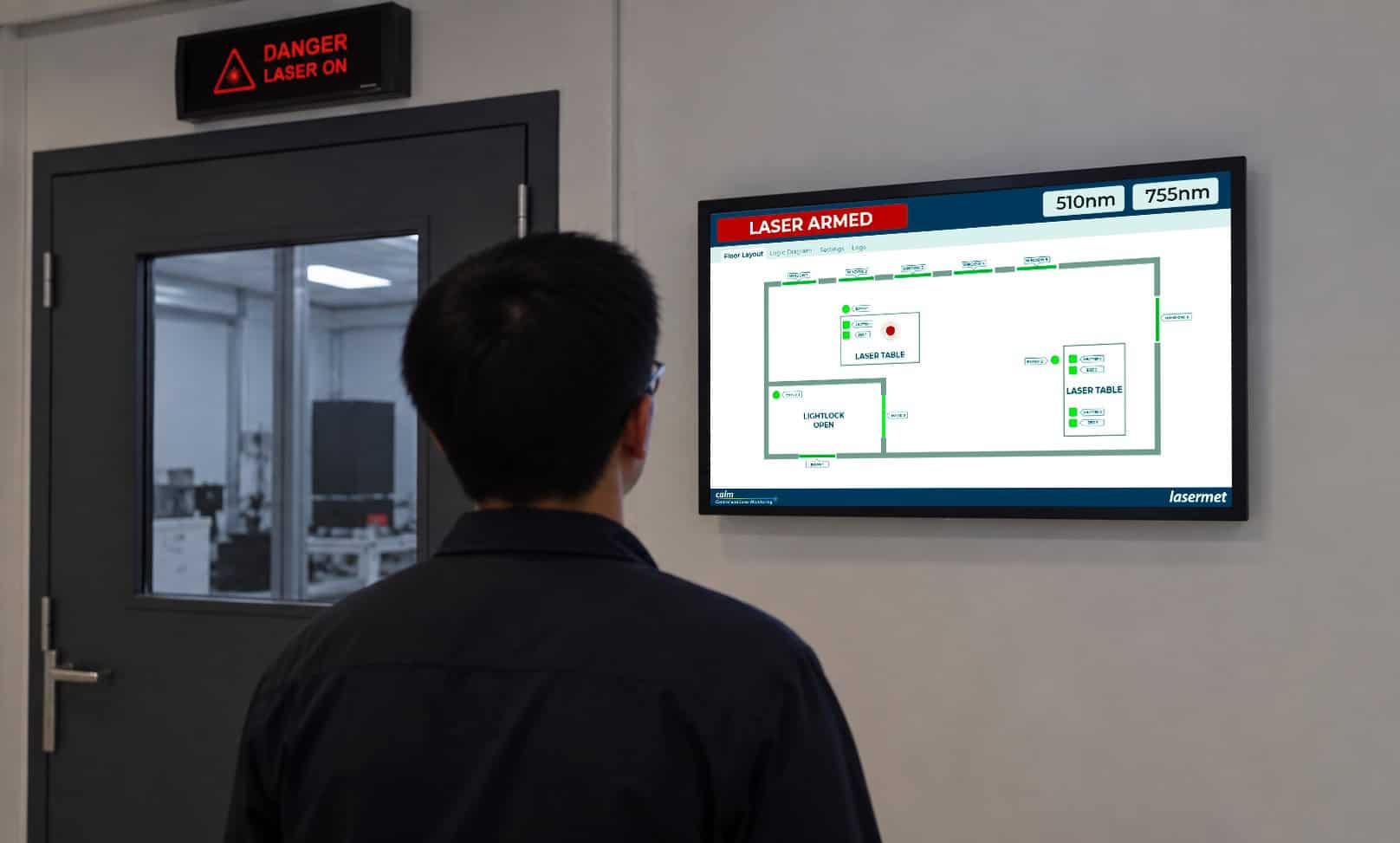
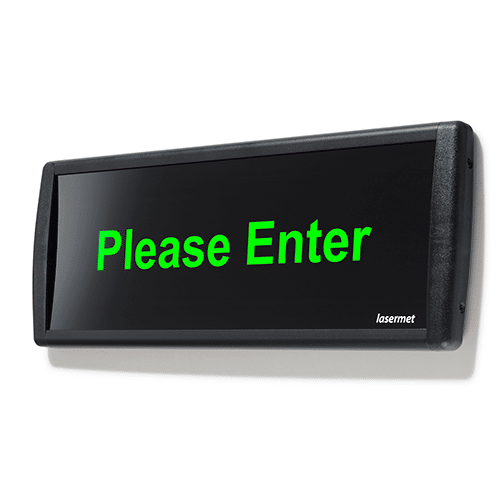
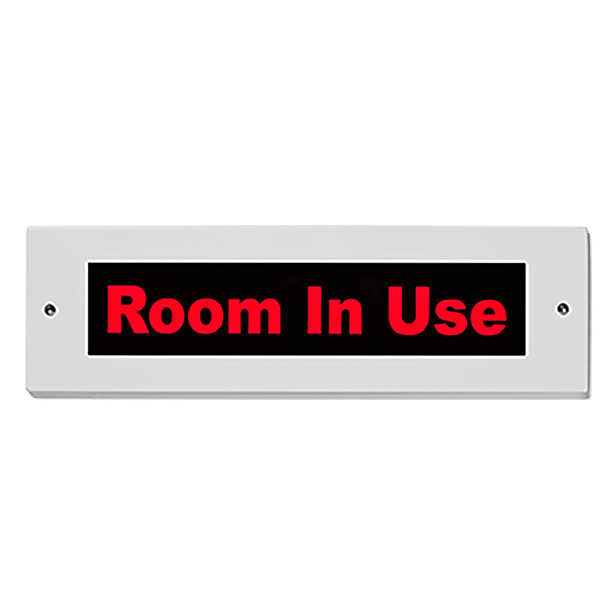
This is where illuminated warning signs provide an important local indication. Positioned at entrances, they can communicate the current operating condition before someone enters the controlled area.
Depending on the installation and system configuration, signs may display messages such as “DANGER LASER ON”, “DO NOT ENTER”, “ENTER”, or “ROOM IN USE”.
Together, CaLM monitoring and local indication provide information where it is needed: a wider system view for operators and clear status information at the point of access.
Why CaLM?
Want to learn more about CaLM? Watch the video below to see why centralised monitoring can be valuable in laser-controlled environments and how CaLM brings monitored information together.
Bringing Monitoring Together
Effective monitoring is not about a single device or display. It is about making the right information available where it is needed.
CaLM provides a central view of the monitored environment, while illuminated warning signs communicate conditions locally at access points. Interlocks, E-Stops, shutters and other connected equipment form part of the wider laser safety system.
Together, these technologies create a more connected approach to laser safety, combining central monitoring, local indication and appropriate safety controls across the controlled environment.
Recommended Products
-
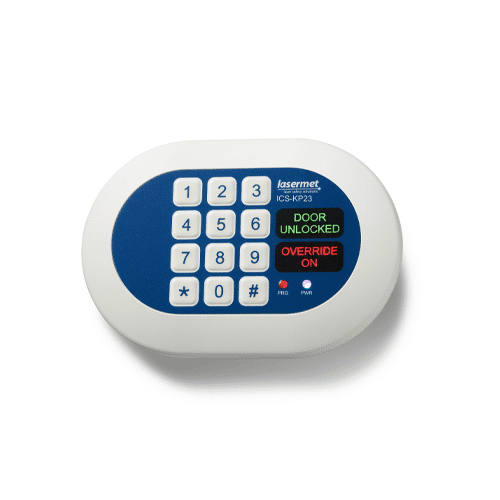
Access Keypad with Override
-
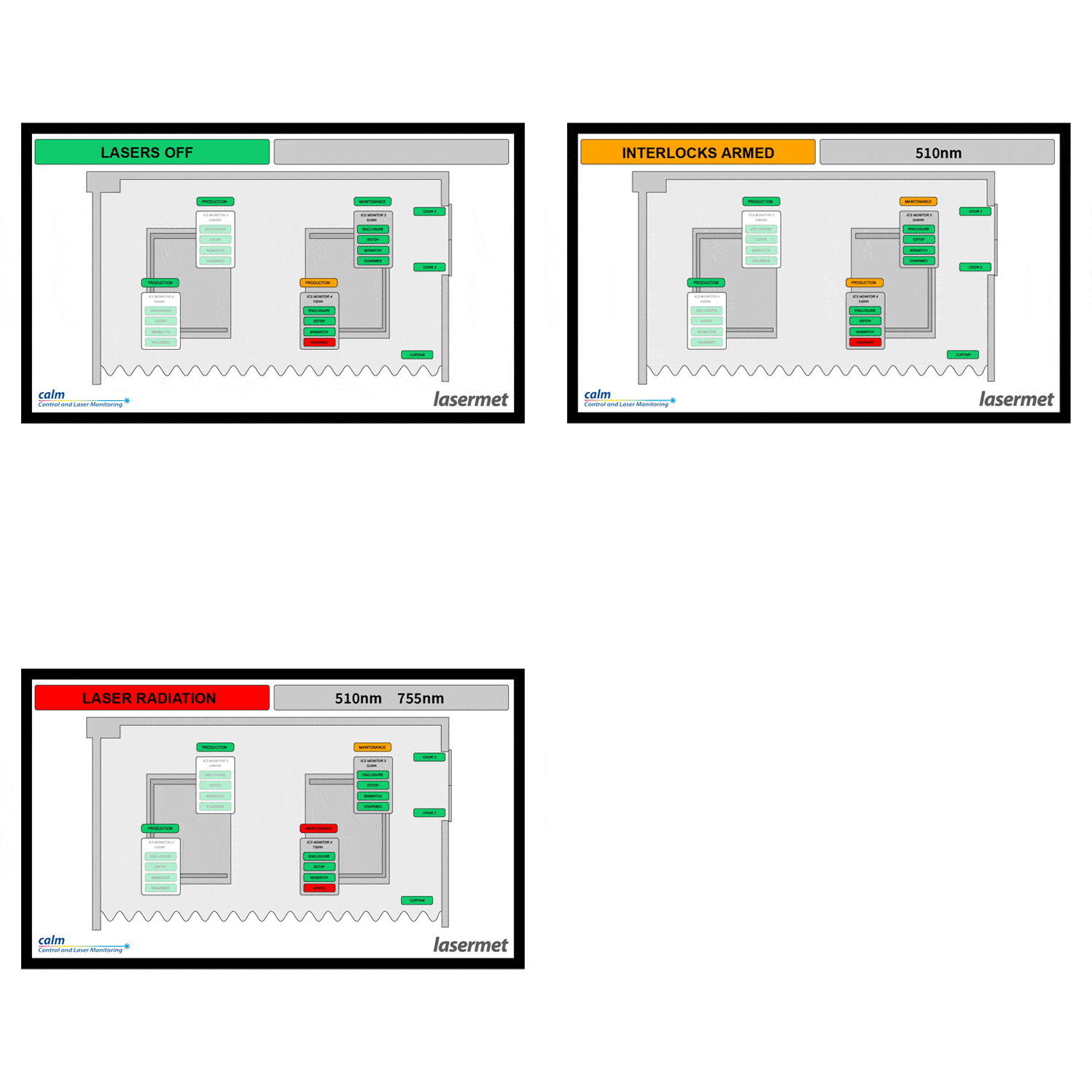
CaLM Control and Laser Monitoring System
-
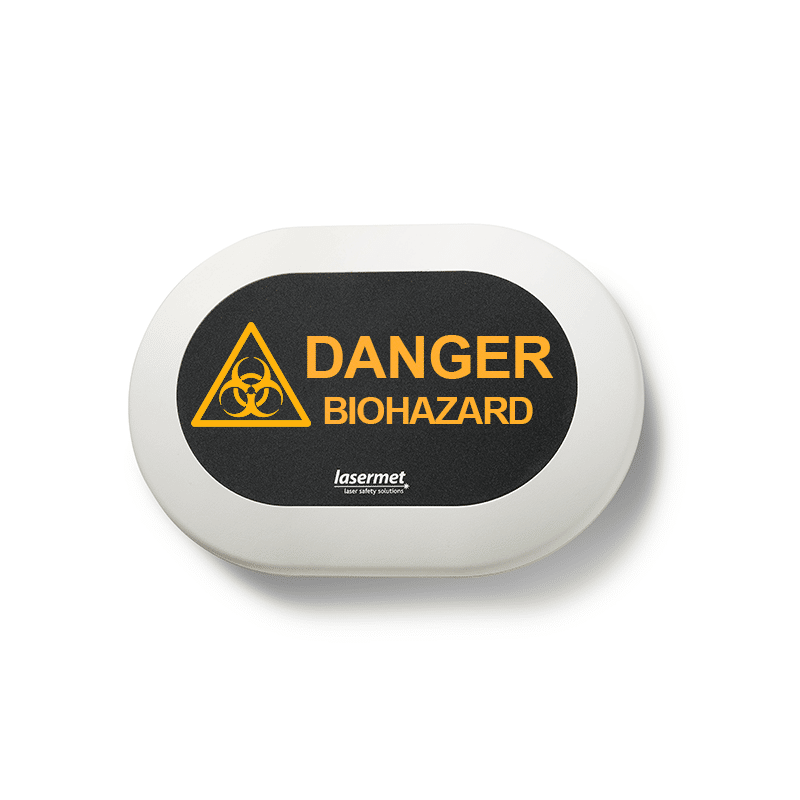
LED Mini Signs
£231.81 -
LED Ultra Signs
Price range: £373.89 through £441.19 -
Slim Jim LED Sign
£231.81