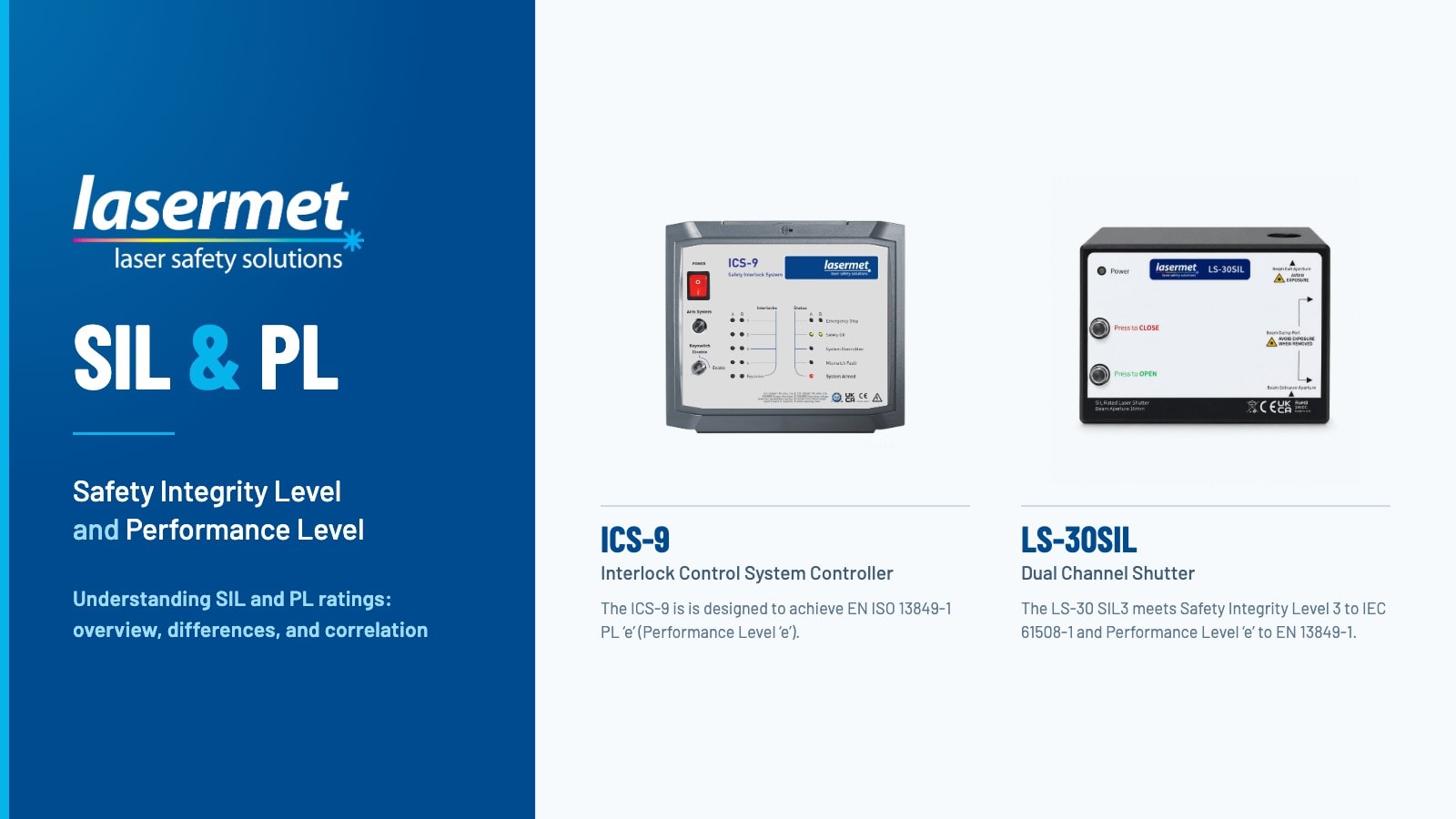
In industrial safety, ensuring that systems operate reliably to protect people, equipment, and the environment is essential. Two commonly used measures of safety system reliability are SIL (Safety Integrity Level) and PL (Performance Level). Although they serve similar purposes, they are based on different standards and are applied in different contexts.
For this reason, Lasermet highlights the importance of understanding what they are, how they differ, and how they relate to each other.
What is Safety Integrity Level (SIL)?
Safety Integrity Level (SIL) is defined in IEC 61508 and related standards such as IEC 62061. It measures the reliability of a safety function by assessing the probability that a system will perform its intended safety function correctly when required. In simple terms, SIL indicates the level of confidence that a safety system will operate effectively to reduce risk and maintain safety.
SIL LEVELS
SIL 1 to SIL 4 with SIL 4 providing the highest level of risk reduction
BASIS
Probability of Failure on Demand (PFD) or Probability of Dangerous Failure per Hour (PFH)
APPLICATIONS
Process industries such as oil and gas, and chemical plants
SIL rating is primarily applied in process industries such as oil & gas, chemical, and power generation. It evaluates the reliability of safety functions within a system covering both hardware and software and focuses on the Probability of Failure on Demand (PFD).
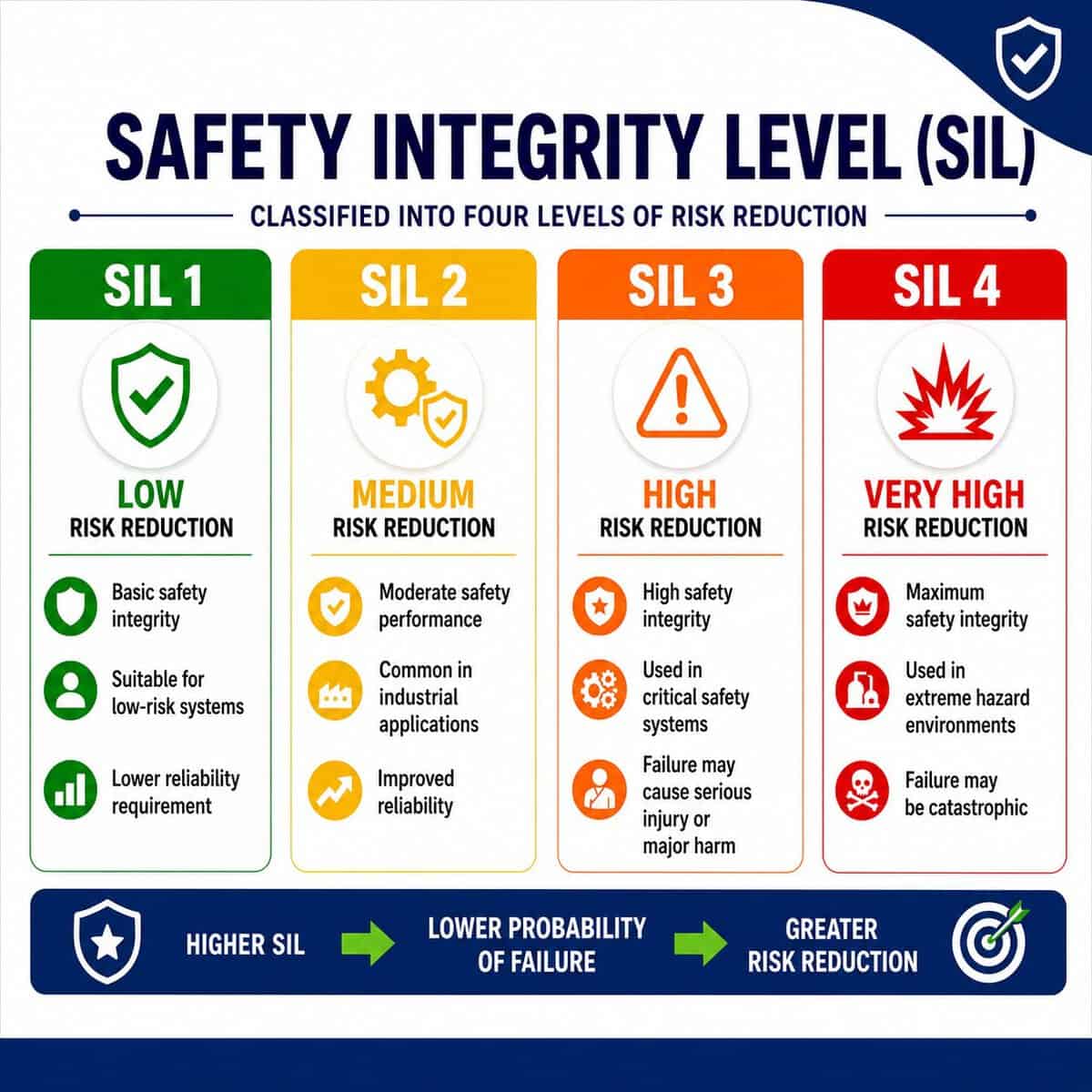
SIL is classified into four levels:
As the SIL level increases, the required reliability and robustness of the system also increase.
What is Performance Level (PL)?
Performance Level (PL), as defined in ISO 13849-1, is widely used in machinery safety applications, including industrial robots, manufacturing systems, and automated equipment. Unlike SIL, PL focuses on the Probability of Dangerous Failure per Hour (PFHd) while also considering factors such as system architecture, redundancy, diagnostic coverage, and component reliability. In simple terms, PL evaluates how effectively a safety-related control system can reduce risk and maintain safe operation throughout its lifecycle.
Performance Levels combine both numerical reliability measures and qualitative design factors, such as the configuration of the control system.
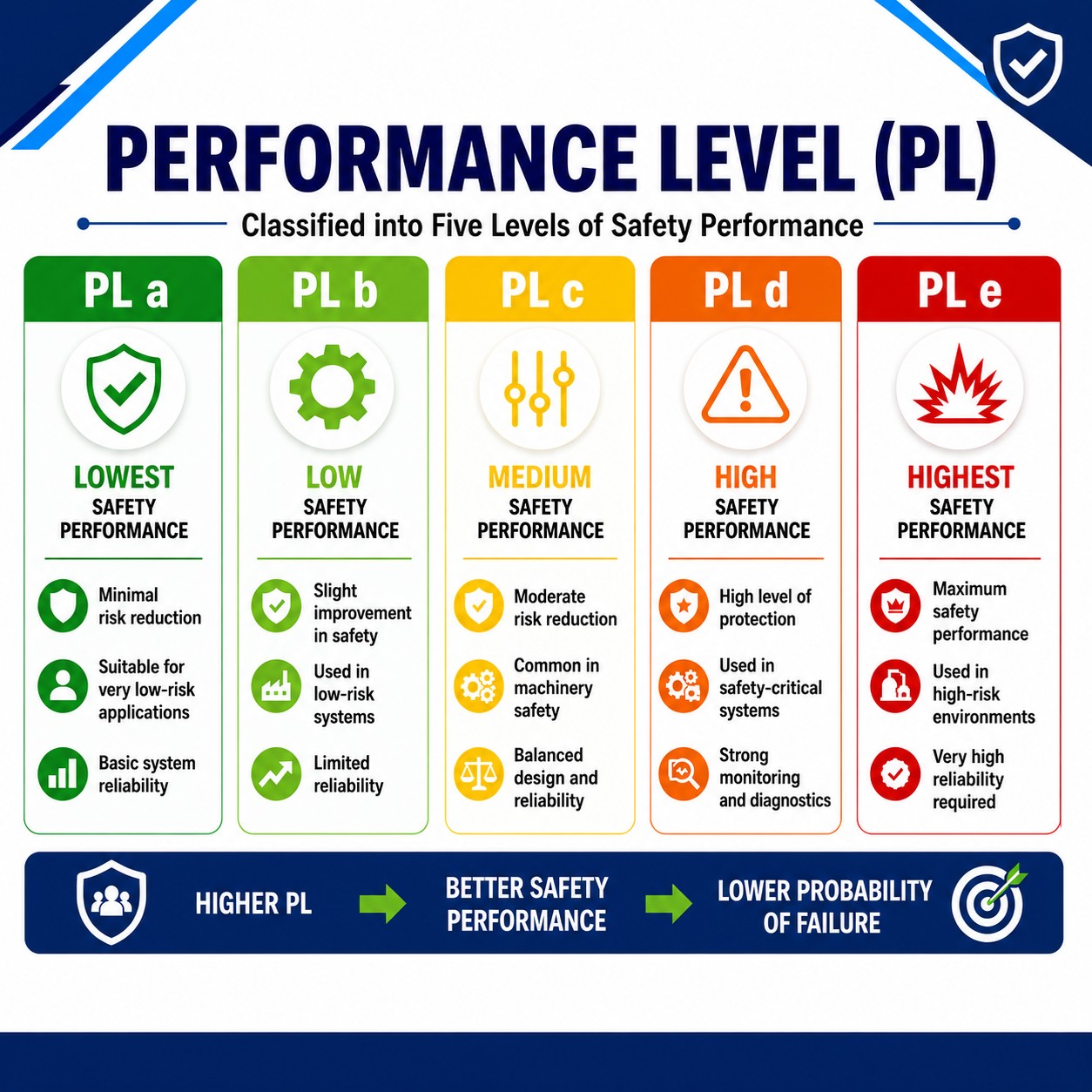
PL LEVELS
PL a to PL e with PL e providing the highest safety performance
BASIS
System architecture, Mean Time to Dangerous Failure (MTTFd), Diagnostic Coverage (DC)
APPLICATIONS
Widely used in machinery and manufacturing environments
PL is classified into five levels:
Key Differences between SIL and PL
| Aspect | SIL | PL |
|---|---|---|
| Standard | IEC 61508 / IEC 61511 / IEC 62061 | ISO 13849-1 |
| Application | Process industries | Machinery and industrial equipment |
| Levels | SIL 1 – SIL 4 | PL a – PL e |
| Focus | Probability of failure on demand (PFD) | Probability of dangerous failure per hour (PFHd) and system architecture |
| Method | Quantitative | Quantitative plus qualitative |
| Coverage | Hardware and software | Primarily hardware, including system structure |
SIL is typically used for process safety systems, while PL is more suited for machine safety and control systems. Although there is some correlation between the levels, they are not directly interchangeable.
Correlation between SIL and PL
While Safety Integrity Level (SIL) and Performance Level (PL) originate from different standards, they can be broadly correlated based on their risk reduction capability. Although they are defined using different approaches, their levels can be approximately aligned and mapped for comparison.
| SIL Rating | Approximate Performance Level (PL) | Note |
|---|---|---|
| SIL 1 | PL c | Low integrity requirement |
| SIL 2 | PL d | Medium integrity requirement |
| SIL 3 | PL e | High integrity requirement |
| SIL 4 | Not commonly mapped | Extremely high integrity, rarely needed in machinery |
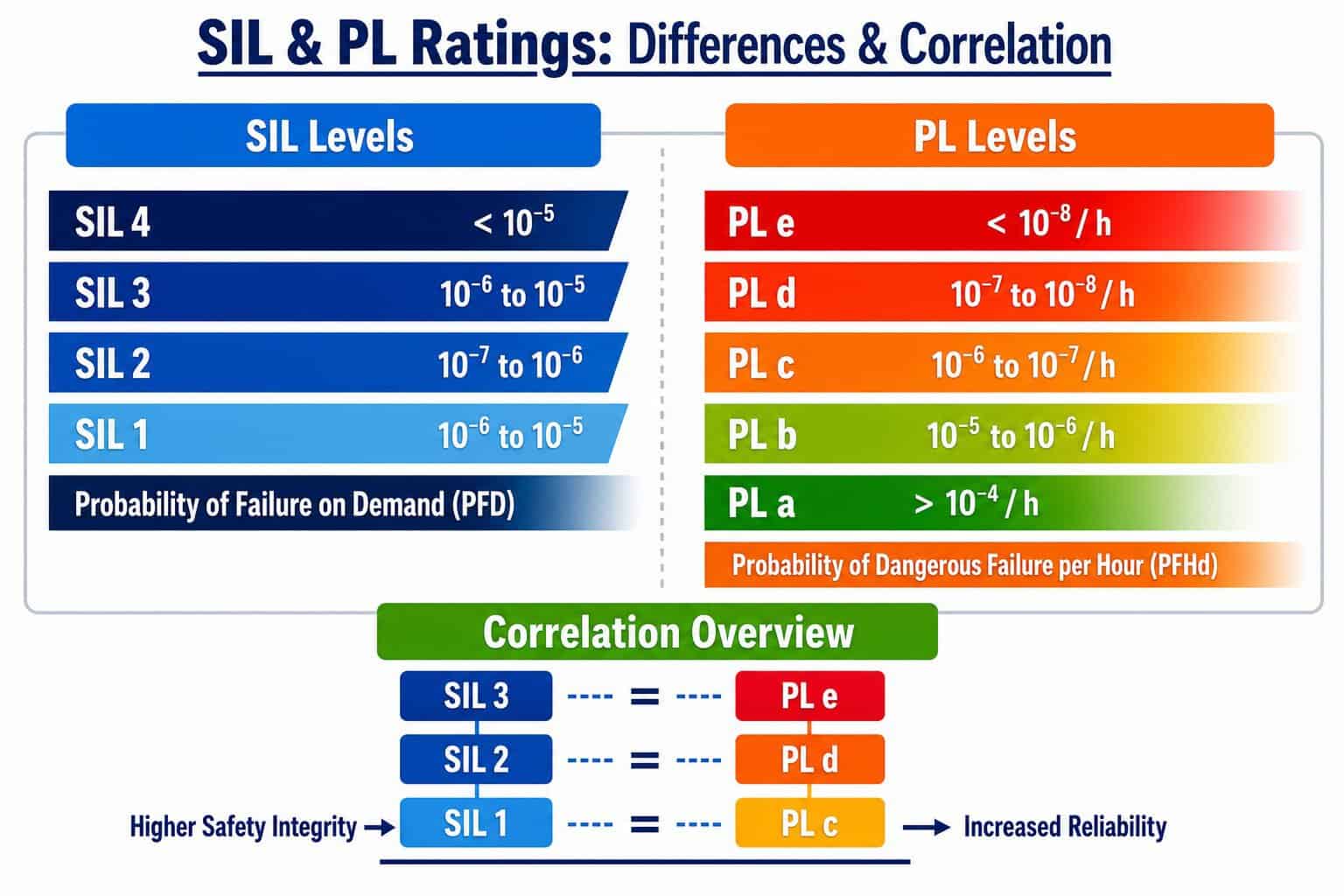
This mapping is approximate. Always follow the specific standard required for your application.
SIL is primarily a numerical probability-based measure, while PL also incorporates system architecture and diagnostic features.
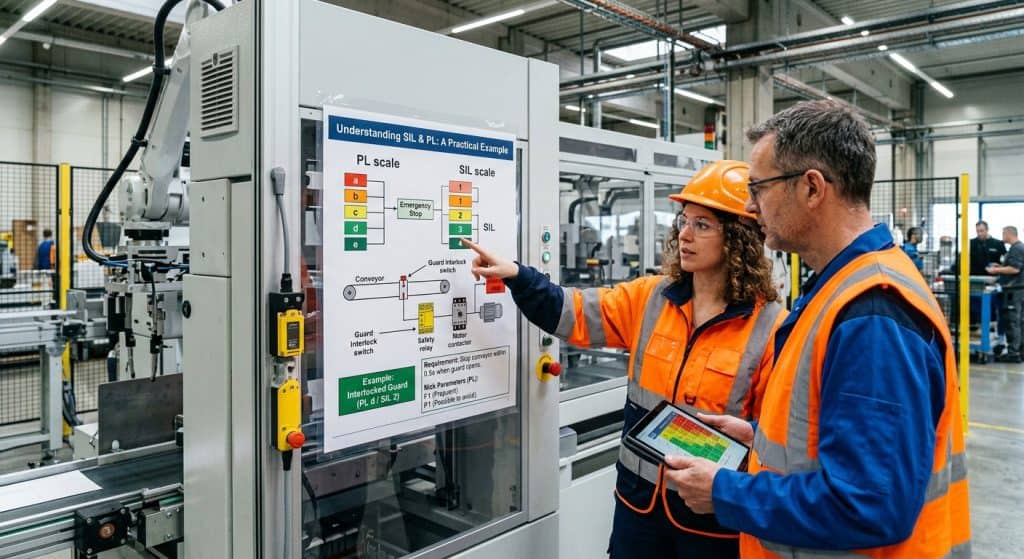
When to Use SIL vs. PL
Both SIL and PL are essential for designing safe systems. At Lasermet, understanding their differences and correlation allows us to select the right safety level for each application. This ensures system reliability, optimizes cost and complexity, and guarantees that our systems effectively protect people, equipment, and the environment.
SIL is a reliability metric focused on the probability of failure, while Performance Level represents overall performance, including system design and robustness. Both are designed to reduce risk, but they use different approaches depending on the application.
Use Safety Integrity Level (SIL) when working with:
Use Performance Level (PL) when working with:
Click the button below to contact us and learn more.