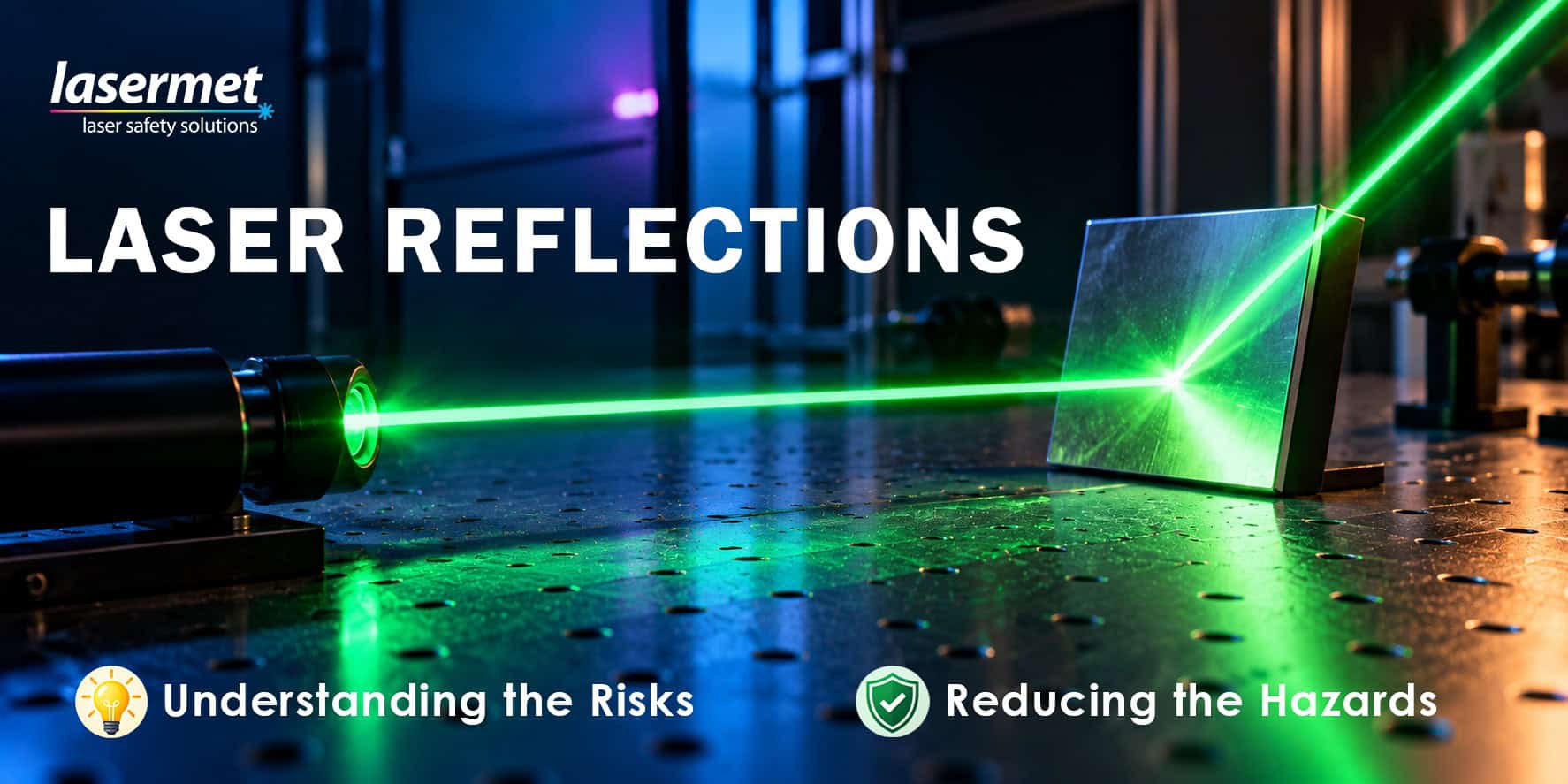
When considering laser safety, we immediately think about the direct laser beam and how it should be contained. However, laser reflections are another important hazard that should not be overlooked. When a laser beam strikes an object or surface, some of the laser radiation may be absorbed, transmitted, scattered, or reflected, depending on the material and its surface properties.
Reflected laser radiation can travel outside the intended beam path, possibly exposing personnel to eye injuries, skin burns, or other hazards. Since reflections can occur in unexpected directions, understanding their risks and implementing appropriate control measures are essential to maintaining a safe laser working environment.
How Does Laser Reflection Occur?
Reflection occurs when a laser beam strikes a surface and a portion of its radiation is redirected rather than absorbed or transmitted through the material. The direction and distribution of the reflected radiation depends on the surface’s texture, material properties, wavelength of the laser, and angle of incidence.
Several factors affect how laser radiation is reflected:
Types of Laser Reflection
The reflected radiation can behave differently depending on the surface characteristics, resulting in two main types of reflection.
Specular Reflection
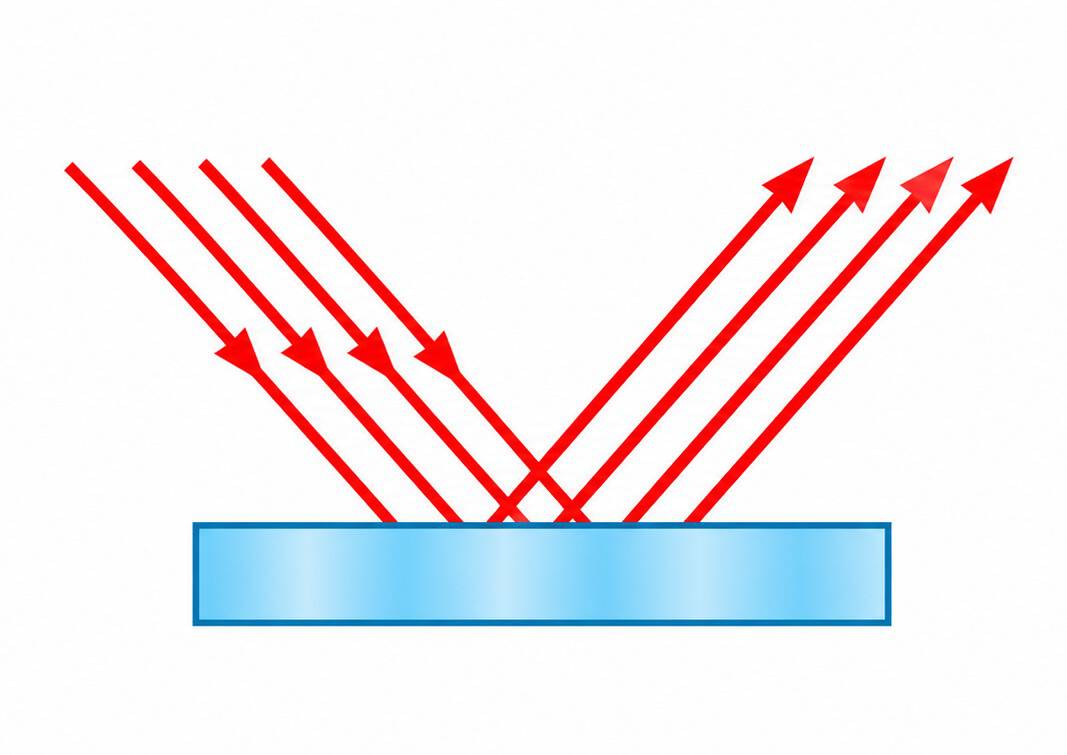
Specular reflection occurs when a laser beam strikes a relatively smooth or polished surface and the radiation is reflected in one direction.
These materials can produce specular reflections: mirrors, polished metals, glossy finishes, and glass.
Specular reflections are hazardous because the reflected beam is concentrated and may retain a significant proportion of the laser energy. The reflection may create a secondary beam path capable of presenting a hazard away from the original beam direction.
Diffuse Reflection
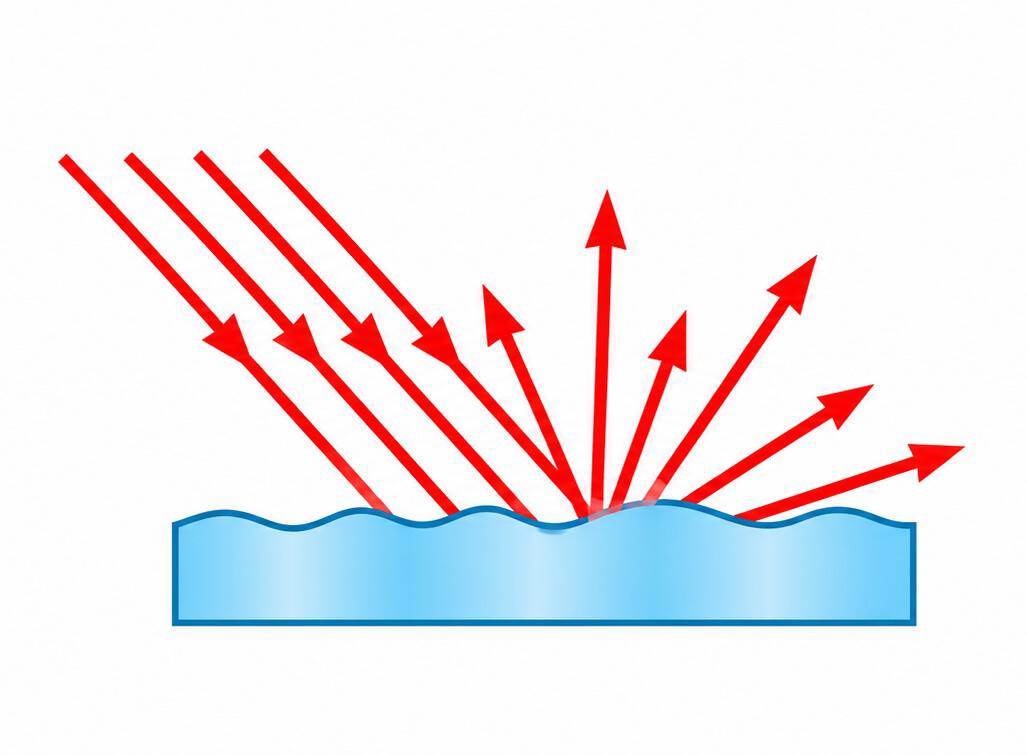
Diffuse reflection occurs when a laser beam strikes a rough or irregular surface and the radiation is scattered in multiple directions.
Matte and rough surfaces are more likely to produce diffuse reflection than a highly polished surface.
Compared with a specular reflection, the laser energy is distributed over a wider area, generally reducing the intensity travelling in any one direction. The energy may be reduced but it does not necessarily make the reflection ‘SAFE’. High power lasers can still produce hazardous diffuse reflections.
Why are Reflections a Laser Safety Risk
A person may be positioned away from the direct laser beam but could still be exposed if the beam strikes a reflective object and is redirected toward them. Depending on the wavelength and exposure level, reflected laser radiation can present hazards to the eyes and skin.
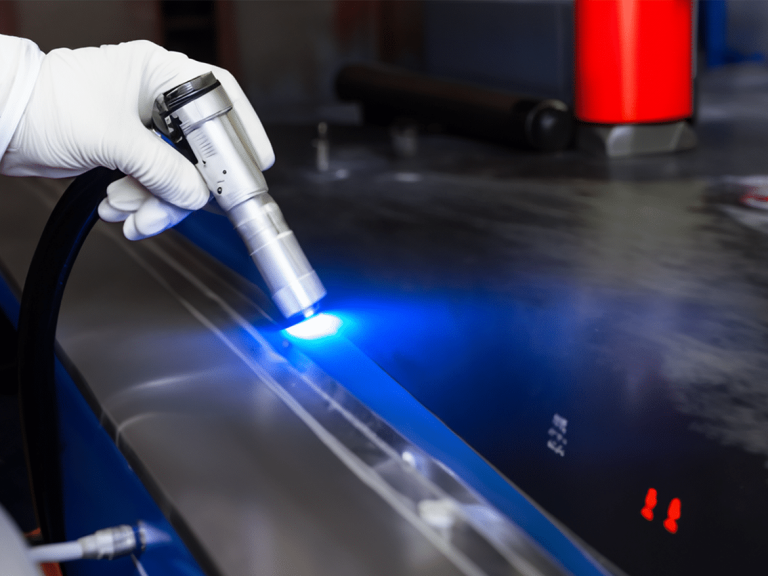
The risk is even higher in applications involving metallic components or tools, such as laser welding, cutting, cleaning and other high-power laser processes.
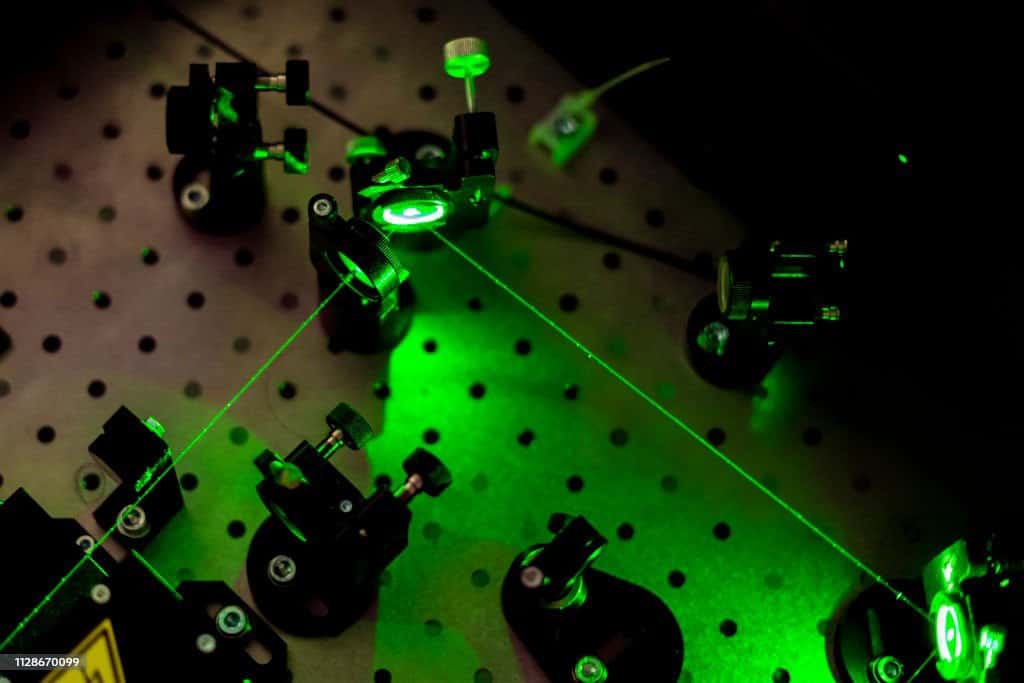
One of the main concerns with reflected laser radiation is that it can create an unexpected beam path. Common sources of unwanted reflections can include:
- Polished or reflective metal surfaces
- Mirrors and glass surfaces
- Glossy machinery and equipment
- Optical components such as lenses, mirrors
- Personal accessories such as jewelry, watches
Hazards of Laser Reflections
The following are associated hazards of laser reflections.
Click each tab to learn more about each hazard.

It may cause retinal damage or damage to the cornea and lenses of the eye.
Even a short exposure may permanently damage vision especially for high-powered lasers.
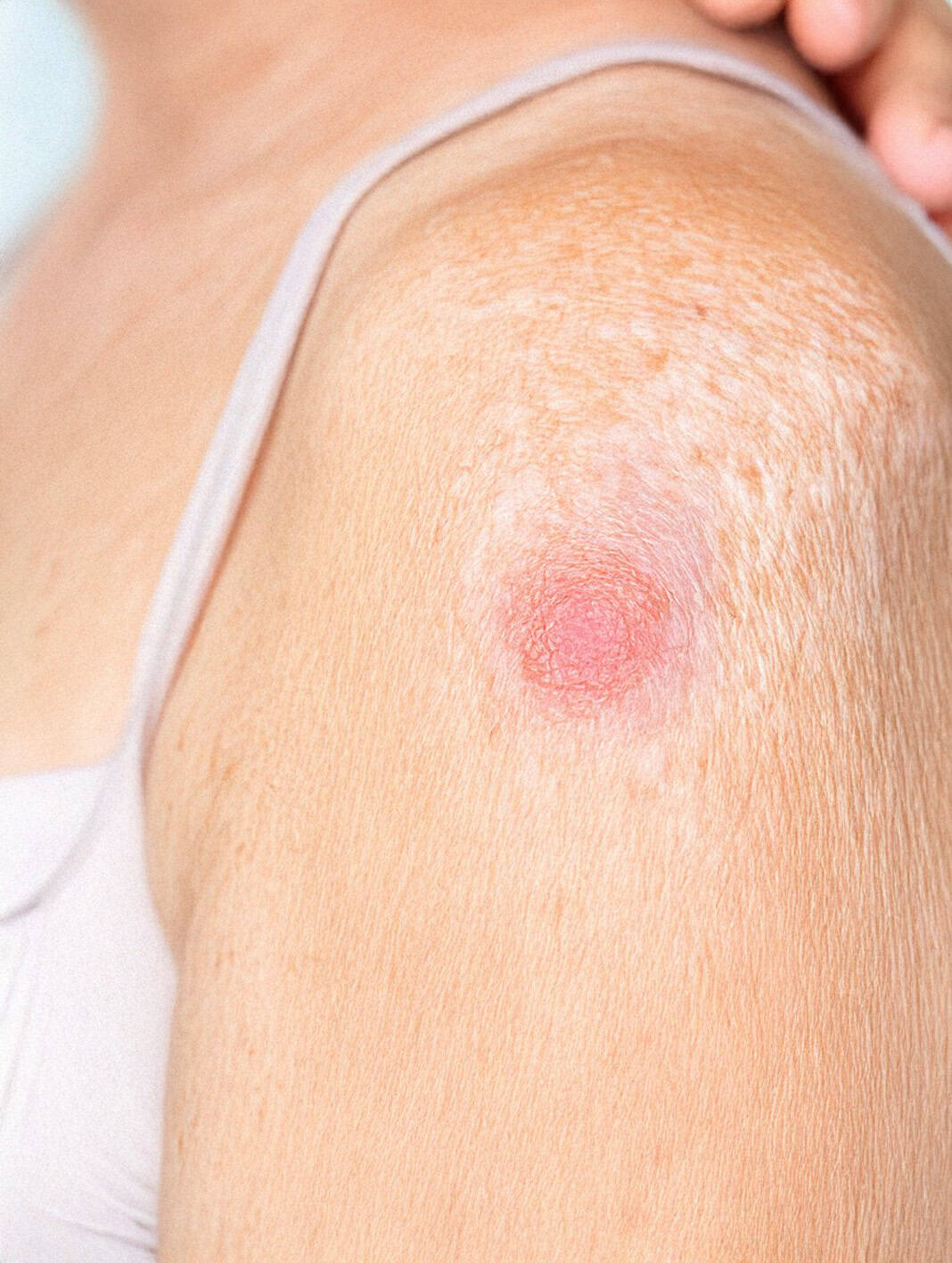
It may cause skin burns or tissue damage.
The severity of a laser burn depends on the wavelength and length of exposure.
Reflections may stray outside of their intended beam path which created unexpected hazards.
This may expose personnel who are unaware of the hazard or are not wearing appropriate protective equipment.
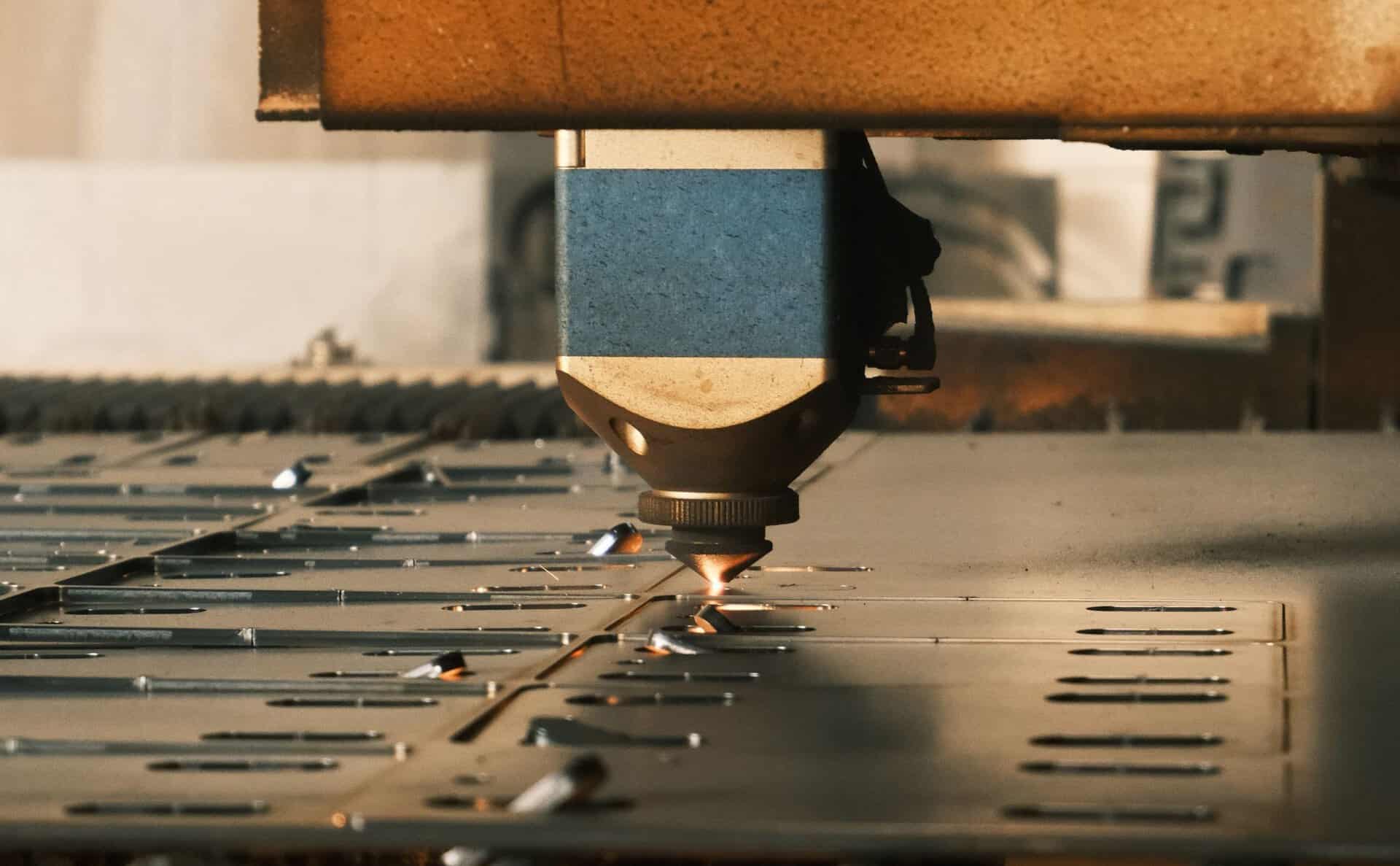
It can cause increase in temperature that may ignite or damage nearby materials and equipment, especially when concentrated on a small area.
Ways to Reduce Unexpected Beam Reflections
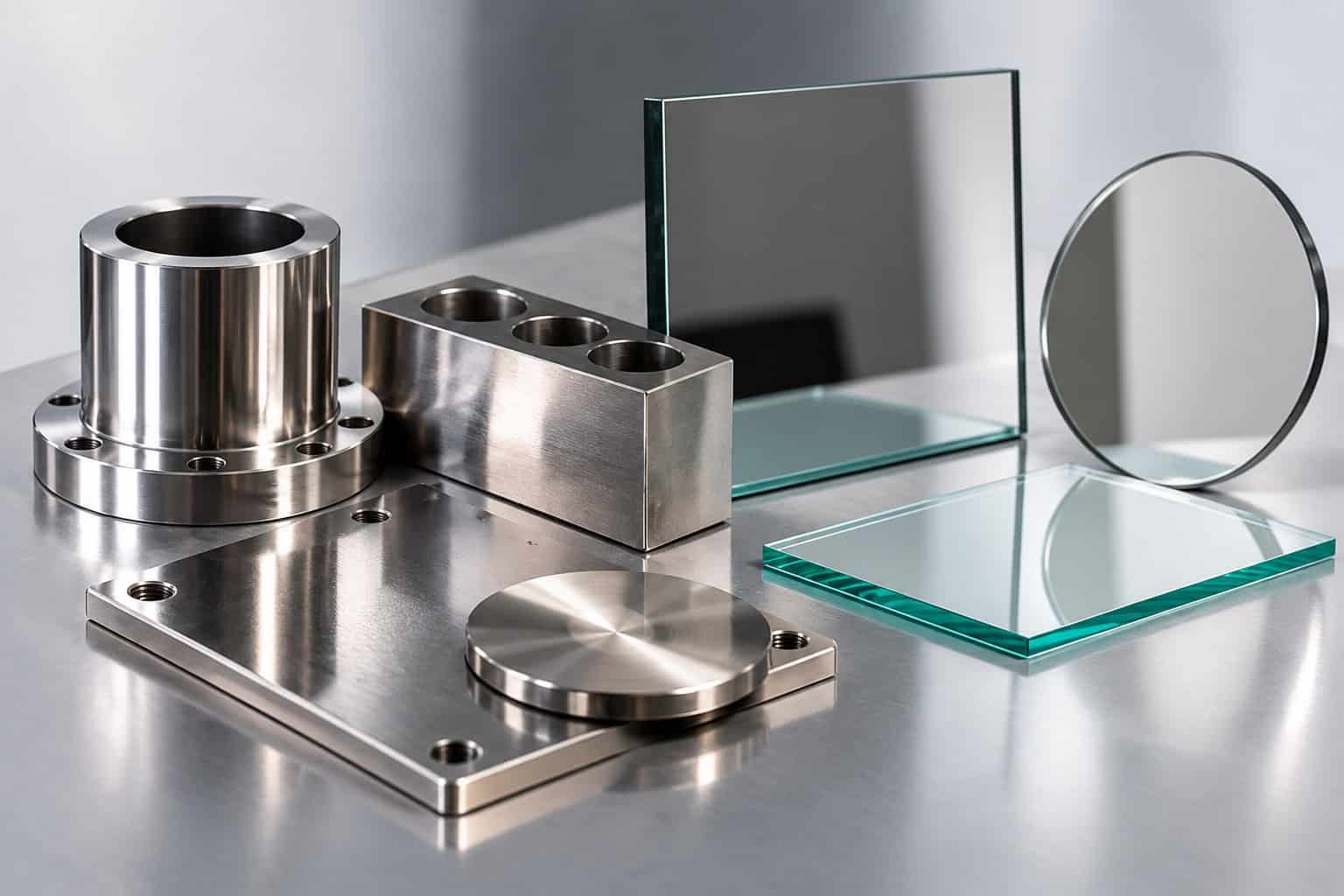
1. Minimising Reflective Surfaces and Objects
One method of reducing reflection hazards is to avoid unnecessary smooth, polished, or highly reflective surfaces around exposed laser beam paths. Matte, non-glossy and low-reflectance finishes can be used on surrounding equipment and barriers.
Surface materials and coatings should be selected based on the laser wavelength in use and one must remember that different laser types react differently to different materials.
A matte surface tends to scatter incident radiation over a wider range of directions rather than producing a strong mirror-like reflection. Dark finishes may also be useful when they provide low reflectance at the wavelength being used. However, a surface appearing dark to the human eye does not automatically mean that it will absorb the laser wavelength effectively.
This is particularly important for lasers operating outside the visible spectrum. A material that appears black under normal lighting may still reflect a significant amount of infrared or ultraviolet radiation.
2. Beam Enclosure and Laser Barriers
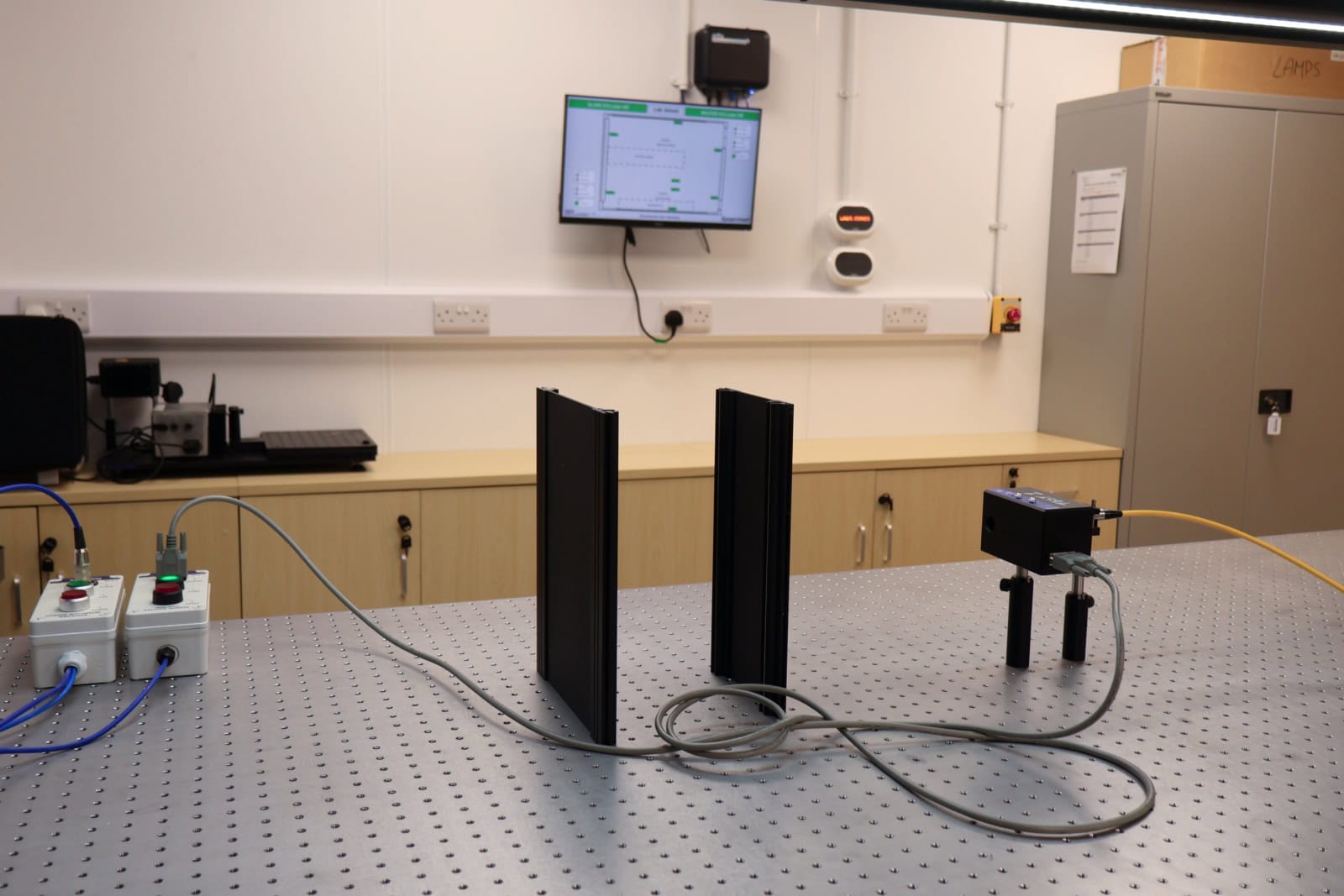
Enclosing the laser beam path and installing proper laser safety barriers can help contain direct and reflected laser radiation within a designated area. These protective measures reduce the likelihood of hazardous radiation reaching operators or other personnel outside the controlled workspace.

3. Beam Dumps and Beam Stops
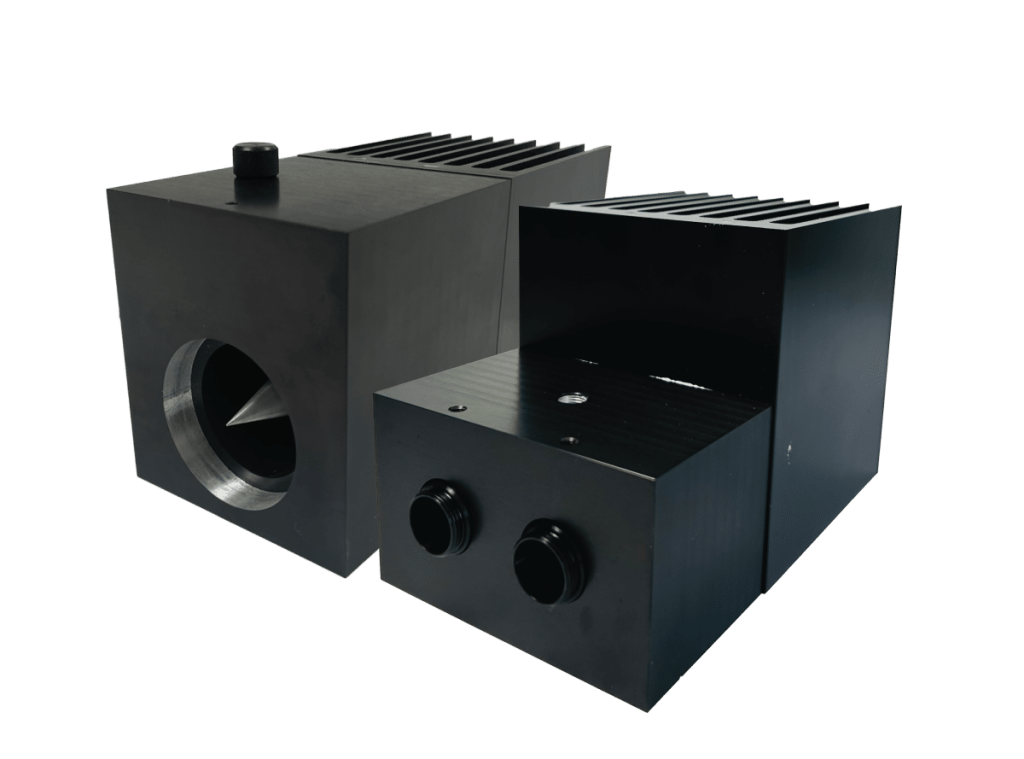
Beam stops and beam dumps are designed to safely terminate laser beams and prevent unwanted radiation from travelling beyond the intended beam path. Properly positioned beam stops or beam dumps can reduce the risk of stray reflections from surrounding surfaces.
Note that barriers and beam dumps must be selected and specified for the application, rather than treating them as generic solutions.
4. Proper positioning of Optical Components
Correct positioning and alignment of optical components help maintain a controlled beam path and reduce unintended reflections. Mirrors, lenses, and other optical equipment should be securely mounted and arranged to direct stray reflections toward suitable beam termination points.
5. Appropriate Laser Safety Eyewear
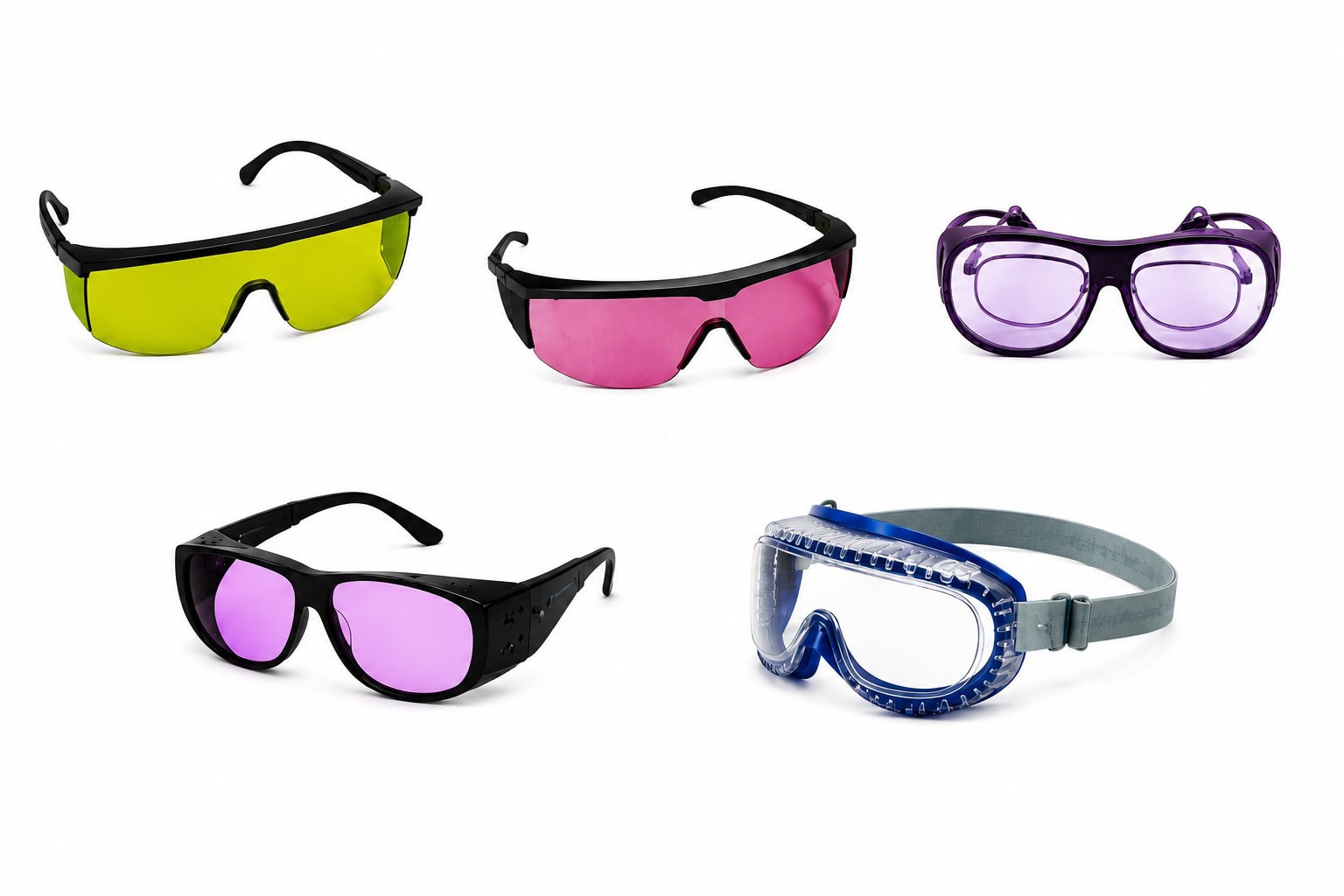
Laser safety eyewear provides an additional layer of protection against accidental exposure to hazardous laser radiation, including reflected beams.
Eyewear must be selected according to the laser wavelength, required optical density, and potential exposure conditions. Factors such as optical density (OD), LB rating, and visible light transmission should be considered when selecting suitable protection.
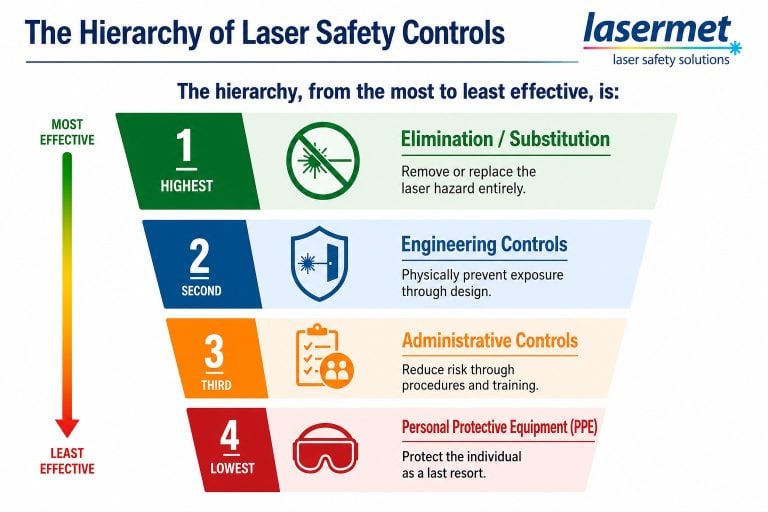
Laser safety eyewear should not be considered the primary way for controlling reflection hazards. Hazardous reflections should first be controlled through appropriate engineering measures and safe working practices.
Laser safety involves more than controlling the direction of the primary beam. Surfaces and objects within the laser working environment can redirect laser radiation and create unexpected exposure hazards.
Highly polished, and glossy surfaces should be considered when working with hazardous lasers. Where appropriate, matte, non-glossy and low-reflectance finishes can help reduce strong specular reflections, particularly when the surface has been selected for the wavelength of the laser being used.
Combined with beam containment, appropriate barriers, beam stops, suitable PPE and a thorough laser safety risk assessment, careful management of reflective surfaces can help create a safer environment for personnel working with or around laser systems.
This article is intended for educational purposes only and should not be considered a formal reference. For detailed guidance on, please consult a laser safety officer or relevant regulatory authorities.