Working with lasers bring tremendous capability – from precision manufacturing and advanced medical procedures to cutting-edge research. But with that power comes real risk. Laser radiation can cause permanent eye damage and severe skin burns in a fraction of a second, which is why a robust, layered approach to laser safety is not optional – it is essential.
At Lasermet, we work with organisations to build laser safety systems that are genuinely effective – not just compliant on paper – whilst also enhancing the user experience – instead of getting in the way of laser use. Central to that is understanding how different control measures compare, and why engineering controls sit at the very top of the hierarchy.
The Hierarchy of Laser Safety Controls
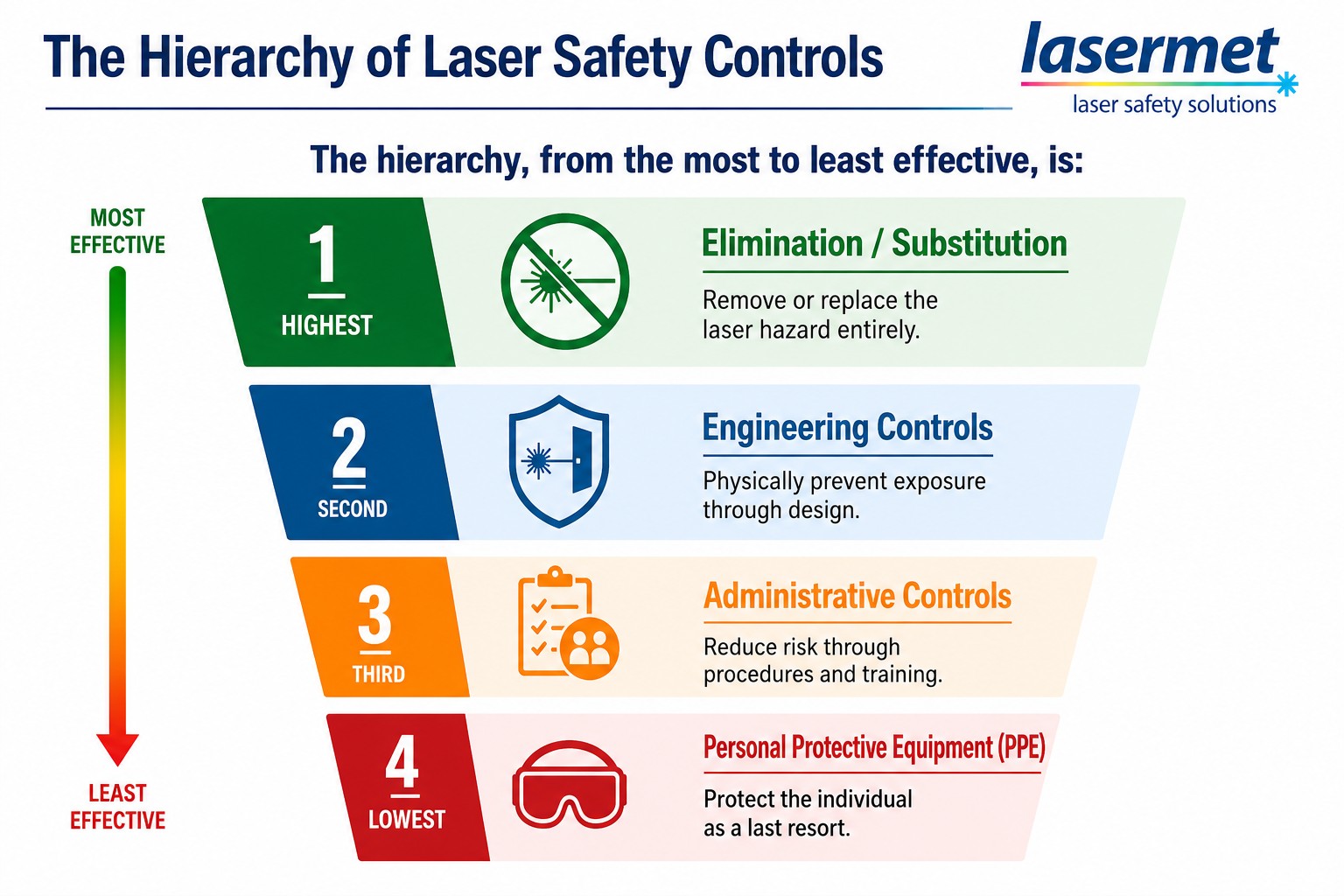
Laser safety is governed by a well-established hierarchy of controls, adapted from broader occupational health and safety frameworks. This hierarchy ranks control measures by their reliability and effectiveness – with the most robust controls at the top and the least reliable at the bottom.
The hierarchy, from the most to least effective, is:
| Rank | Control Type | Principle |
| 1 — Highest (most effective) | Elimination / Substitution | Remove or replace the laser hazard entirely |
| 2 | Engineering Controls | Physically prevent exposure through design |
| 3 | Administrative Controls | Reduce risk through procedures and training |
| 4 — Lowest (least effective) | Personal Protective Equipment (PPE) | Protect the individual as a last resort |
Elimination – where the laser hazard is removed altogether or a less hazardous alternative adopted – is theoretically the most effective. However, in most laser applications, the laser itself is the point of the work, making elimination impractical. This places engineering controls as the most achievable and most effective tier of control in real-world laser environments.
Engineering Controls: The Strongest Form of Control
Engineering controls are physical safeguards built into the laser system or its working environment. Their defining characteristic is that they do not rely on people to remember to use them correctly – they work automatically or structurally to prevent exposure. This makes them far more dependable than administrative measures or PPE.
Key engineering controls include:
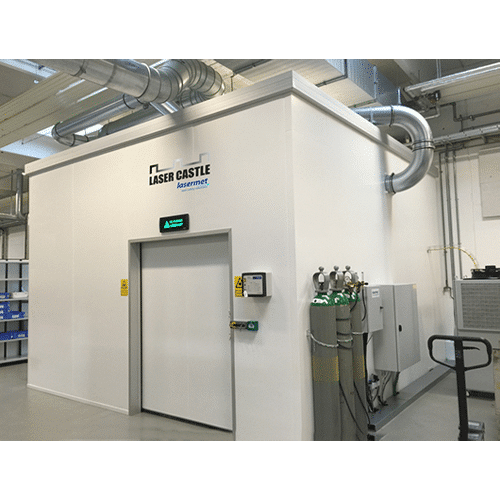
1. Laser enclosures and interlocked housings
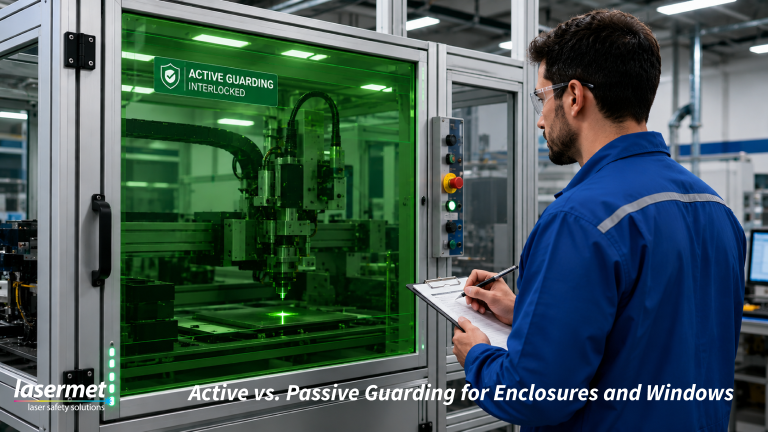
Fully enclosed systems prevent any stray or reflected beams from reaching operators or bystanders. Interlocked access panels shut down the laser automatically if a door or panel is opened during operation. Enclosures should be rated to resist the laser beam for an appropriate length of time, 10s, 100s or 10,000s (depending on the continuity of observation of the system) at the maximum power and minimum possible beam diameter incident on the enclosure. A light tight enclosure is not in itself sufficient for Class 4 lasers. If a passive enclosure cannot resist the laser beam for sufficient time an active laser guard should be installed.
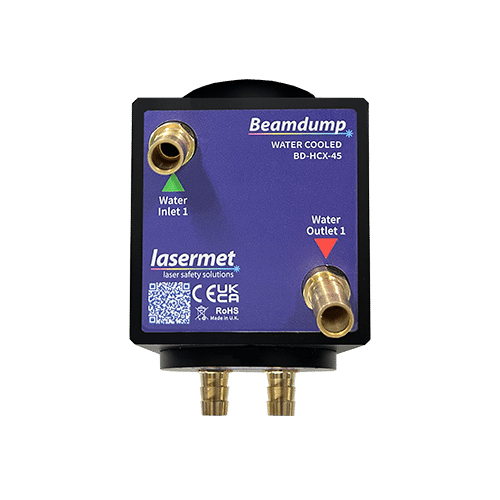
2. Beam stops and beam dumps
Physical stops placed at the end of the beam path absorb laser energy safely, ensuring the beam cannot travel beyond its intended target. These need to be rated to the appropriate power and beam diameter.
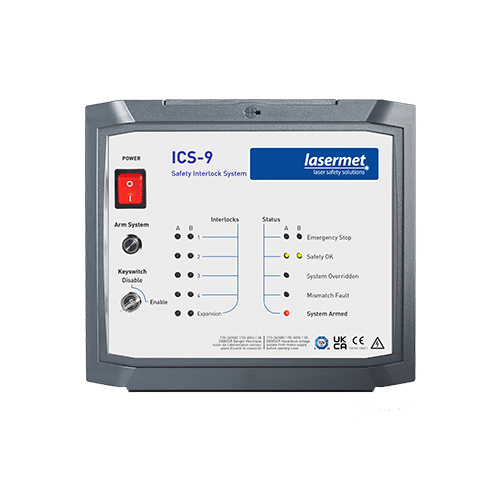
3. Laser Safety Interlock
Interlocked laser controlled areas (LCAs) use door contacts and other safety sensors to render the laser safe if someone enters unexpectedly. These are a core requirement for Class 3B and Class 4 laser environments. The safety integrity of an interlock system is defined by the performance level (PLa – lowest, to PLe – highest) and should be chosen commensurate with the level of risk.
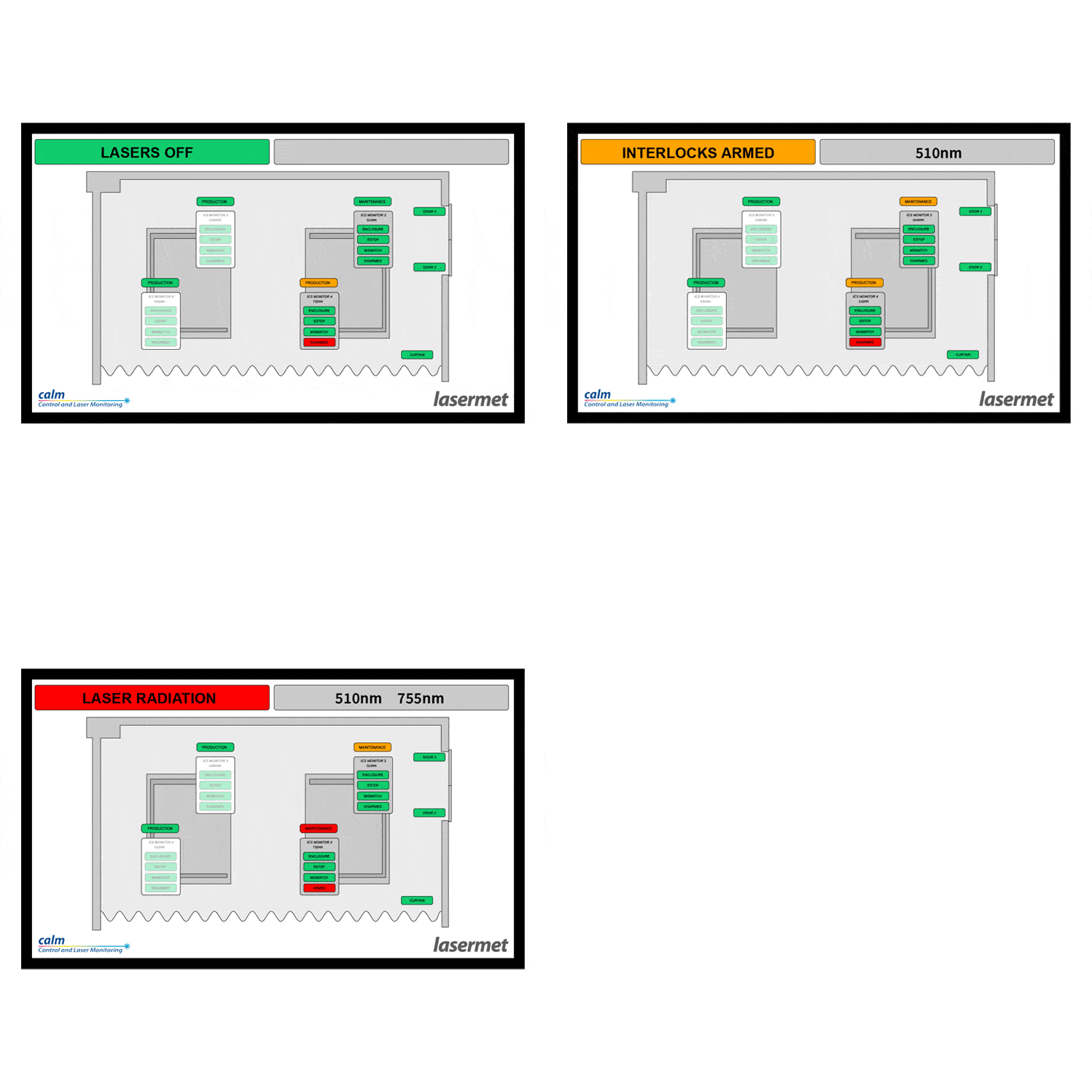
4. Remote firing and viewing systems
Remote operation removes personnel entirely from the beam path, while camera-based viewing systems eliminate the need to look along the beam directly.
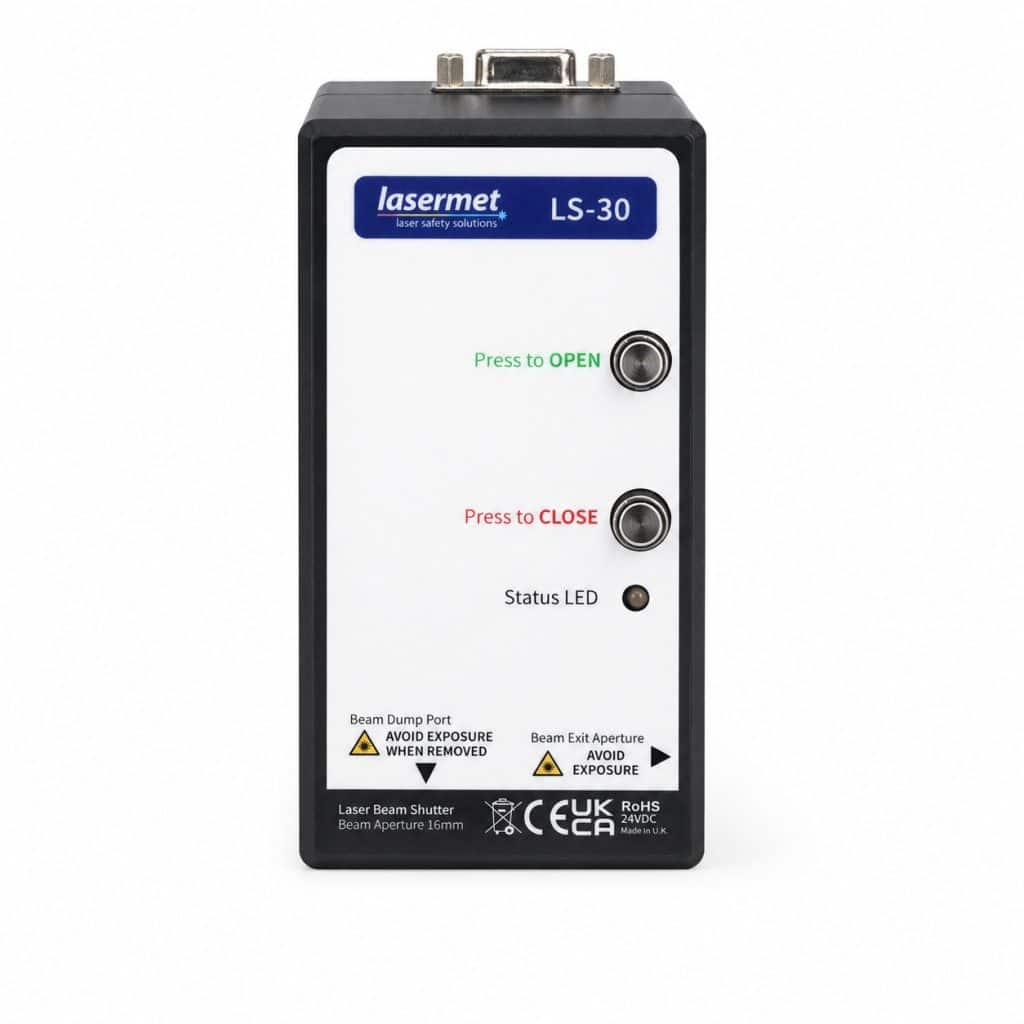
5. Laser safety shutters and attenuators
Shutters are a very useful safety shutdown device typically used in laser labs. They are driven by the interlock system and maintain safety without interfering with the stability of the laser beam, by blocking or deflecting the beam into a separate beam dump. Such devices can also be used to turn off the laser beam when not required, preventing accidental exposure during setup, alignment, or maintenance activities.
6. Laser safety screens and barriers
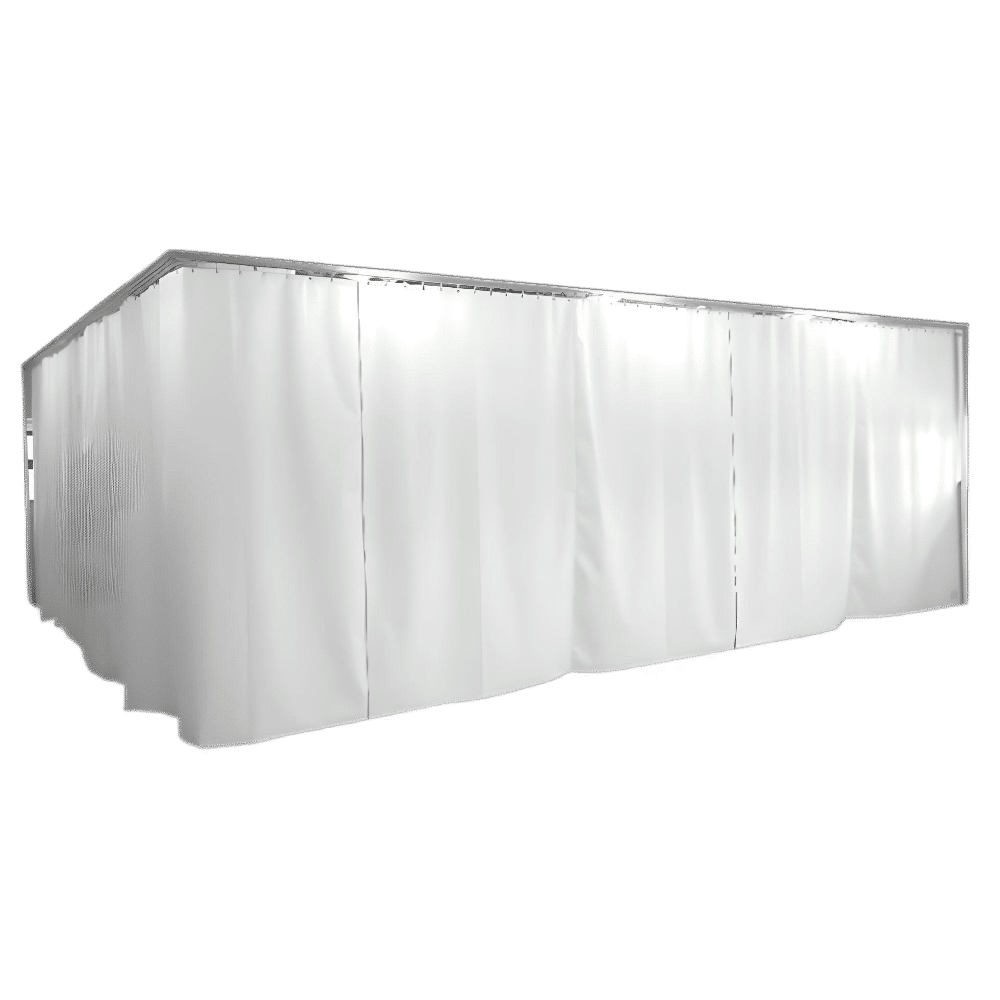
Where full enclosure is not possible, laser resistive barriers rated in a similar manner to enclosures can be used. Beware of optical density (OD) ratings since they do not account for breakdown of the material being used and are rarely the relevant factor for protection from the laser.
Why Engineering Controls Outperform Other Measures
The superiority of engineering controls over administrative measures and PPE comes down to one fundamental principle: they remove the human variable.
Engineering Control Versus Administrative Control
Administrative controls — standard operating procedures, training programmes, warning signs, access restriction policies — are valuable, but their effectiveness depends entirely on people consistently following them under all circumstances. Fatigue, distraction, time pressure, complacency, and staff turnover all erode their reliability over time. An interlock that physically prevents laser activation, by contrast, works equally well whether it is the first day of operation or the thousandth.
Engineering Control Versus Personal Protective Equipment
Laser safety eyewear is often the most visible laser safety measure in a workplace — and it is genuinely important as a supplementary layer of protection. However, relying on PPE as a primary control is fraught with limitations:
- PPE must be worn correctly every time it is needed — a single lapse can result in a permanent injury.
- Laser eyewear must be correctly specified for the laser wavelength and power in use — incorrect eyewear may provide no meaningful protection.
- Eyewear can be damaged, degraded, or misidentified without the user being aware.
- PPE protects only the wearer — it does not prevent the beam from reaching others in the vicinity.
Engineering controls, by contrast, protect everyone in the environment simultaneously, without any reliance on individual behaviour or correctly specified equipment.
Applying Engineering Controls in Practice
Engineering controls should be considered at the earliest stage of laser system design and facility planning — not added retrospectively once a system is already in use. A well-designed installation will typically incorporate several complementary engineering measures, forming a layered approach that addresses different failure modes.
Practical steps organisations should take include:
- Conducting a thorough laser risk assessment to identify all potential exposure pathways, including reflections and scatter.
- Selecting laser equipment with appropriate built-in safety features for the intended application.
- Designing or specifying laser controlled areas with properly rated screening, interlocking, and signage.
- Regularly inspecting and testing all engineering safety systems to confirm they remain functional — interlocks that fail silently provide no protection.
- Choosing a high integrity interlock system (eg PLe) can almost elimate the possibility of loss of the safety function.
- Documenting all engineering controls as part of the site’s laser safety file.
Laser Safety Interlock with ICS-9 Product Deep Dive Series
Part 1 — What is a Laser Safety Interlock System?
Part 2 — ICS-9 Laser Interlock System Walkthrough
A Complete Safety Programme: Engineering Controls Supported by Other Measures
Emphasising engineering controls as the strongest form of protection does not mean other measures are unnecessary. A truly effective laser safety programme operates across all tiers of the hierarchy simultaneously. Administrative controls — including appointment of a competent Laser Safety Officer (LSO), written safe operating procedures, and thorough operator training — provide the framework within which engineering controls operate. PPE covers residual risks and provides a final safety net.
The critical point is one of priority: when considering how to control a given laser hazard, the question should always begin with what engineering measures can be put in place. Administrative controls and PPE should follow, not lead.
Regulatory Context
This approach is consistent with the requirements of ANSI z136.1 (Safe use of lasers), IEC 60825-1 (Safety of Laser Products – Part 1 : Equipment classification and requirements), IEC 60825-4 (Safety of laser products – Part 4 : Laser guards), IEC TR 60825-14 (Safety of laser products – Part 14 : A Users Guide) and ISO 13849-1 (Safety of machinery – Safety related parts of control systems – Part 1 : General principles for design), which are the relevant laser safety standards in the US and worldwide.
For Class 3B and Class 4 lasers in particular — which present the most significant risks to eyes and skin — engineering controls are not merely best practice. They are an expected baseline for any responsible laser operation.
How Lasermet can help
Lasermet works with laser users and laser product manufacturers all over the world to design, manufacture and install safety systems for lasers which meet the highest levels of quality and safety whilst also enhancing the user experience to improve efficiency and useability of their laser resources.
This allows users and manufacturers to focus on what they do best, whether that is innovative R&D, life saving surgery, high quality manufacturing, improving their laser product or simply selling more of it.