Laser welding has become an essential manufacturing process across industries such as automotive, aerospace, defense and industrial manufacturing. Its precision, speed, and repeatability make it ideal for modern production environments.
However, laser welding systems are almost universally classified as Class 4 lasers which introduces severe risks compared to standard arc welding. The infrared laser beams used in laser welding are highly concentrated and often completely invisible to the human eye which means that a rigorous safety strategy is non-negotiable.
Understanding the Core Hazard of Laser Welding
To effectively mitigate risks, operators and safety managers must understand exactly what they are fighting against:
- Invisible Beam Hazards: Most fiber laser welders operate in the near-infrared spectrum (typically 900 nm to 1100 nm). The beam is completely invisible, meaning workers cannot see a stray or reflected beam until the damage is already done.
- Specular and Diffuse Reflections: Highly reflective materials like aluminum, copper, and brass can act like mirrors. A specular (mirror-like) reflection can redirect a dangerous amount of laser energy across a room, creating a Nominal Hazard Zone (NHZ) that spans dozens of meters.
- Laser-Generated Air Contaminants (LGACs): The intense heat of a laser vaporizes metals, creating ultra-fine particulate plumes and toxic fumes that pose severe respiratory risks if left unmanaged.
- Fire Risks: Class 4 lasers will instantly ignite combustible materials, solvents, or plastic debris caught in the beam path or its reflection cone.
- Electrical and Mechanical Hazards: Laser welding systems often incorporate high-voltage power supplies, industrial robots, automated handling equipment which are risks other than the laser itself.
Engineering Controls for Laser Welding
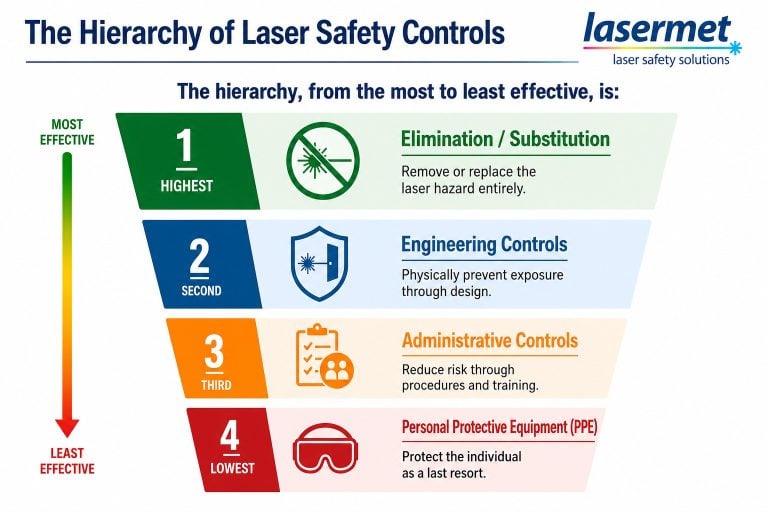
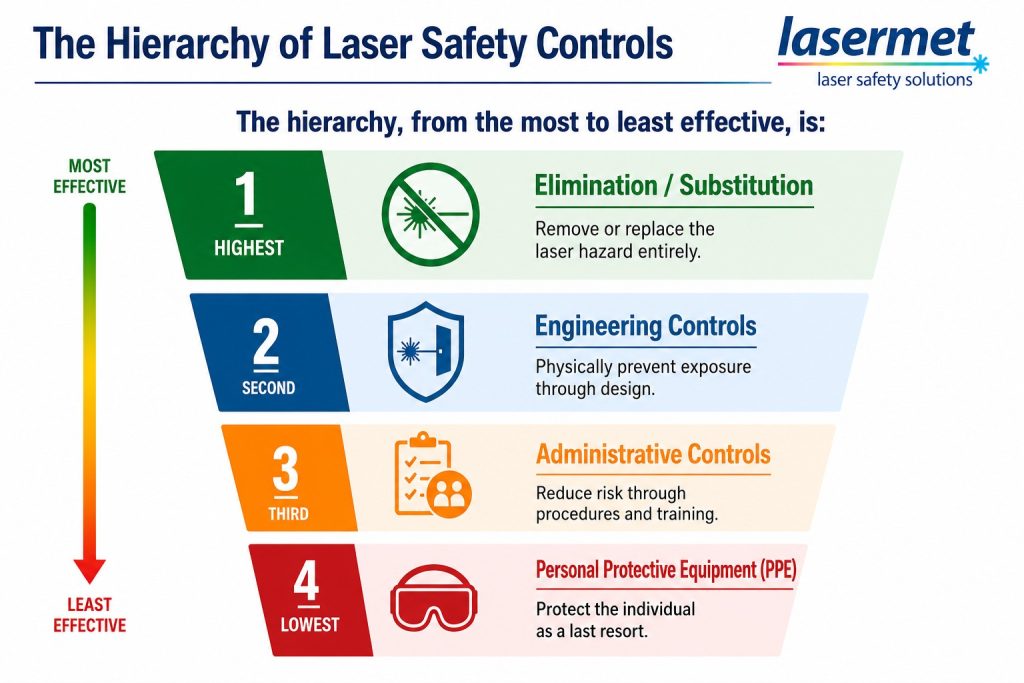
Relying entirely on personal protective equipment (PPE) is a dangerous safety flaw. True protection begins with engineering controls designed to isolate the hazard.
Engineering Controls: The Strongest Form of Control
Engineering controls are physical safeguards built into the laser system or its working environment. Their defining characteristic is that they do not rely on people to remember to use them correctly – they work automatically or structurally to prevent exposure. This makes them far more dependable than administrative measures or PPE.
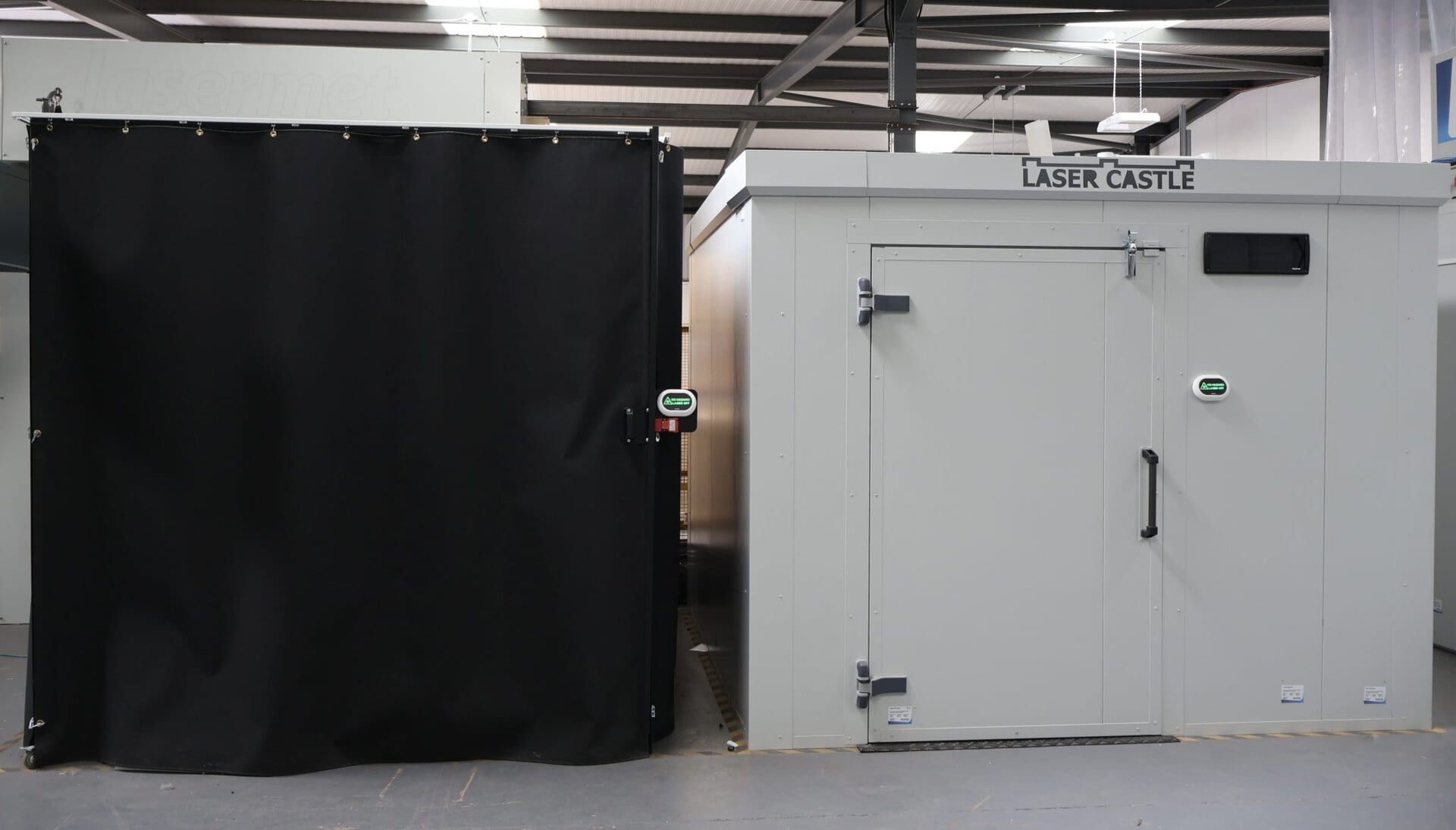
Establish a Laser Controlled Area (LCA)
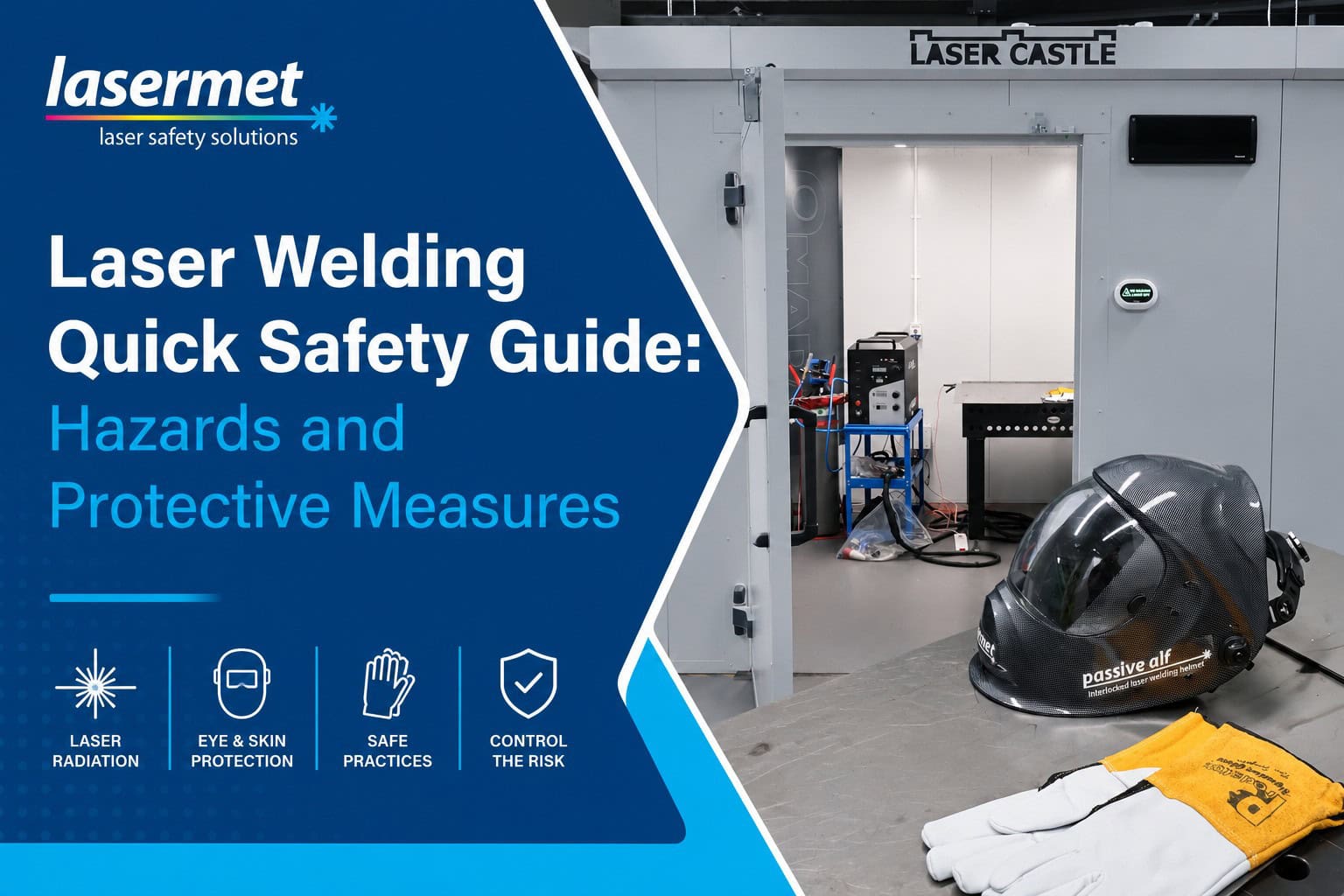
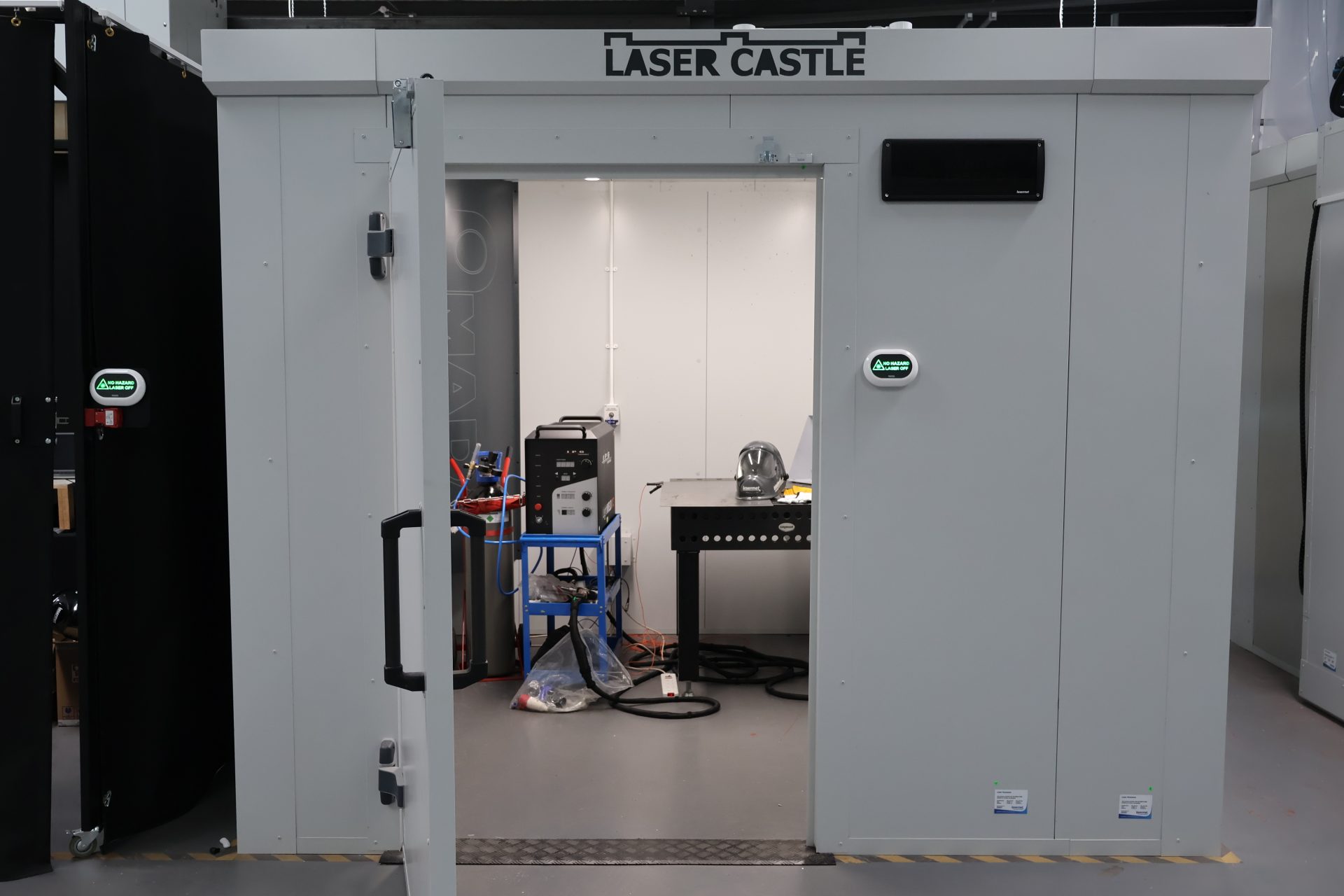
A Class 4 laser must never be operated in an open workshop. It must be completely contained within a designated Laser Controlled Area.
- Laser Safety Enclosures: Use certified laser-blocking enclosures and curtains rated to withstand the specific wavelength and power of your laser.
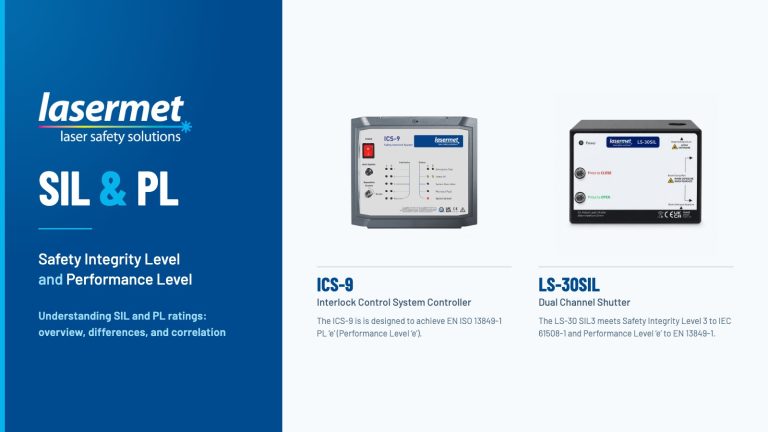
- Laser interlock Systems: All entry points to the enclosure must be tied to a laser interlock system. If a door is opened during operation, the interlock must instantly terminate or isolate the laser beam, preventing accidental exposure to passerby.
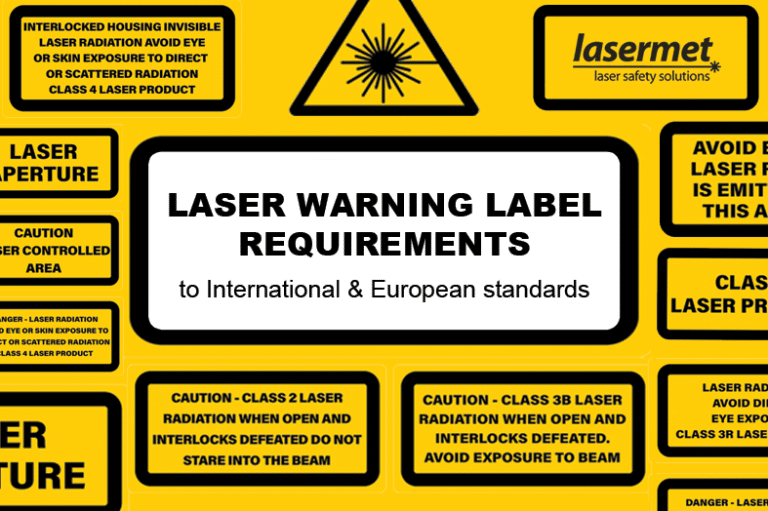
- Illuminated Warning Signs: Conspicuous, dynamic warning signs must be placed outside the enclosure to indicate the laser’s status (e.g., “Laser Armed” vs. “Safe to Enter”).
Dedicated Personal Protective Equipment (PPE) for Laser Welding
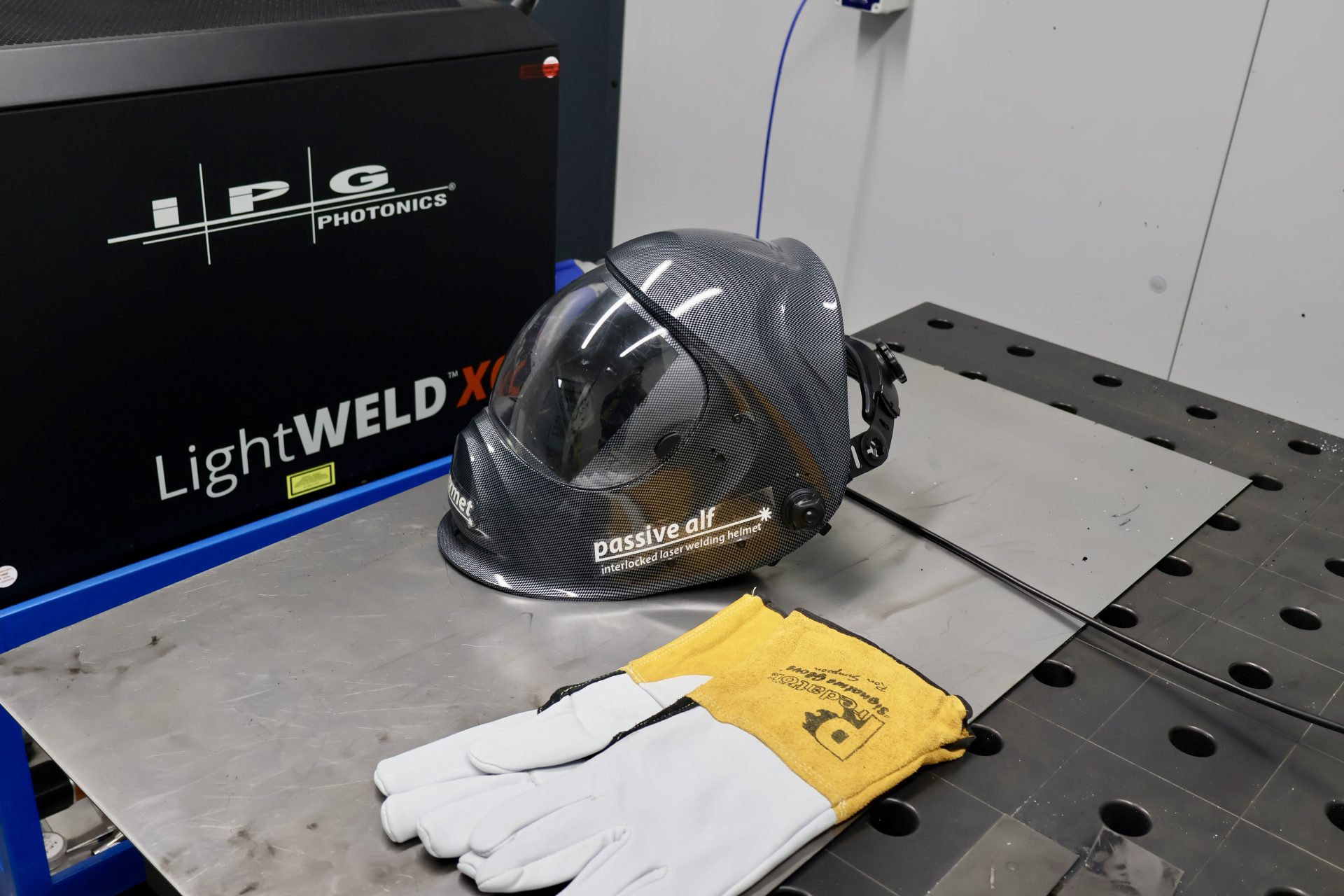
Standard welding helmets and shades do not block laser radiation. In fact, standard arc welding PPE can be melted or penetrated by a Class 4 laser in fractions of a second.
| PPE Item | Requirement | Why It Matters |
| Laser Welding Helmet | Specialized helmet worn over laser safety glasses. | Blocks both the intense visible plasma glare (UV/IR) and offers full-face structural protection against stray laser strikes. |
| Flame-Resistant Clothing | Heavy, non-reflective, tightly woven natural fibers (leather, heavy cotton, or specialized FR synthetic blends). | Synthetics melt onto skin; skin must be completely covered to prevent rapid laser burns. |
Administrative Controls and Training
Even the best equipment fails without a culture of safety.
- Appoint a Laser Safety Officer (LSO): Every facility utilizing Class 4 lasers should have a designated LSO responsible for overseeing risk assessments, ensuring compliance, and verifying safety protocols.
- Operator Training: All personnel must be explicitly trained on the specific mechanics of the laser system, hazard awareness, and emergency shutdown procedures.
Laser welding offers tremendous advantages in modern manufacturing, but safety must always remain a priority. By understanding the hazards and implementing appropriate protective measures, organizations can create safer working environments while maximizing the benefits of laser technology.
Whether installing a new laser welding cell or upgrading an existing system, investing in effective laser safety controls is essential for protecting both personnel and operations.