Our team attended the 7th Annual Laser Safety Vendor Fair at Stanford University, where we showcased our range of laser beam shutters.
We noticed that there was still some confusion about how laser beam shutters work, so we thought it would be helpful to write this article explaining the basics.
What is a laser beam shutter and how does it work?
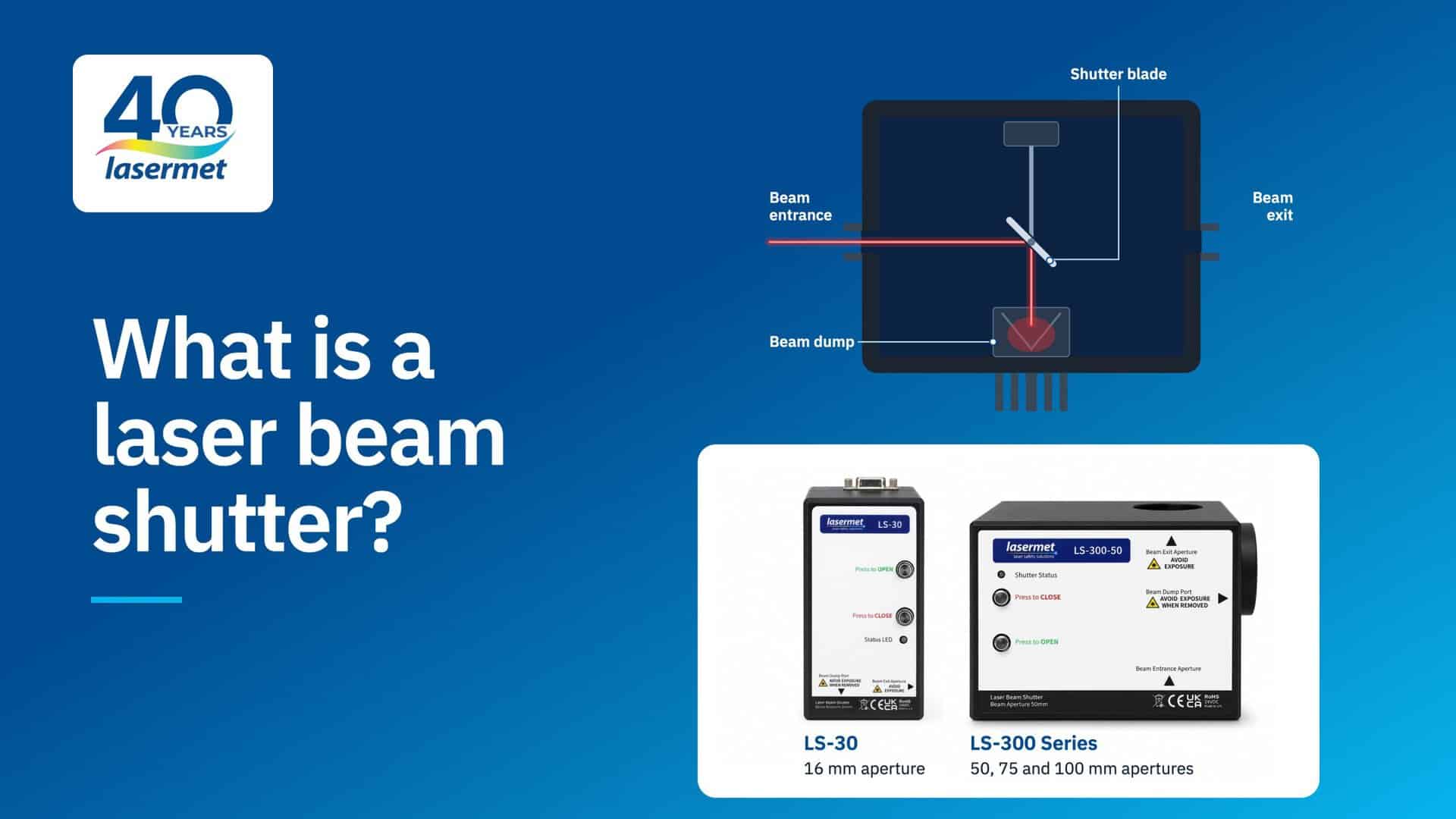
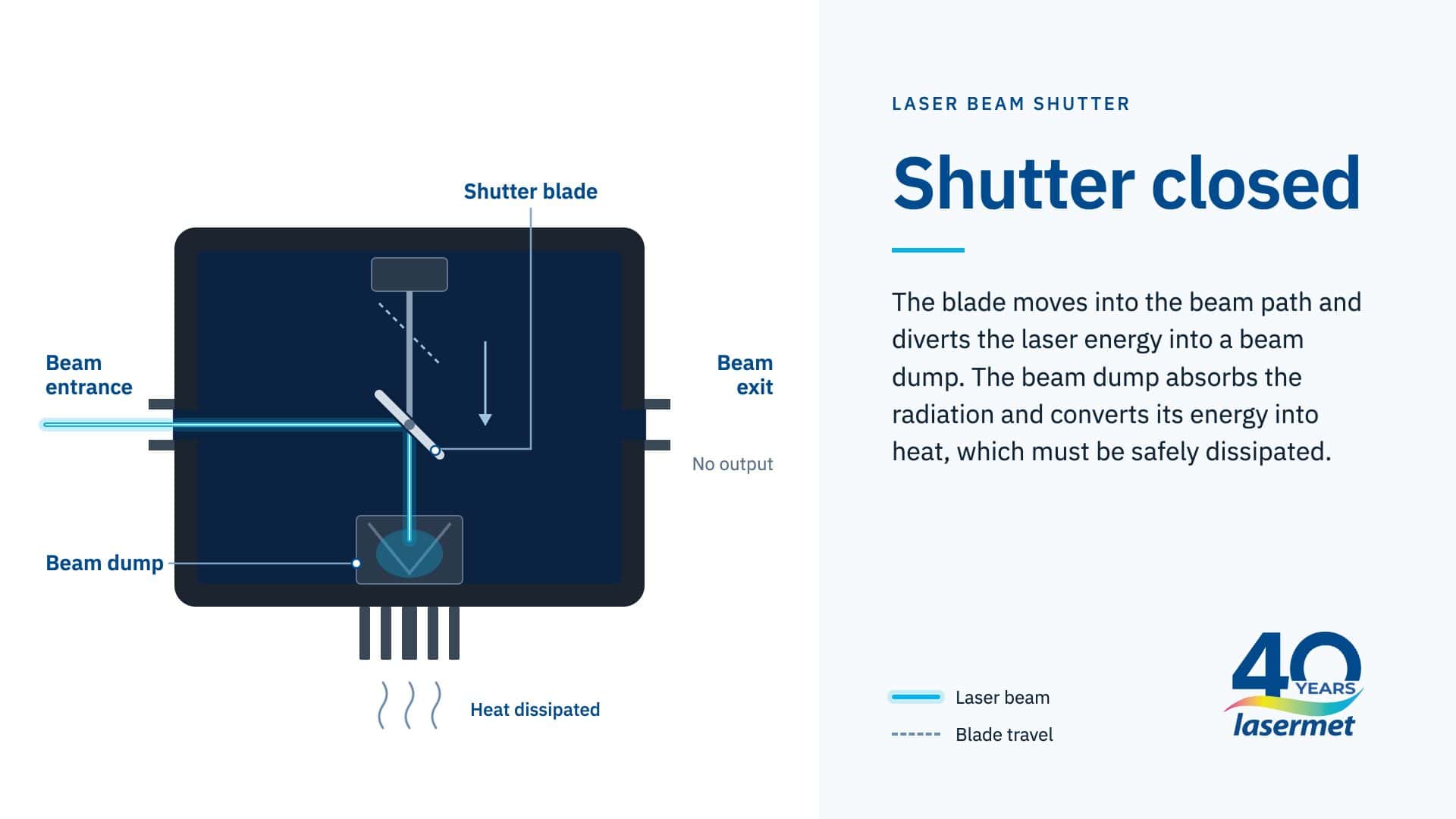
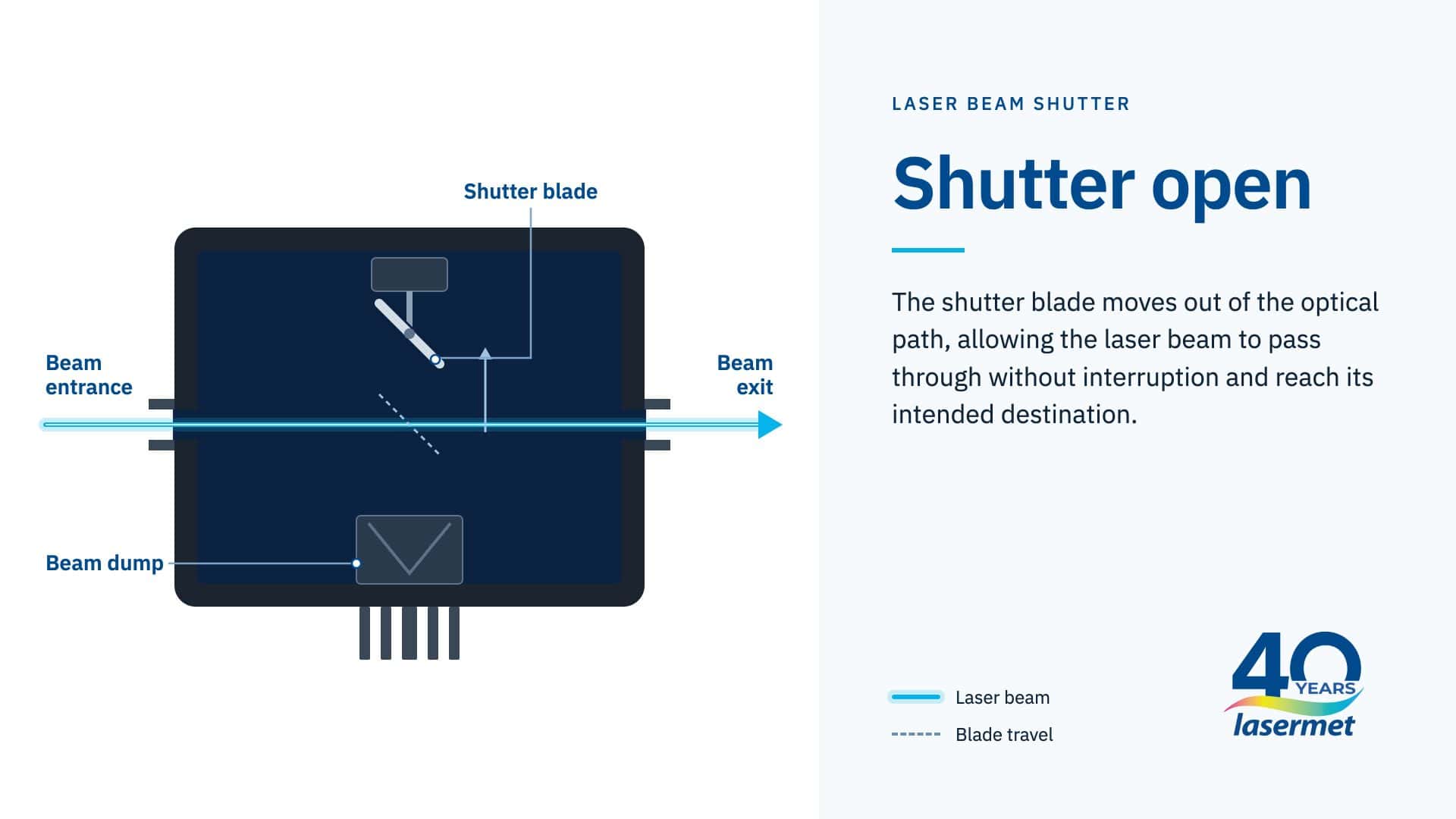
At its core, the main function of a laser beam shutter is to block or redirect a laser beam into an internal beam dump or external beam dump.
- When the shutter is closed, a blade redirects the beam into its internal beam dump. For higher powered lasers, the beam is diverted into an external beam dump.
- When the shutter is open, the blade moves out of the beam path allowing the laser beam to pass through.
Why do you need a laser beam shutter?
The the short answer is that a beam shutter safely controls the laser beam without having to turn off the laser source itself.
Here are the common reasons why you need a laser shutter:
- Someone needs to enter the laser area. Doors get opened for deliveries, maintenance and visitors. An interlocked shutter blocks the beam the instant a door opens, so nobody walks into a live Class 4 beam.
- The laser has to stay on. Many lasers need time to warm up and stabilize, and frequent power cycling wears them out. A shutter blocks the beam in milliseconds while the laser keeps running, ready to resume work straight away.
- Alignment and set-up work. Technicians often work close to the beam path while adjusting optics. Closing the shutter between steps keeps the beam contained while hands and faces are near the optics.
- An emergency. When an emergency stop is pressed, the shutter drops into the beam path without needing power, giving a fast, dependable shutdown of the hazard.
- Shared lasers and multiple workstations. One laser often feeds several stations or users. Shutters let each beam path be opened or closed independently, without interrupting anyone else.
- Unattended or automated processes. In production cells, shutters ensure the beam only reaches the workpiece during the process cycle and is blocked at all other times.
- Compliance and insurance. Laser safety standards expect engineering controls for higher-class lasers, and a Laser Safety Officer will look for them in a risk assessment. A properly specified shutter and interlock system helps demonstrate that the hazard is controlled by design, not by good behavior alone.
Lasermet’s Range Laser Shutters
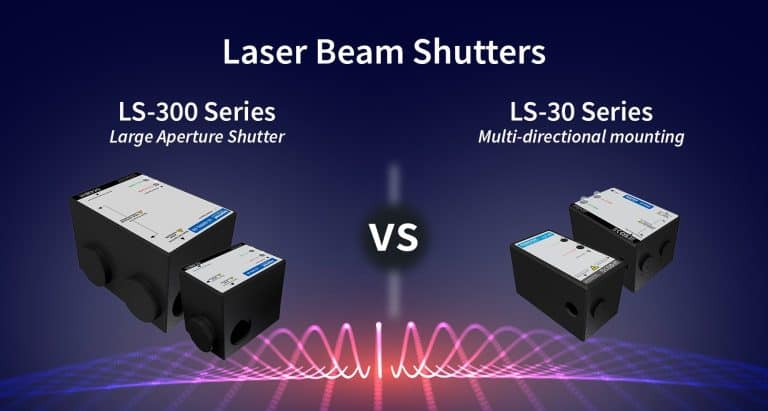
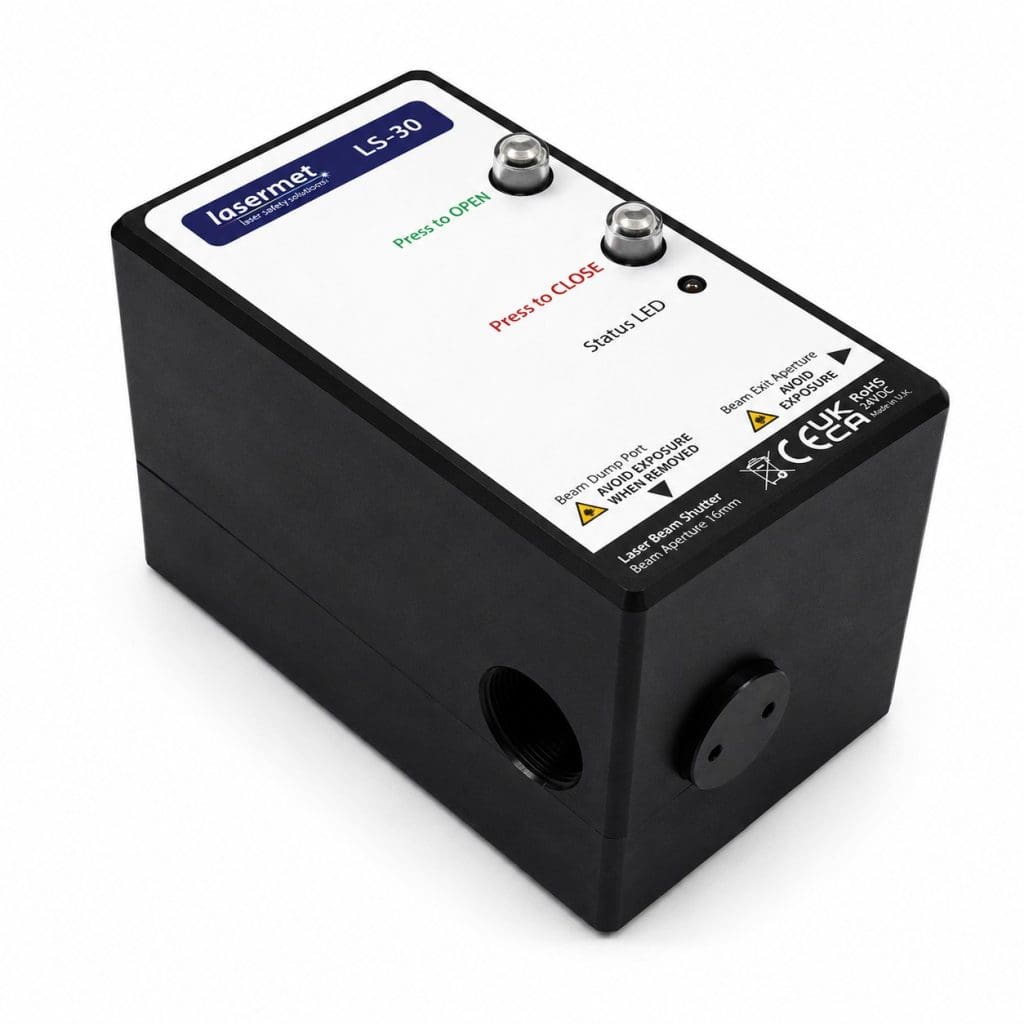
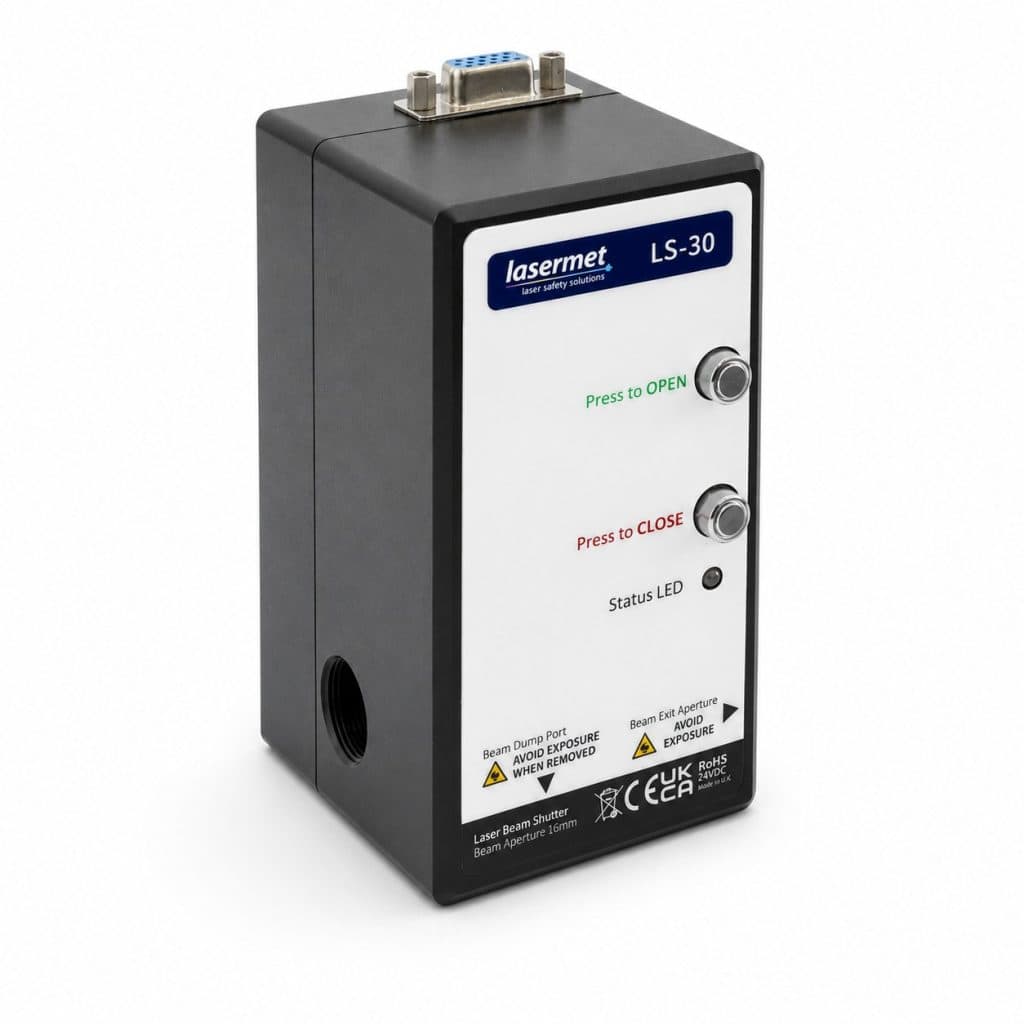
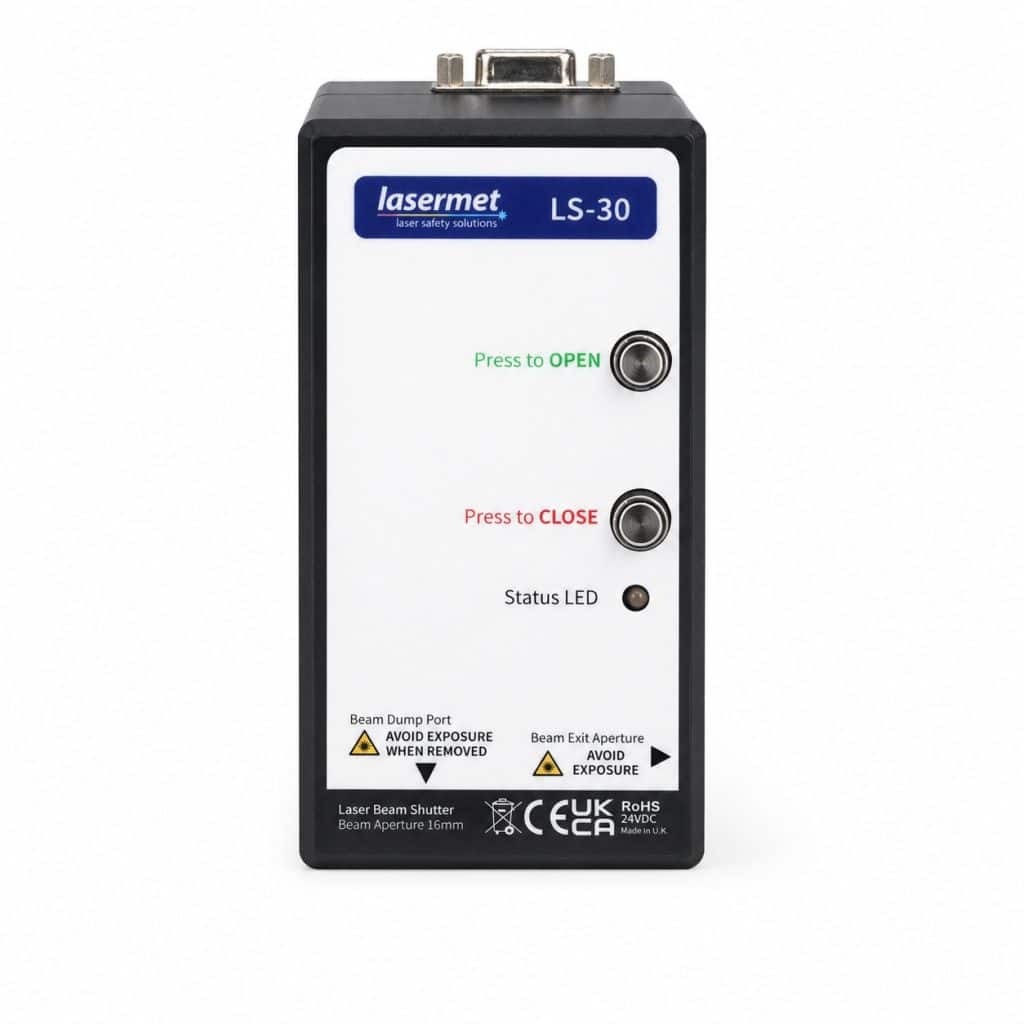
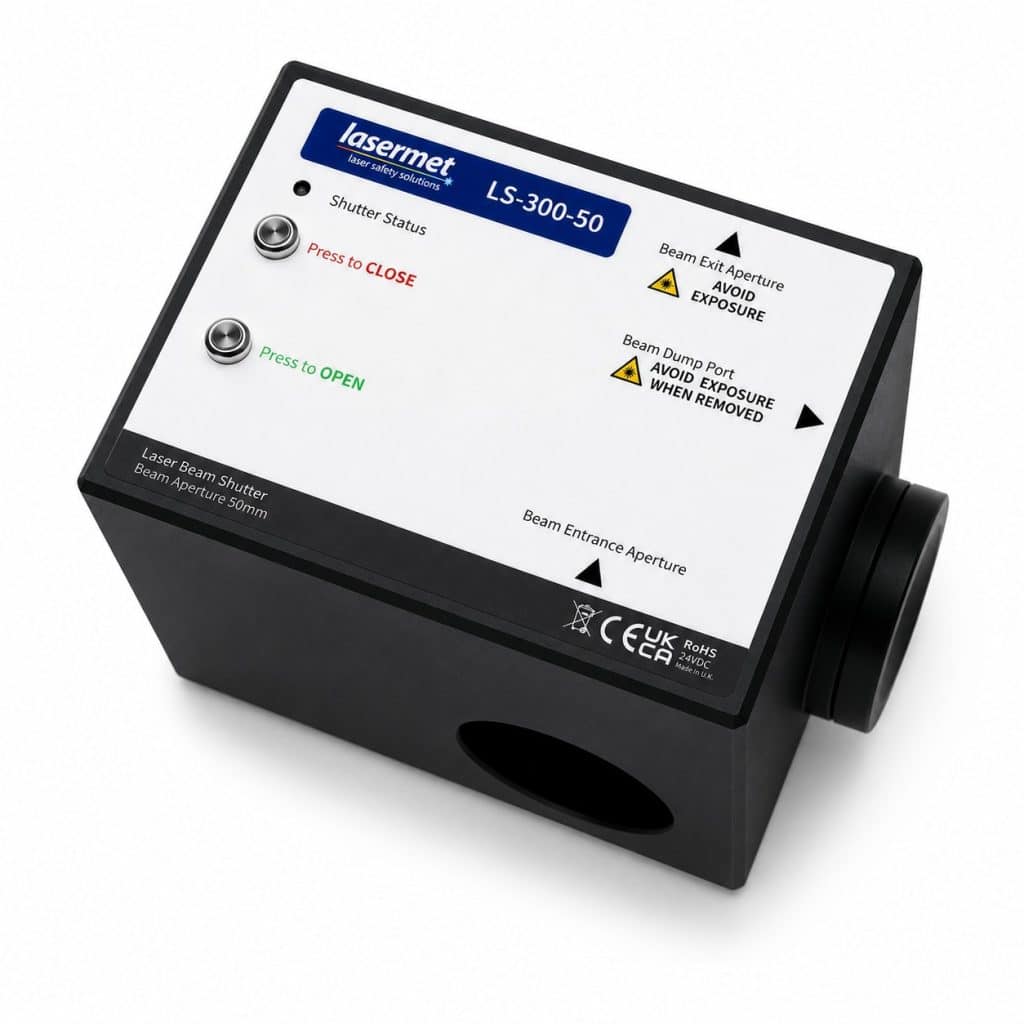
Lasermet’s new generation of laser shutters are the LS-30 and LS-300.
The LS-30 are designed for 16mm apertures while the LS-300 are designed for larger apertures 50mm above.
LS-30 Laser Shutters


LS-300 Laser Shutters


| Model | Channels | Aperture | Blade and mounting | Safety rating |
|---|---|---|---|---|
| LS-30 | Single | 16 mm | Spring-loaded, any orientation | PL ‘c’ (EN ISO 13849-1) |
| LS-30SIL | Dual | 16 mm | Spring-loaded, any orientation | SIL 3 (IEC 61508-1), PL ‘e’ |
| LS-300-50 | Single | 50 mm (2 in) | Motor-driven, horizontal beam path | Standard |
| LS-300SIL-50 | Dual | 50 mm (2 in) | Motor-driven, horizontal beam path | SIL 3, PL ‘e’ |
| LS-300-75 | Single | 75 mm (3 in) | Motor-driven, horizontal beam path | Standard |
| LS-300SIL-75 | Dual | 75 mm (3 in) | Motor-driven, horizontal beam path | SIL 3, PL ‘e’ |
| LS-300-100 | Single | 100 mm (4 in) | Motor-driven, horizontal beam path | Standard |
| LS-300SIL-100 | Dual | 100 mm (4 in) | Motor-driven, horizontal beam path | SIL 3, PL ‘e’ |
Conclusion
A laser beam shutter is a simple idea with a big job: keep the laser running, but make sure the beam only goes where it should, when it should. Choose one that fails safe, matches your power and beam size, and carries the safety rating your risk assessment demands.
We wrote a deep dive on laser shutters, read our blog post below.