Override by definition means to bypass, replace, or take control over an existing setting, rule, or action. In everyday life, we use overrides to allow human judgment to take precedence over automated rules when exceptions or special circumstances arise. This article provides insight into Lasermet’s override feature, explaining how an override is incorporated into a laser system and why it is essential to safe, flexible, and reliable system operation.
Lasermet incorporates an override feature in all its safety systems to provide controlled flexibility during commissioning, testing, maintenance, and fault recovery. This ensures that approved personnel can safely intervene when standard automated responses are insufficient, while still maintaining compliance, system integrity, and a high level of operational safety.
Incorporate these Lasermet products into laser safety systems for an override feature: the ICS-KP-23 Access Keypad and Interlock Override Pushbutton.
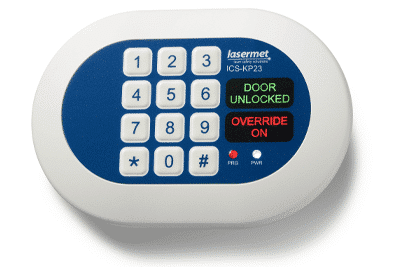
Access Keypad
ICS-KP-23 Access Keypad
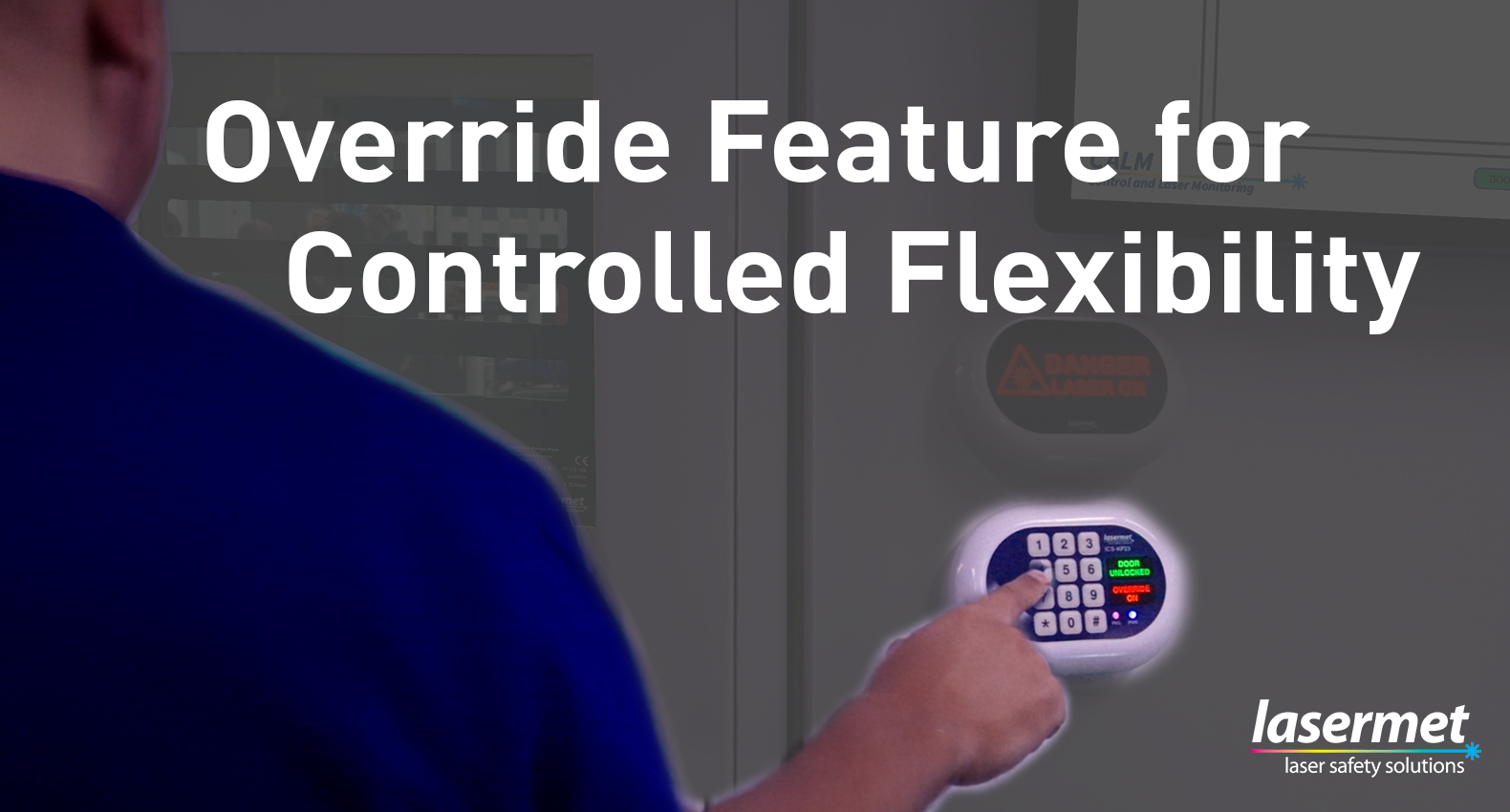
Lasermet’s Access Keypad with Override, ICS-KP-23 is intended to be used in conjunction with Lasermet’s Laser Interlock® Systems. The keypad inhibits access to hazardous areas by unauthorised persons. It works by masking the signal from the door sensor for a time limit so you can open the door without tripping the system (door status remains closed).
Global Override
Overrides all door switches / maglocks
Local Override
Overrides only a selected door switch / maglock
Choosing between a global and local override depends on the kind of operation and safety level that an installation requires. For higher safety level environments such as hospitals or laboratories, a local override would be a better choice whilst a global override is the more flexible choice for maintenance or for faster access to multi-entry labs.
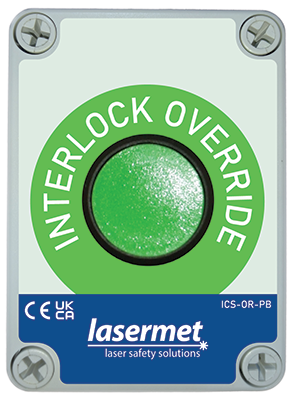
Interlock Override Push Button
ICS-OR-PB Override Pushbutton
The Interlock Override is a push button that is wired into the interlock control system and typically installed inside the laser cabin or enclosure. It performs the same function as the Access Keypad sans the need to input a code, which is unnecessary when persons are leaving the hazard area.
When the button is pressed, the door switches and any maglocks are overridden (global or local) allowing the door to be opened without switching off the laser.
Lasermet’s equipment use override functions which are adjustable to suit your needs. Users can adjust the override duration, select between global or local override, and implement any number of special logic rules which must be satisfied before doors are overridden.
Typical Installation of an Override Feature
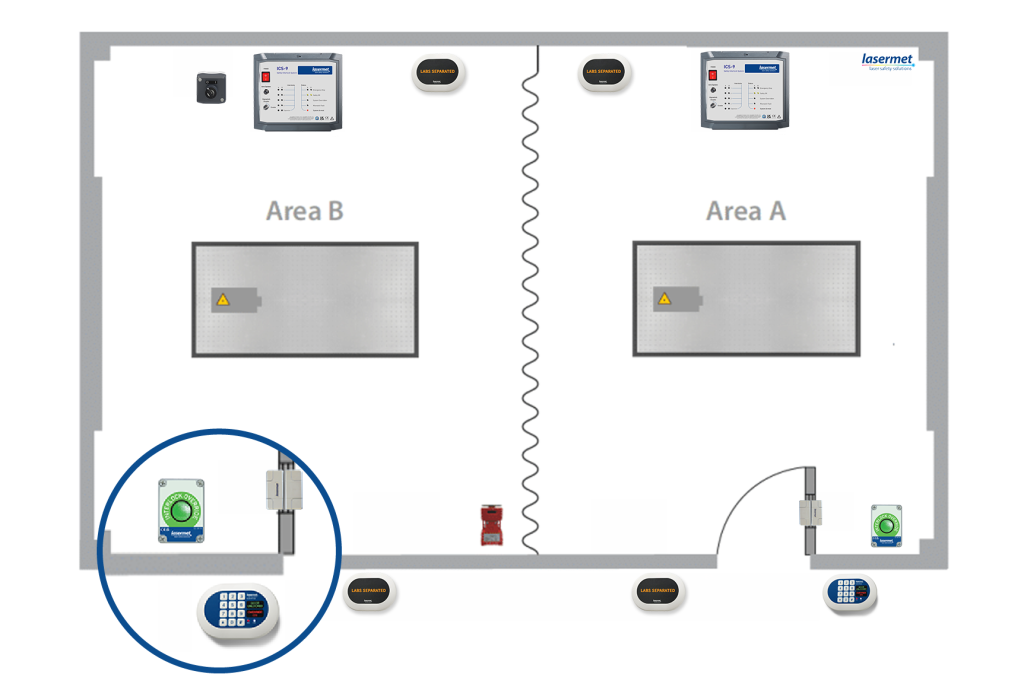
Lasermet incorporates an override feature for laser safety installations. As shown in the layout below, the Interlock Override Button is installed inside the laboratory near the door allowing personnel to bypass the interlocked door and exit or enter the room without interrupting ongoing operation while the Access Keypad is installed outside the laboratory requiring authorised personnel to input a passcode to enter the room.
How does Lasermet Incorporate an Override Safely?
Restrictions
Only approved / sanctioned users can access the hazard area by using the correct Access Keypad passcode.
Temporary
Override feature only lasts for 15 seconds. If the door remains open after 15 seconds, the interlock system will automatically go back to safe state with the lasers disabled.
Clear Audio and Visual Indications
A ‘Door Overridden’ warning message is incorporated into the Access Keypad, and a audible alert will sound while the override is in place.
Importance of Override Feature in Interlock Systems
Operational Continuity
Prevents downtime when a system malfunctions or behaves incorrectly and allows trained personnel keep operations running while an issue is being fixed.
Testing, Maintenance and Troubleshooting
Essential for system setup, calibration, diagnostics, and maintenance and allows safe verification without triggering normal restrictions unnecessarily.
Safety and Emergency Response
Allows immediate action when automated systems could cause harm or delay.
In conclusion, an override provides essential operational flexibility, allowing systems to function effectively in non-standard, maintenance, or emergency conditions. It ensures continuity of operation while still preserving safety by enabling qualified personnel to apply informed human judgment when automated controls are insufficient. When properly designed, restricted, and monitored, an override strikes a critical balance between automation and safety, ensuring systems remain both reliable and adaptable without compromising control or compliance.