The Complete Guide to Laser Shutters
Laser safety shutters are one of those components that tend to be overlooked until something goes wrong. They sit quietly as part of a laser system, but they play a critical role in making sure a laser only emits radiation when it is actually safe to do so. In many setups, they are the final physical barrier between a high-power laser beam and the outside world.
Beam shutters, also often called beam attenuators, were first introduced during the 1970s when the early laser safety standards were codified. Even in the modern day, the use of laser beam shutters for high-powered lasers is still required.
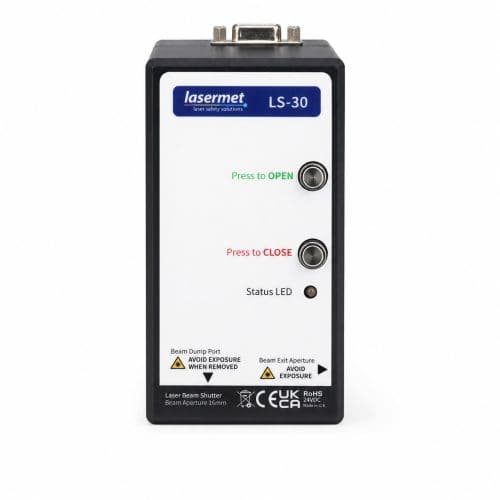
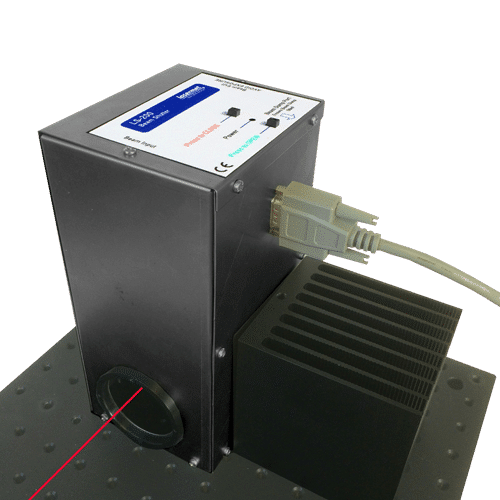
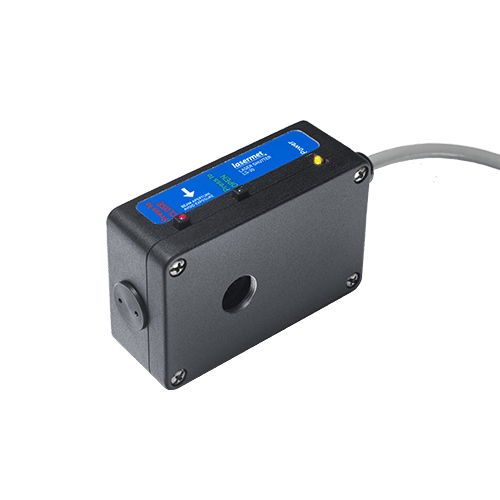
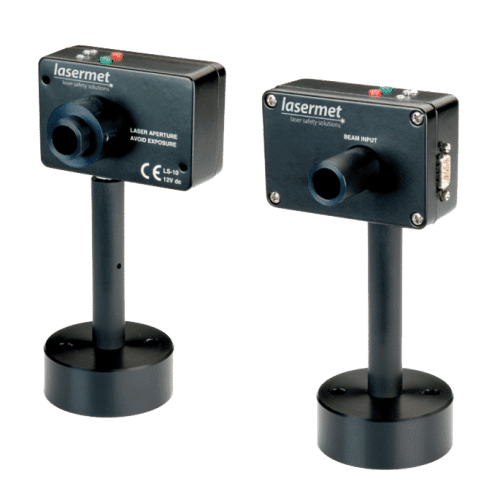
At a basic level, a laser shutter is a mechanical device that blocks or allows the passage of a laser beam. It usually sits somewhere along the beam path either inside the laser head, in the beam delivery system, or at the point where the beam exits into a workspace. When the shutter is closed, the beam is physically obstructed. When it opens, the beam is allowed through.
This might sound simple, but in terms of laser safety, there are many finer points that need to be considered when selecting a laser beam shutter.
How Laser Shutters Work
Most laser safety shutters are electrically controlled mechanical barriers. Internally, they typically consist of:
- A metal or coated blocking plate designed to block the laser beam.
- An actuator, such as a solenoid or motor, that moves the blocking plate.
- A return mechanism, usually a spring, that forces the shutter into the safe (closed) position when power is removed.
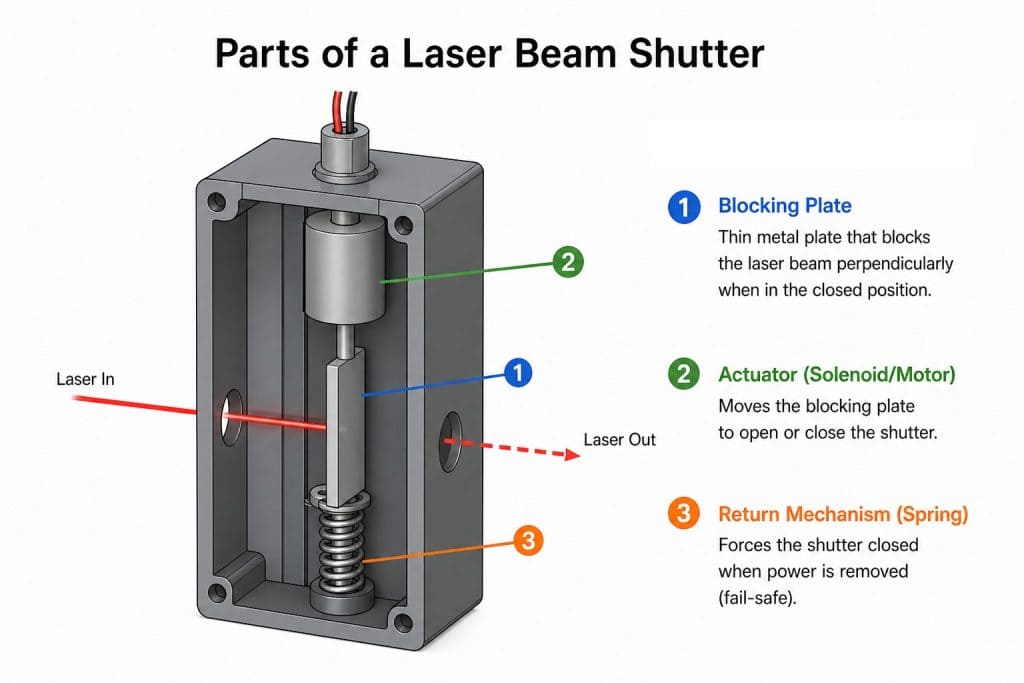
The most important design principle when it comes to laser beam shutters is fail-safe operation. In most safety-rated systems, the shutter is designed to be normally closed. It only opens when it receives an electrical signal confirming that all safety conditions are satisfied. If power is lost, a cable is disconnected, or a safety circuit is triggered, the shutter automatically returns to the closed position. This means the default state of the system is safe and remains safe even during a fault occurring.
In more advanced installations, laser shutters are integrated into safety interlock systems. These interlock systems monitor everything in the laboratory or work area including door switches, emergency stop buttons, active guarding panels, and control signals from machines or robots. If any part of the interlock system is detected to be in an unsafe state, it will automatically cut power to the beam shutter (shutter closes) and render the system safe.
CHECK OUT OUR VIDEOS!
Why Laser Beam Shutters are Needed
Lasers, especially Class 3B and Class 4, can cause permanent eye damage or serious burns in a fraction of a second. In many industrial and research environments, the beam is invisible, high-powered, and extremely dangerous. Because of this, laser safety relies on multiple layers of protection. A shutter is one of the most important of those layers because it provides physical beam containment.
IMMEDIATE LASER BEAM TERMINATION
Electronic controls can fail. Software can crash. Signals can be delayed. A mechanical laser shutter provides a fail-safe direct, physical method of stopping the beam within milliseconds. When it closes, the beam is blocked no matter what the rest of the system is doing.
PROTECTION DURING SETUP AND MAINTENANCE
Many accidents happen not during normal operation, but during alignment, servicing, and system configuration. Using a laser interlock shutter is an extra layer of safety to prevent accidental exposure to hazardous laser beams during system setup and maintenance activities.
COMPLIANCE WITH SAFETY STANDARDS
Laser safety standards require some form of beam termination or interlocked protective housing for higher class lasers. In many systems, a shutter is the simplest and most reliable way to meet those requirements. Without a shutter, it becomes much harder to demonstrate that the laser can be safely disabled when an unsafe condition is detected.
FAIL-SAFE CONTROL OF HAZARDOUS ENERGY
In safety engineering, systems should always default to a safe state when something goes wrong. For lasers, that means the beam should be blocked unless conditions are proven safe. A properly designed shutter enforces that principle. If the interlock system loses power or detects a fault, the shutter closes automatically.
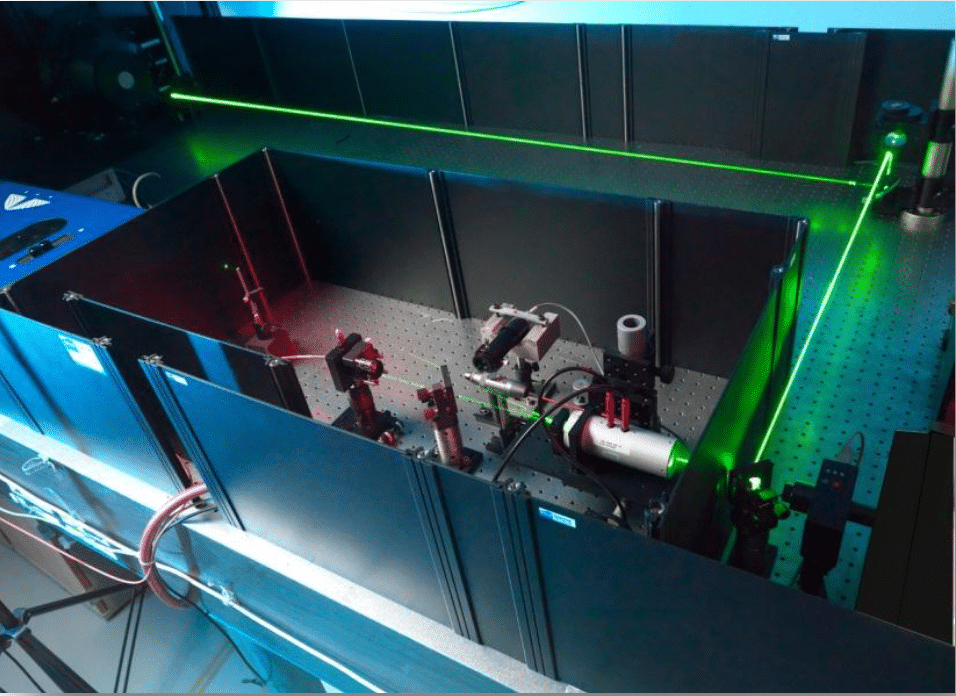
Laser safety shutters are a common fixture in laser operations across the world spanning industrial laser processing systems, research laboratories, and medical laser equipment. In many cases, they are integrated directly into safety systems like Lasermet’s Interlock® system, so the laser beam shutter responds automatically to door switches, emergency stops, or interlock triggers.
Browse:
Laser Beam Shutters
What to Look for in a Laser Safety Shutter
There are multiple factors to consider when selecting the right laser beam shutter for your unique optical set-up.
Types of Laser Shutters
There are several common types of laser beam shutters, depending on the actuation method.
SPRING-RETURN SHUTTERS
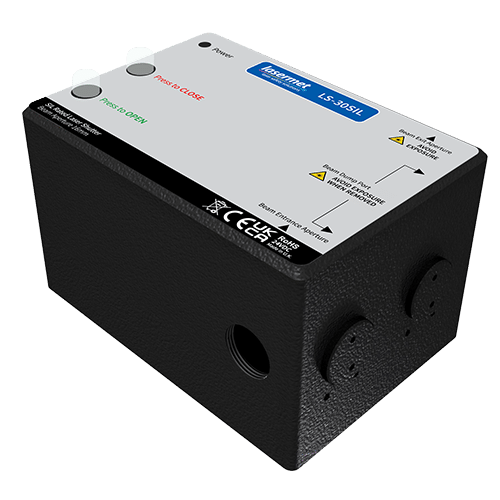
A spring-return shutter is so called because it uses a spring to return the blade to the closed position when power is removed. Actuation (opening of the shutter) is typically done with an electromagnet (solenoid) to pull the shutter blade open.
| Pros: | Cons: |
| – Fast response time – Simple, compact design – Naturally fail-safe with spring-return | – Limited force and travel distance – Can generate heat during continuous operation – Audible clicking noise during actuation |
GRAVITY-FED SHUTTERS
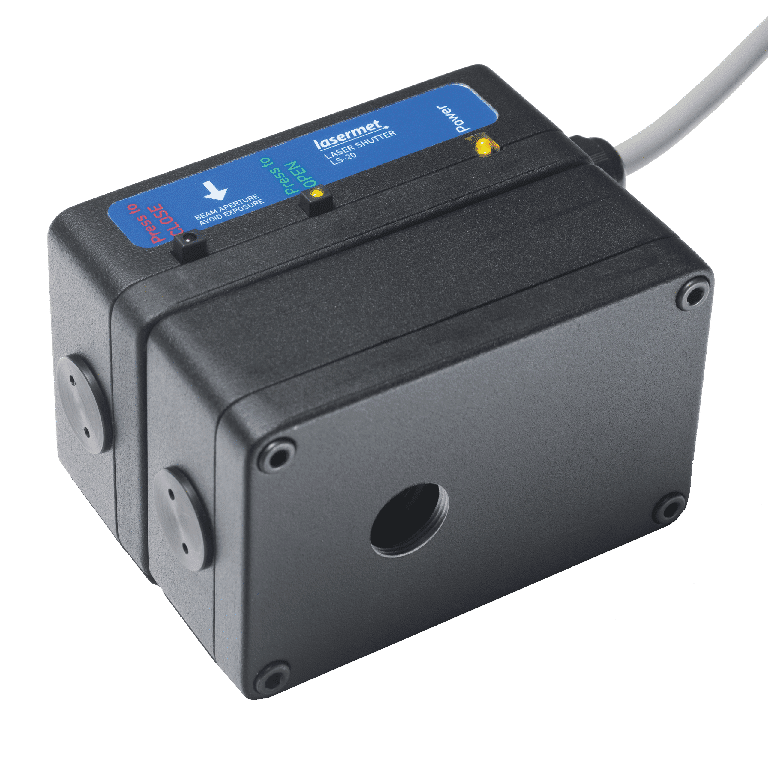
In a gravity-fed shutter, gravity causes the blade to drop into the closed position when power is removed. Actuation of the shutter is typically done with an electromagnet or solenoid.
| Pros: | Cons: |
| – Extremely reliable fail-safe operation – No reliance on springs, which can fatigue over time – Simple mechanical design – Suited to safety-critical applications | – Must be installed in a specific orientation (vertical) – Not suitable for systems that move or tilt – Generally slower closing speeds than solenoid types |
MOTORISED SHUTTERS
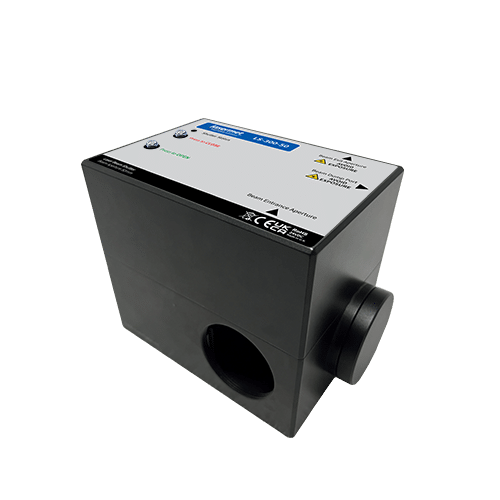
Actuation is done via a small electric motor driving the shutter blade into the open or closed position, usually through gears or a lead screw.
| Pros: | Cons: |
| – Smooth and controlled movement – Suitable for larger or heavier shutter plates – Can handle larger apertures – Lower impact forces and reduced mechanical shock | – Slower than solenoid shutters – More complex mechanically – May require position sensors or control logic – Not inherently fail-safe |
ROTARY SHUTTERS
Rotary shutters use a rotating disc or wheel to move a blocking section in and out of the beam path, often driven by a motor.
| Pros: | Cons: |
| – Very fast switching possible – Good for high repetition or pulsed systems – Smooth, continuous motion | – More complex alignment – Typically not fail-safe by default – Continuous rotation may cause wear over time – Usually better suited for optical setups than safety interlocks |
Quick Guide: Comparison of Shutter Types
| Shutter Type | SPEED | FAIL-SAFE BY DEFAULT | COMPLEXITY | APPLICATIONS |
| SPRING-RETURN | Fast | Yes | Low | Interlock safety systems |
| GRAVITY-FED | Medium | Yes | Low | Safety-critical, fixed installations |
| MOTORISED | Medium | Not always | Medium – High | Large apertures, heavy shutters |
| ROTARY | Fast – Very fast | Not usually | Medium | Optical labs, modulation |
Dual-channel vs. Single-channel Architecture
Laser beam shutters used in safety systems are typically classified as either single-channel or dual-channel devices, depending on how their circuitry is designed. Many laser applications require redundant, monitored safety channels for higher-risk systems like Class 3B and Class 4 lasers.
DUAL-CHANNEL ARCHITECTURE
Dual-channel shutters use two independent control circuits that are monitored by a safety controller. Both channels must agree for the shutter to open, and any discrepancy is treated as a fault, causing the system to revert to the safe state.
Dual-channel systems are typically classified as PL ‘d’ orPL ‘e’ under the ISO 13849-1 Safety of Machinery standard or SIL-3 under the IEC 61508 Functional Safety of E/E/PE Systems standard.
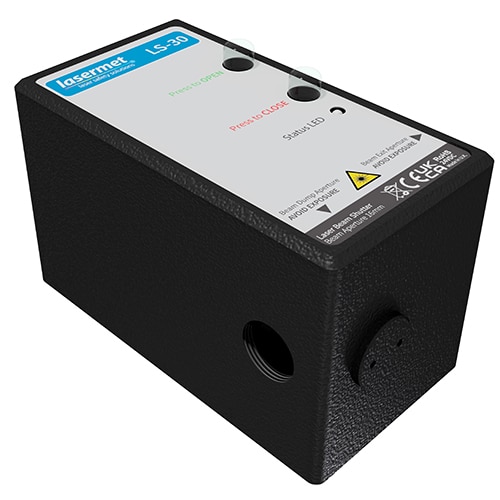
SINGLE-CHANNEL ARCHITECTURE
A single-channel shutter, by contrast, relies on one control path to open and close the mechanism. If that single circuit fails the system may not detect the fault, and the shutter could remain open when it should be closed.
A single-channel shutter may be acceptable for low-risk or non-safety-critical applications, but it will not meet the requirements of many interlocked systems or higher safety integrity levels.
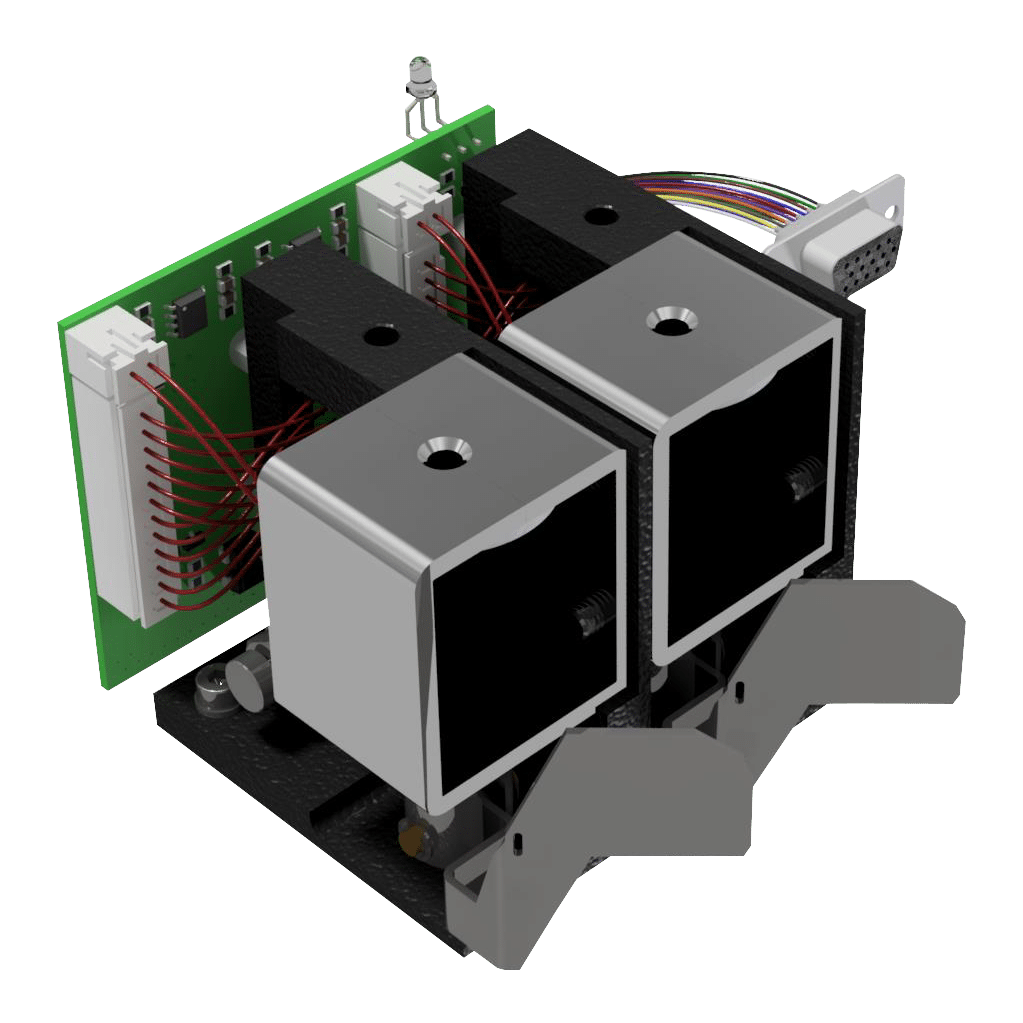
Integrated vs. External Laser Beam Shutters
As per IEC 60825-1 Safety of laser products, Class 3B and Class 4 laser products require a beam attenuator and remote interlock connector to be permanently incorporated or attached. The remote interlock must stop emission when the circuit is opened, while the beam attenuator must reduce accessible emissions below Class 1 or Class 2 levels.
These built-in beam shutters are available as Original Equipment Manufacturer (OEM) version shutters which are supplied without a case making them easier for integration into a laser device.
In addition to these internal beam shutters required by IEC 60825-1, many laser applications of all classes will also use an external beam shutter.
Remote Operation of Laser Shutters
Many laser lab set-ups unintentionally make it inconvenient to manually access shutter controls, or use high powered lasers that make it unsafe to get near the shutter. In situations like these, other methods of operating the laser interlock shutter should be put in place.
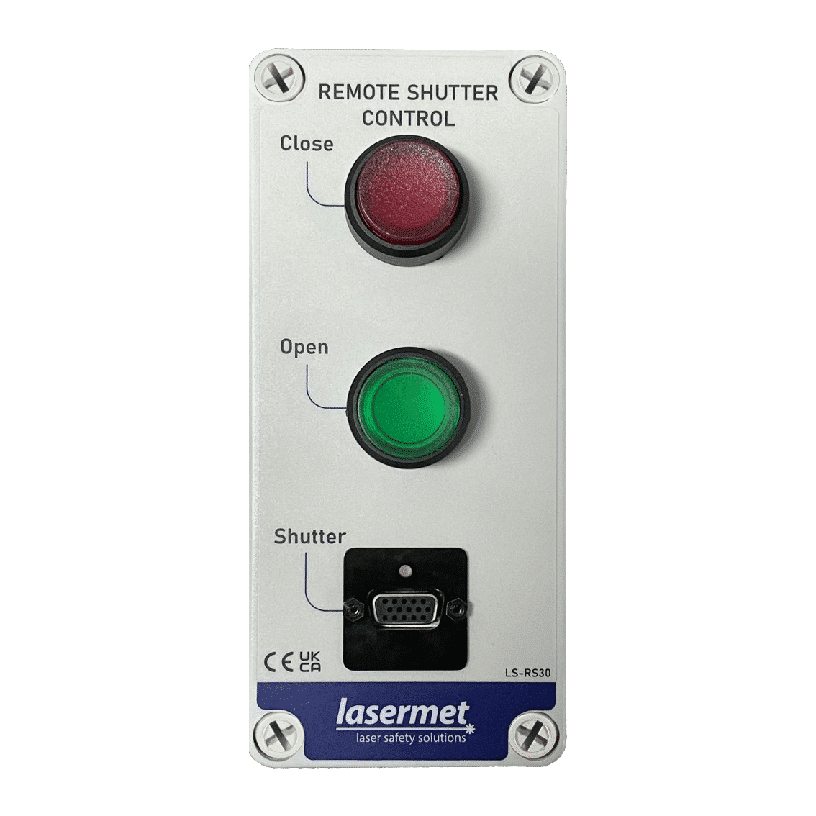
For ease of operation, Lasermet shutters have the option of being remotely operated by the use of a Remote Shutter Switching Station. This is an external distribution box for the shutters which can be placed in a more convenient place for easy opening and closing of the shutter.
Using with Laser Beam Dumps
When using a laser shutter, it is important to consider if it can handle the laser power being used. High-power typically means high heat and most shutters have limits on the amount of energy they can safely withstand before overheating or degrading.
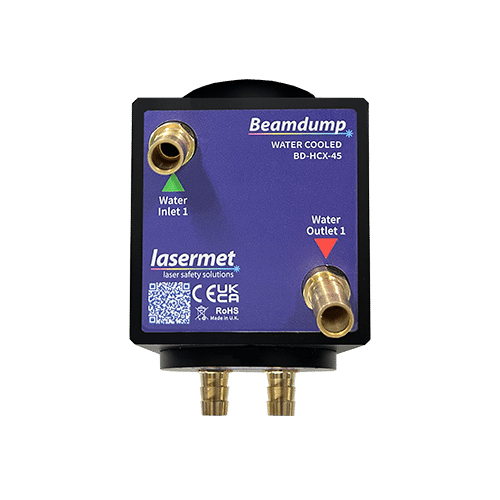
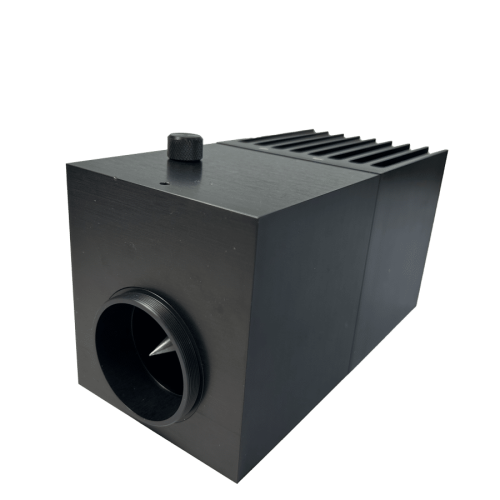
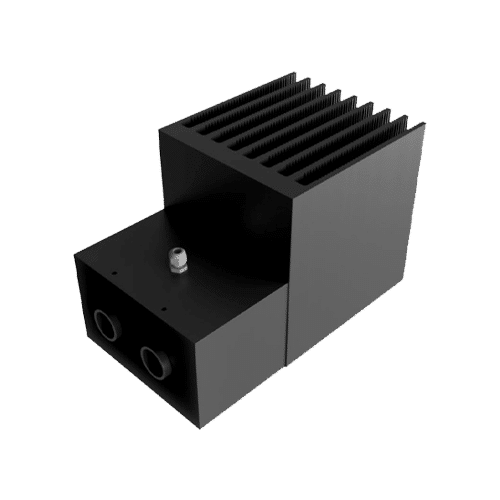
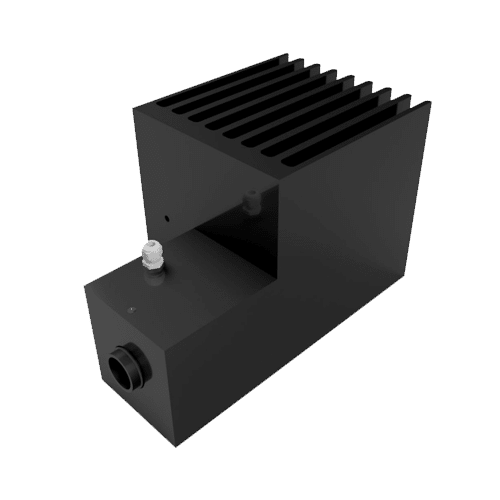
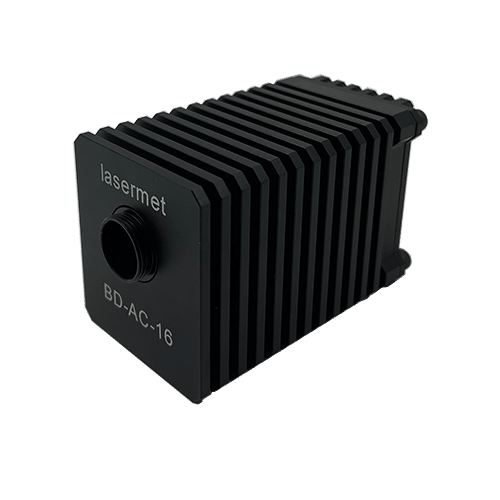
In such cases, it is recommended to fit an external high power laser beam dump to the laser shutters. The shutter redirects the beam into the beam dump, which can safely absorb and dissipate the excess energy.
Lasermet have a range of laser beam dumps compatible with our laser beam shutters.
Browse:
Laser Beam Dumps
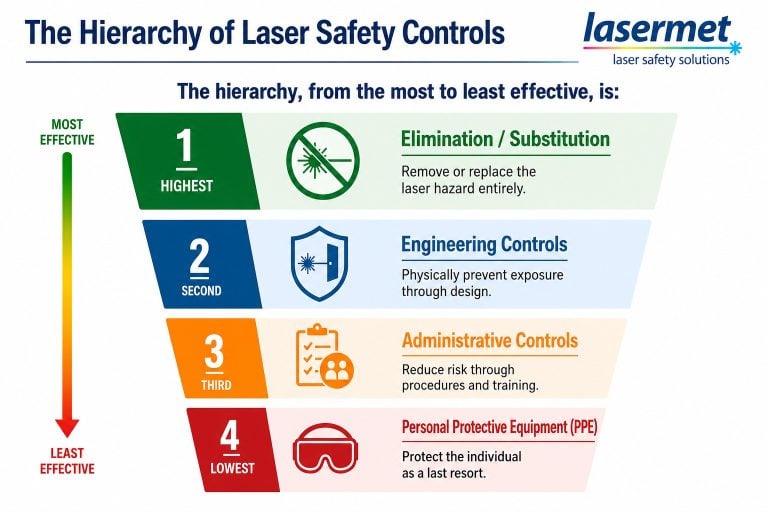
A shutter alone is not a complete safety solution. It is one part of a layered approach that typically includes laser guards, interlock systems, administrative controls, and Personal protective equipment (PPE). But among these, the shutter is unique because it provides a direct, physical interruption of the beam. It does not rely on human reaction time or software logic alone.
In a high-power laser system, the energy involved is not theoretical. It can cause real, immediate harm. A laser safety shutter is a simple device, but it serves a fundamental purpose: it ensures that the beam is only accessible when the system has confirmed that it is safe.
Without a shutter, you are relying entirely on electronics, software, or human behaviour to control a hazardous beam. With a shutter, there is a physical barrier that defaults to safe whenever something goes wrong. That is why shutters are not treated as optional accessories, they are essential safety components.
Get in touch with our team of experts today!