When dealing with lasers in the workplace, safety is non-negotiable. Whether in healthcare, research, manufacturing, or aesthetics, laser systems introduce serious risks if not properly controlled.
From an employer perspective, laser safety is not just best practice; it is a legal and operational requirement. From a user perspective, it depends on having the right people in place. Two roles sit at the core of workplace laser safety: the Laser Safety Officer (LSO) and the Laser Protection Adviser (LPA).
This guide breaks down who they are, what they do, how they differ, and when and why you need them.
What Is a Laser Safety Officer (LSO)?
A Laser Safety Officer (LSO) is the designated individual responsible for the day-to-day management of laser safety within an organisation. The role exists to ensure that laser operations are conducted safely, compliantly, and consistently. LSOs operate across various sectors including industrial manufacturing, medical and dental facilities, laboratories, research institutions, and entertainment.
In environments using Class 3B or Class 4 lasers, the appointment of an LSO (or an equivalent competent person) is a fundamental requirement under laser safety standards and health and safety legislation.
Responsibilities of the LSO
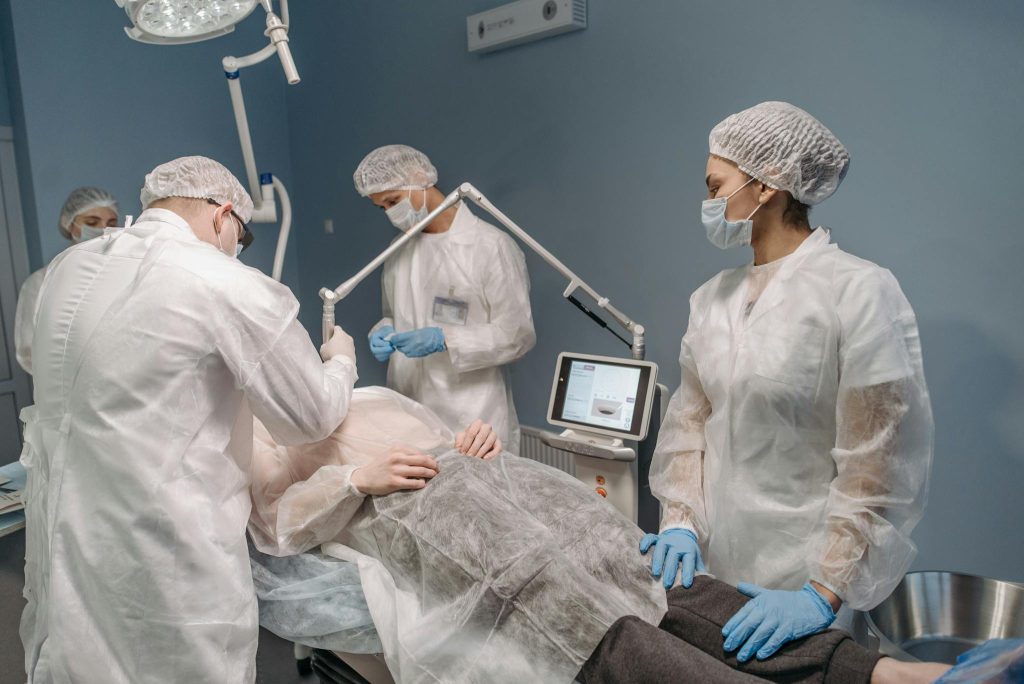
- Developing and implementing the organisation’s laser safety programme
- Conducting laser hazard and risk assessments
- Defining controlled areas and Nominal Hazard Zones (NHZs)
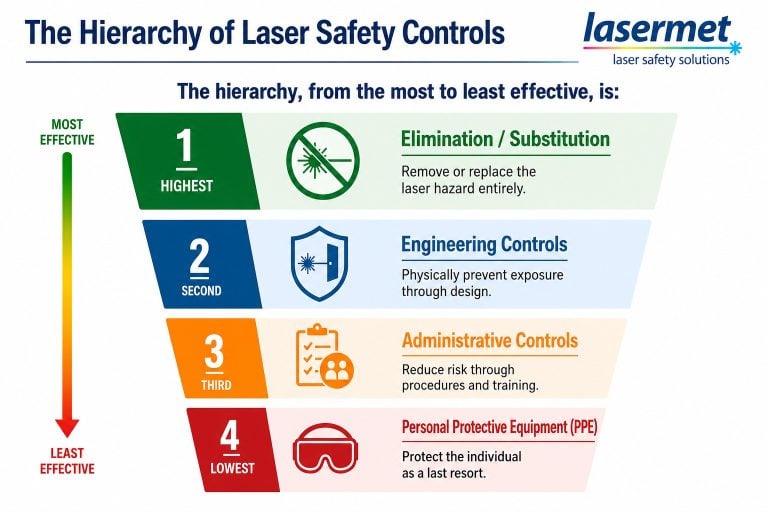
- Ensuring engineering, administrative, and PPE controls are in place
- Providing or coordinating laser safety training
- Monitoring compliance and stopping unsafe laser operations if required
What Is a Laser Protection Adviser (LPA)?
A Laser Protection Adviser (LPA) is a specialist laser safety expert—often external to the organisation—who provides independent, high-level advice on compliance, risk management, and best practice. Unlike an LSO, an LPA does not usually manage day-to-day operations. Instead, they provide oversight, validation, and specialist input to ensure the organisation’s approach is legally robust.
In the UK, LPAs are commonly used in healthcare, aesthetics, and clinical settings, where their involvement is frequently a licensing or registration requirement.

Responsibilities of the LPA
- Conducting in-depth laser risk assessments
- Advising on compliance with HSE, CQC, MHRA, and relevant standards
- Developing local rules, SOPs, and safety documentation
- Defining controlled areas and safe systems of work
- Providing staff training and refresher education
- Acting as an authoritative source of optical radiation expertise
Laser Protection Adviser Services
Lasermet’s RPA2000 qualified team of Laser Protection Advisers (LPAs) are here to work with you to ensure that laser safety standards are met and safe systems of work are in place for you and your employees.
Other Laser Safety Roles – Laser Protection Supervisor (LPS)
A Laser Protection Supervisor (LPS) is a role commonly used in hospitals and aesthetics clinics, responsible for supervising laser use at the operational level, often under guidance from an LPA.
If your organisation uses Class 3B or Class 4 lasers, you must appoint a competent person to manage laser safety.
Whether this is an LSO, LPS, or supported by an external LPA depends on your sector—but the function is mandatory.
Do I need a LSO or LPA?
Yes, having a Laser Safety Officer (LSO) or Laser Protection Adviser (LPA) is legally required or strongly mandated in the UK for places using higher-powered lasers under Health & Safety law to manage risks from artificial optical radiation. Though specific roles and names can vary by sector and UK region.
You will typically need one or both if you operate lasers in:
- Hospitals and NHS facilities
- Dental clinics
- Aesthetic clinics
- Scientific research laboratories
- University research laboratories
- Industrial laser cutting, welding, marking, or cleaning environments
- Entertainment and laser display applications
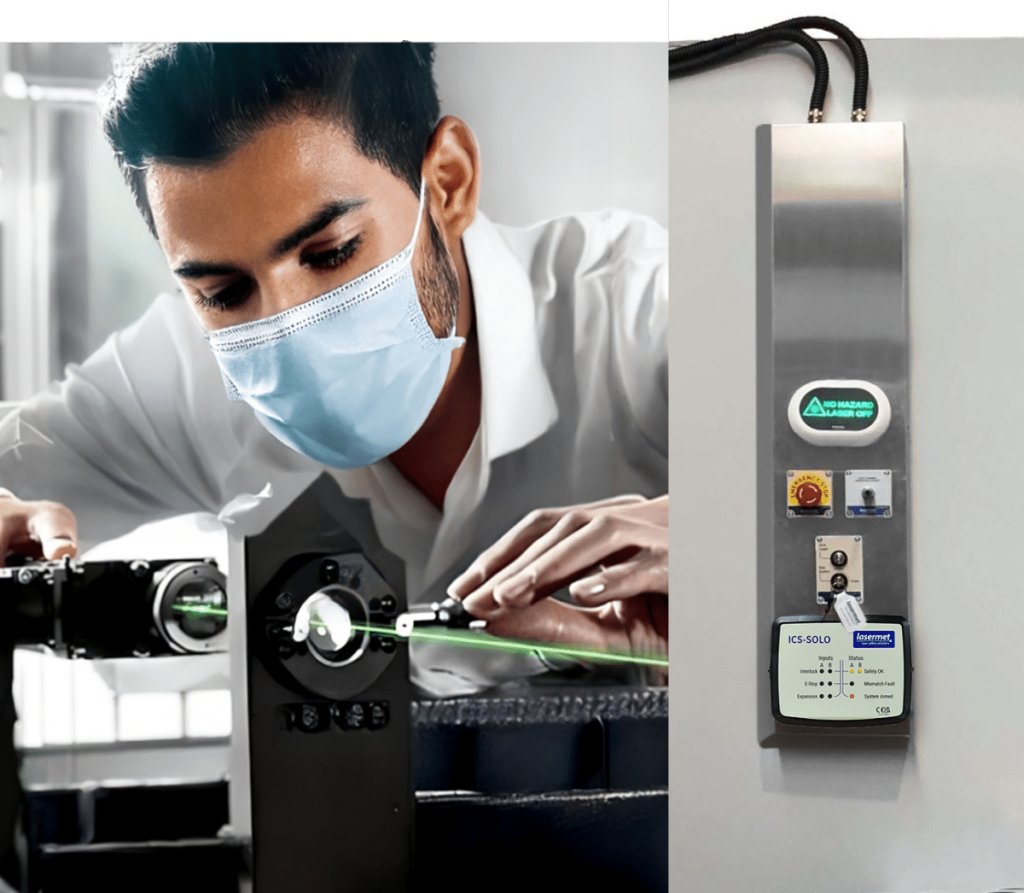
In the UK, the Control of Artificial Optical Radiation at Work Regulations 2010 requires employers to assess laser risks and implement appropriate controls, including appointing competent persons. British Standards such as IEC 60825-14 strongly recommend the appointment of an LSO for Class 3B and Class 4 lasers. Specifically in healthcare and aesthetics sectors, an LPA is often required for licensing and inspection.
Internationally, standards such as ANSI Z136.1 mandate an LSO for facilities operating higher-powered lasers. Requirements vary by jurisdiction but follow the same principle.
Besides legal enforcement, there are many practical and commercial reasons for appointing a competent person in charge of laser safety. Businesses can benefit from the prevention of serious laser injuries, laser damage to equipment and premises, protection from enforcement action and prosecution, and much more.
Laser incidents are rarely caused by equipment failure. They are almost always the result of inadequate controls, training gaps, or unclear accountability which is precisely what LSOs and LPAs exist to prevent.
Becoming an LSO or LPA
Becoming an LPA is a specialist career path which requires a specific extensive academic background and professional accreditation by RPA 2000 Certification. It’s a competency-driven role that carries legal accountability designed for people with deep expertise in laser physics, optical radiation safety, clinical/industrial risk, and regulations.
In contrast, anyone can be appointed as a Laser Safety Officer (LSO) provided they have completed the proper training in laser safety principles and standards. LSOs are often an existing employee of the business with technical, engineering, or clinical experience who has been formally appointed to wield sufficient authority to enforce laser safety controls.
TECHNICAL UNDERSTANDING
Have knowledge of laser classifications, biological effects, hazard analysis, and control measures.
FORMAL TRAINING AND CERTIFICATION
Completion of recognised laser safety officer training courses and certification through professional bodies where applicable.
ORGANISATIONAL APPOINTMENT
The employer must formally designate the role and provide the authority to enforce.
Laser Safety Training
Lasermet provides comprehensive LSO and laser safety training programmes, covering a range of topics.
These courses are designed to ensure appointed personnel are not only compliant on paper, but operationally effective.
Final Thoughts
Laser safety is not achieved through equipment alone. It depends on governance, competence, and accountability. Whether you appoint an internal Laser Safety Officer, engage an external Laser Protection Adviser, or operate a combined model, the objective is the same: control the risk, protect people, and maintain compliance.
If your organisation uses high-powered lasers and these roles are unclear or unassigned, that is a material risk that needs addressing immediately.