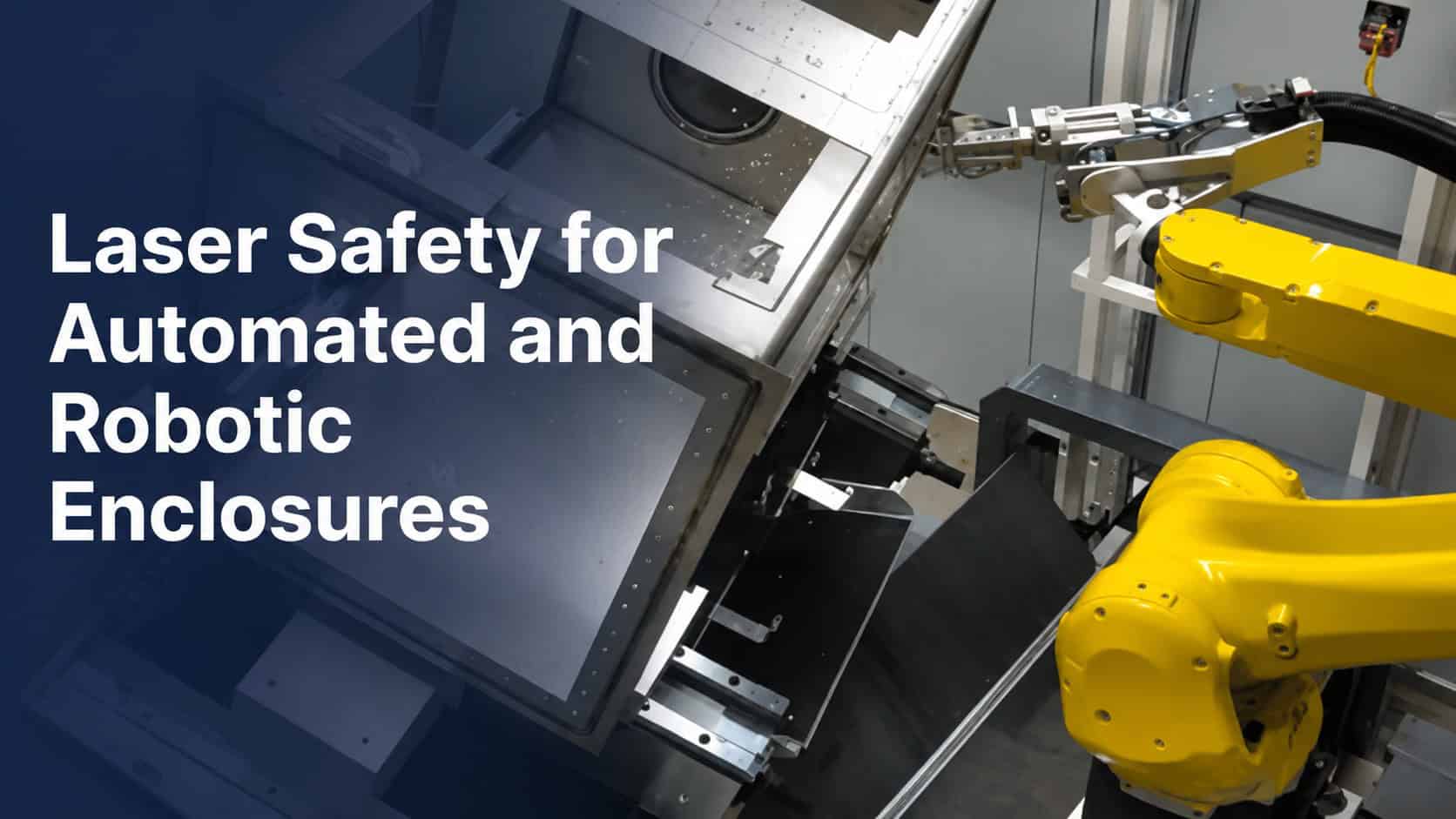
Robotic laser processing offers manufacturers a powerful combination of precision, repeatability and throughput. From laser welding and cutting to marking, cleaning and cladding, automation can make complex processes more consistent and efficient.
However, safety planning for a robotic laser enclosure must account for more than normal production. The laser head, robot arm, workpiece and tooling may all move throughout a large working area, creating changing beam directions and potential exposure scenarios.
A safe installation is therefore not defined only by its performance during the production cycle. It must remain controlled during fault recovery, maintenance and every other situation in which people may need to interact with the enclosure.
Why Robotic Laser Enclosures Need a Different Safety Mindset
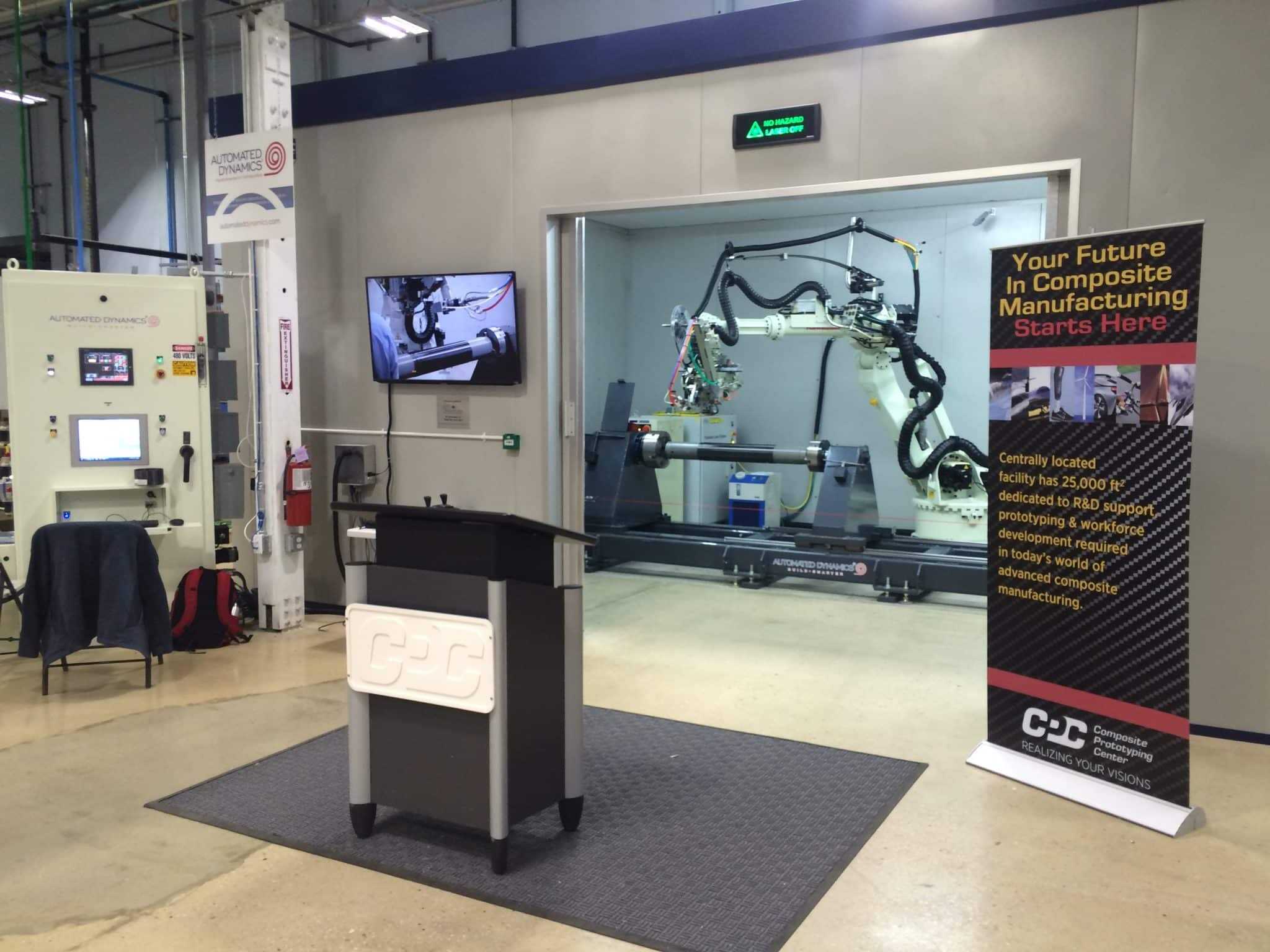
In a fixed laser installation, the beam path is often relatively predictable. In a robotic enclosure, the laser head can move with the robot, while the workpiece, fixtures and process equipment may also change position.
This means that the safety design must consider the full working envelope of the robot—not just the intended process path. Reflections from workpieces or fixtures, access points in the enclosure and changes to robot programs can all affect the risk profile.
A robotic laser enclosure may also bring several systems together, including:
A laser source and beam-delivery system.
A robot and robotic controller.
Material-handling equipment or conveyors.
Extraction systems.
Vision or inspection systems.
Access doors and guarding.
Interlocks, warning devices and e-stop circuits.
These systems must operate as one coordinated safety solution. Treating the laser as a separate component can leave gaps between the robot, the enclosure and the safety controls.
Safety is most effective when it is considered at the earliest design stage. This gives engineers the opportunity to build protection into the enclosure, rather than attempting to add it once production has begun.
Different Operating Modes, Different Controls
A laser enclosure can operate in many different states. For practical purposes, it is useful to focus on three key conditions: normal operation, fault recovery and maintenance.
Normal Operation
During normal use, the enclosure should be operating as intended: access points are secured, the automated process is running and the laser is only enabled when the required safety conditions have been met.
Typical safety measures may include:
- Interlocked doors and access points
- Laser-safe enclosure materials and guarding
- Clear laser-warning signs and status indicators
- Emergency-stop provisions
- Safety-related control functions appropriate to the application
The objective is straightforward: if a person opens an access point or a safety condition is no longer met, the enclosure should respond according to its defined safety design.
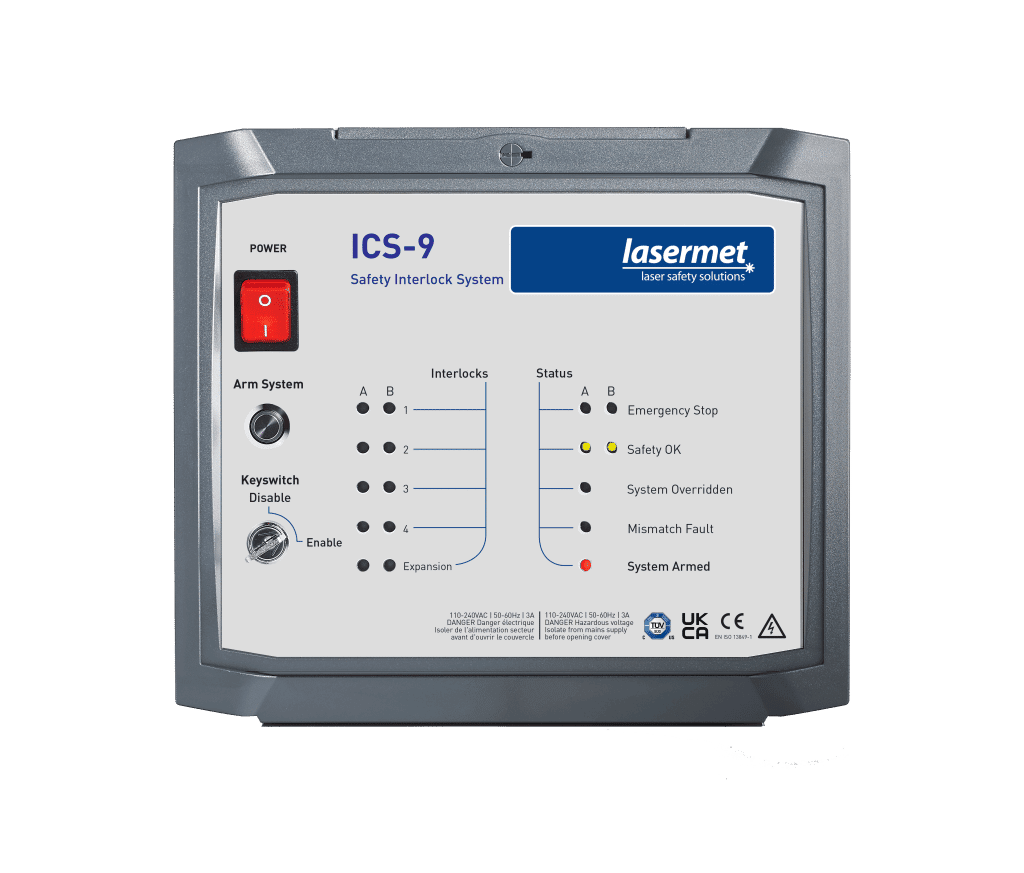
Lasermet Interlock Systems
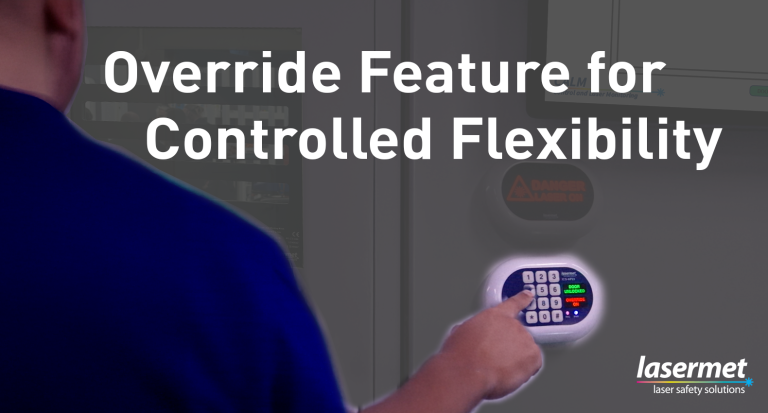
Laser interlock systems help coordinate the safety functions of a laser-controlled enclosure. They can monitor access points, warning signs, emergency stops and other safety devices to help ensure the laser is only enabled in the correct operating condition.
Fault recovery and Troubleshooting
Production faults can create pressure to restore operation quickly. A door fault, safety-circuit trip, incorrectly positioned part or robot-programming issue can all tempt operators to take shortcuts.
That is why fault recovery should be designed into the enclosure from the beginning.
The system should provide clear fault indication, controlled reset processes and a defined route for escalation when trained maintenance or safety personnel are required. It should also be designed to prevent an unexpected restart while someone may still be inside the safeguarded area.
A well-considered fault-recovery process helps avoid uncertainty. Operators should be able to identify when an issue can be resolved through normal procedures and when the enclosure must be isolated before further investigation.
Maintenance and Servicing
Maintenance is often one of the highest-risk periods in the life of a robotic laser enclosure. Guards may be open, components may be removed and engineers may need to work close to the laser head, optical path, robot or fixtures.
Planned isolation procedures, authorised access and a documented maintenance process are essential. Before the enclosure returns to service, relevant safety functions should be checked and the system should be formally reinstated.
This may include inspection of:
- Interlocked doors and access points
- Laser shutters or beam-control devices
- Guards and enclosure panels
- Warning signs and alarms
- Emergency-stop devices
- Safety-related control functions affected by the work
The goal is not simply to complete the maintenance task. It is to confirm that the enclosure has been returned to a safe operating condition before production resumes.
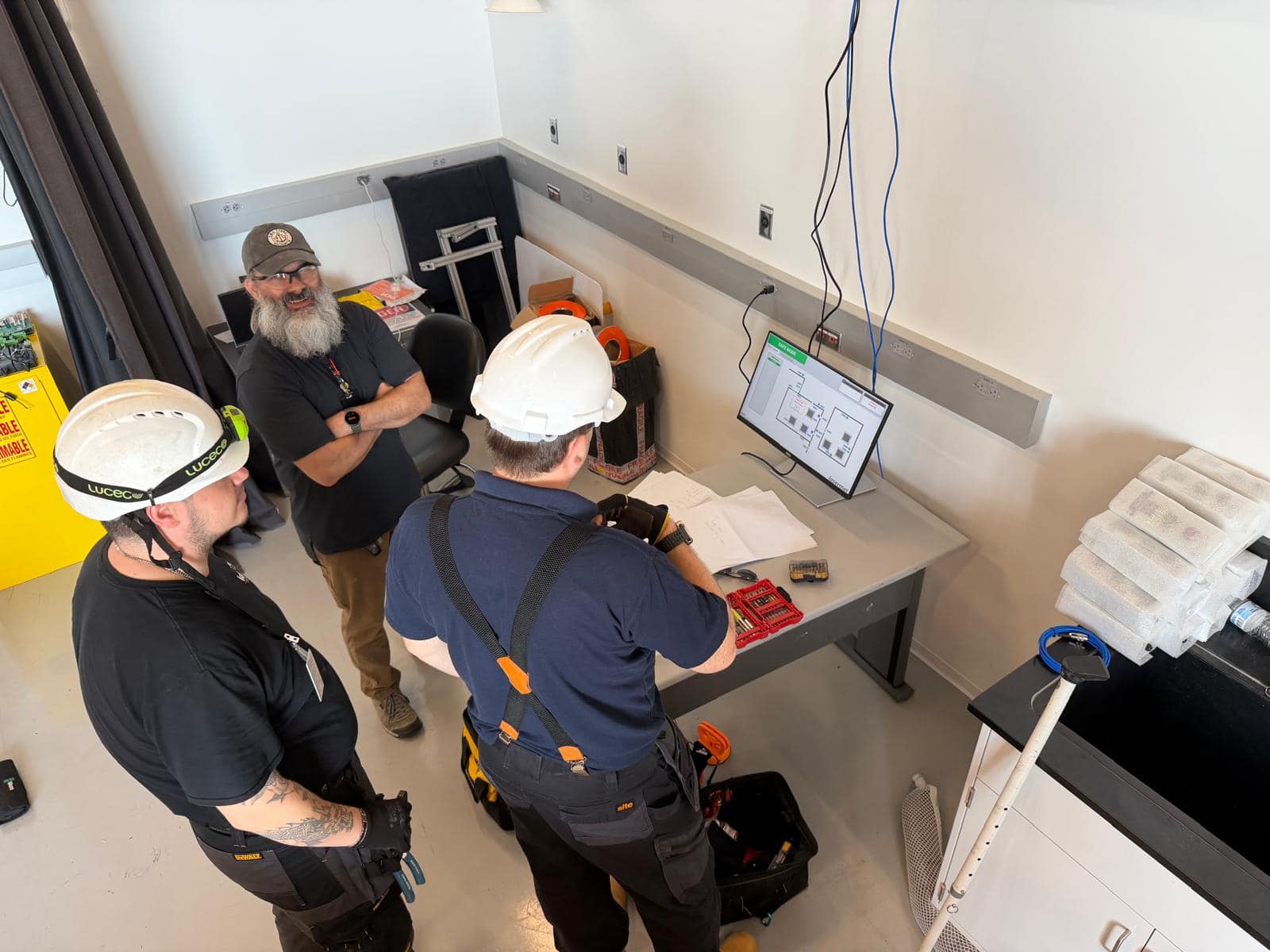
What to do to ensure Laser Safety?
1. Start with the Beam and the Process
Before selecting safety products, it is important to understand where the laser can travel and what it may encounter.
A laser safety risk assessment helps identify the control measures required for the actual installation. It should consider foreseeable production conditions, faults and maintenance activities—not only the ideal automated cycle.
Changes also matter. A new laser source, different workpiece material, revised fixture or updated robot program may alter the safety requirements of the enclosure. Safety arrangements should be reviewed whenever the process changes in a meaningful way.
2. Building Protection into the Enclosure
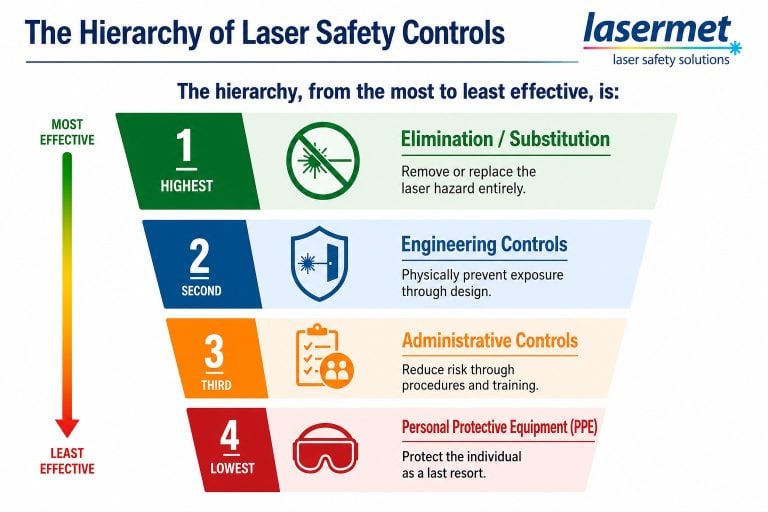
Engineering controls provide protection that does not depend solely on individual behaviour. In a robotic laser application, these controls form the foundation of the safety strategy.
Physical containment and laser guarding
A laser-safe enclosure is designed to contain the hazards associated with the process while allowing production to continue efficiently. Depending on the application, this may involve fixed panels, cabins, doors, windows, curtains, screens or a combination of these solutions. The right approach depends on the laser, process, likely beam exposure, access needs and wider layout of the facility.
The enclosure must remain suitable across the robot’s working envelope. A safe panel location for one process position may not be adequate if the laser head can be directed elsewhere during another part of the cycle.
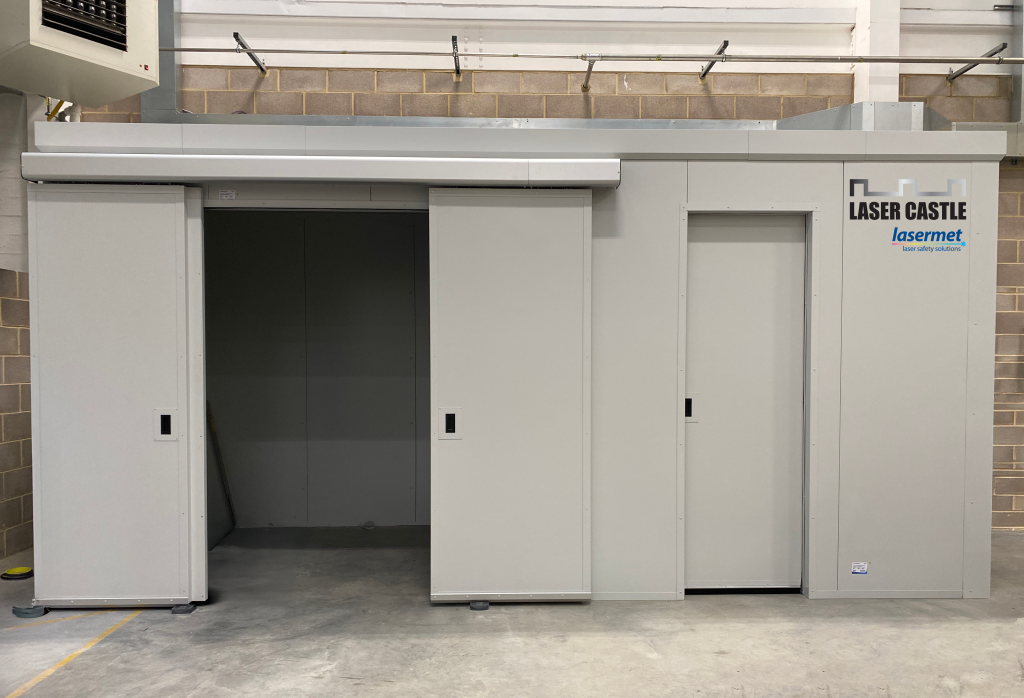
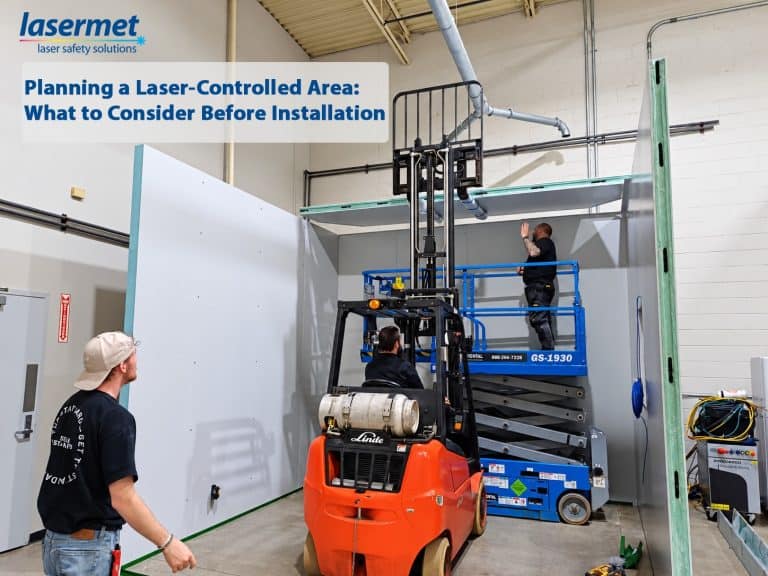
Lasermet designs and manufactures laser safety enclosures for industrial and research applications. A tailored enclosure can incorporate access doors, viewing arrangements, interlocks, warning systems and other features required for the installation.

Interlocked Access
Interlocked doors and access points play an important role in controlling entry to a laser-controlled enclosure.
When an access point is opened, the enclosure should respond in accordance with its safety design. This may involve inhibiting laser operation, changing the system status and preventing automatic restart until the correct reset process has been completed.
The access should be designed around the application. A small standalone enclosure may have very different access requirements from a large robotic system with multiple entry points.
Warning Signs and Indicators
Clear information is especially valuable in busy manufacturing environments. Before someone approaches an enclosure, they should be able to understand whether the system is safe, ready, operating, in fault or in an emergency-stop condition.
Illuminated warning signs, visible status indicators and audible alerts where appropriate can support safe behaviour around the enclosure. The messages should be consistent and easy to interpret across the installation.
Status indication is an important layer of protection, but it does not replace physical guarding or interlocks. A sign can communicate that a laser is enabled; it cannot prevent access to a hazardous area on its own.
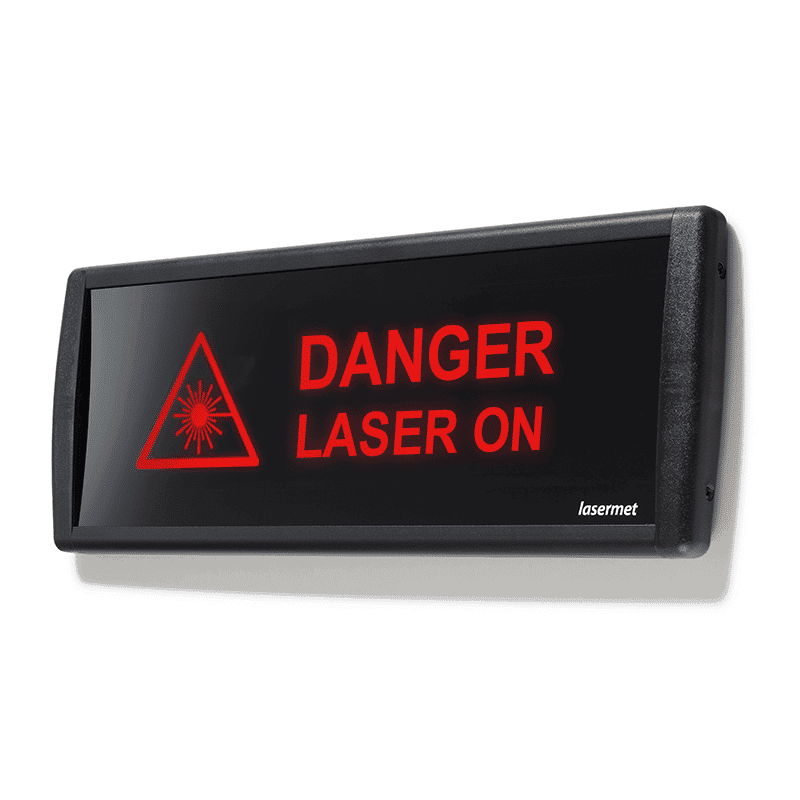

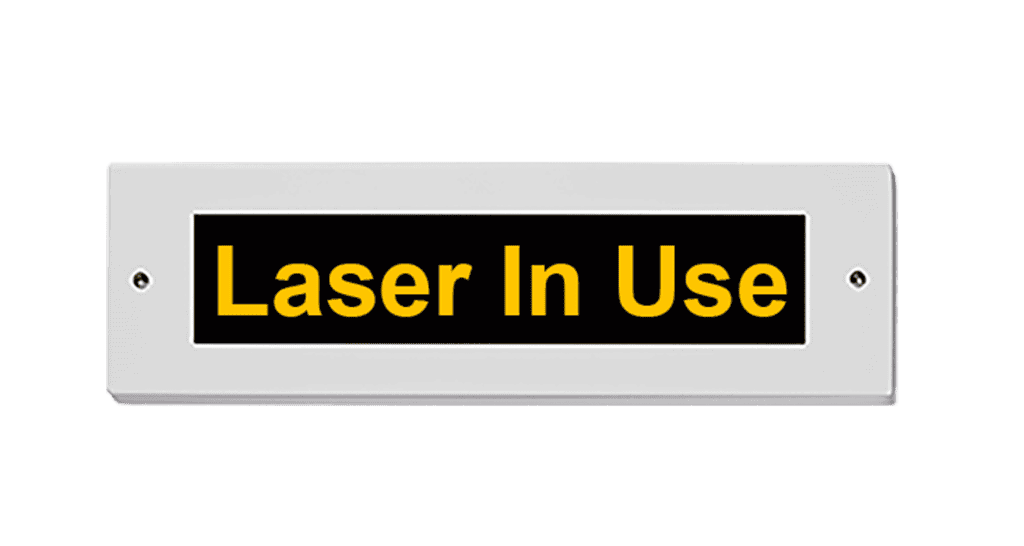
Illuminated laser warning signs provide a clear visual indication of enclosure status. They can be integrated with an interlock system to display conditions such as laser enabled, safe to enter or fault.
Making the Safety Systems Work Together
A robotic laser enclosure may contain several safety devices, but their value depends on how well they work together.
The laser enable signal, robot status, door interlocks, warning signs, emergency stops and any beam-control devices should form part of a coordinated safety design. The laser should only be permitted to operate when the enclosure is secure, the relevant safety circuits are closed, the system is in the correct mode and the authorised process sequence has been met.
Designing for the Full Reality of Automated Operation
Robotic laser safety is not only about containing a beam during normal production. It is about designing an enclosure that remains controlled and understandable during fault recovery, maintenance and future changes.
A robust safety approach brings together:
Addressing these points early can help manufacturers create robotic laser enclosures that are safer, easier to operate and better prepared for future expansion.
Planning a new robotic laser enclosure or upgrading an existing installation? Lasermet can help develop an integrated laser safety solution, including guarding, interlocks, warning systems, installation, consultancy and training. Contact our team to discuss your application.