Inside Lasermet’s Laser & LED Testing Lab
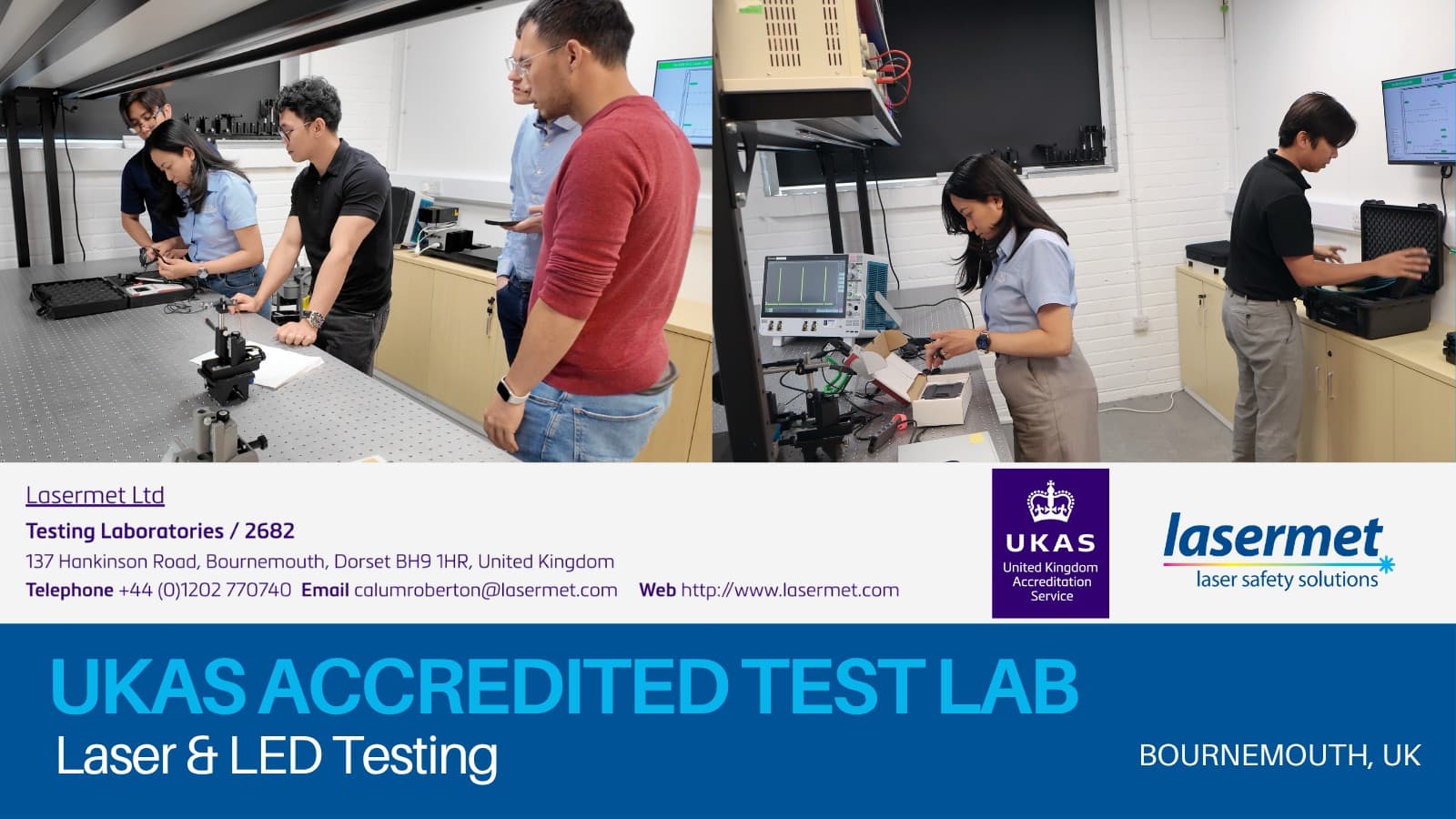
Lasermet is best known as a safety engineering company specialising in laser safety. Alongside our laser safety products and solutions, we also operate a UKAS-accredited Laser and LED Testing Laboratory in Bournemouth, UK.
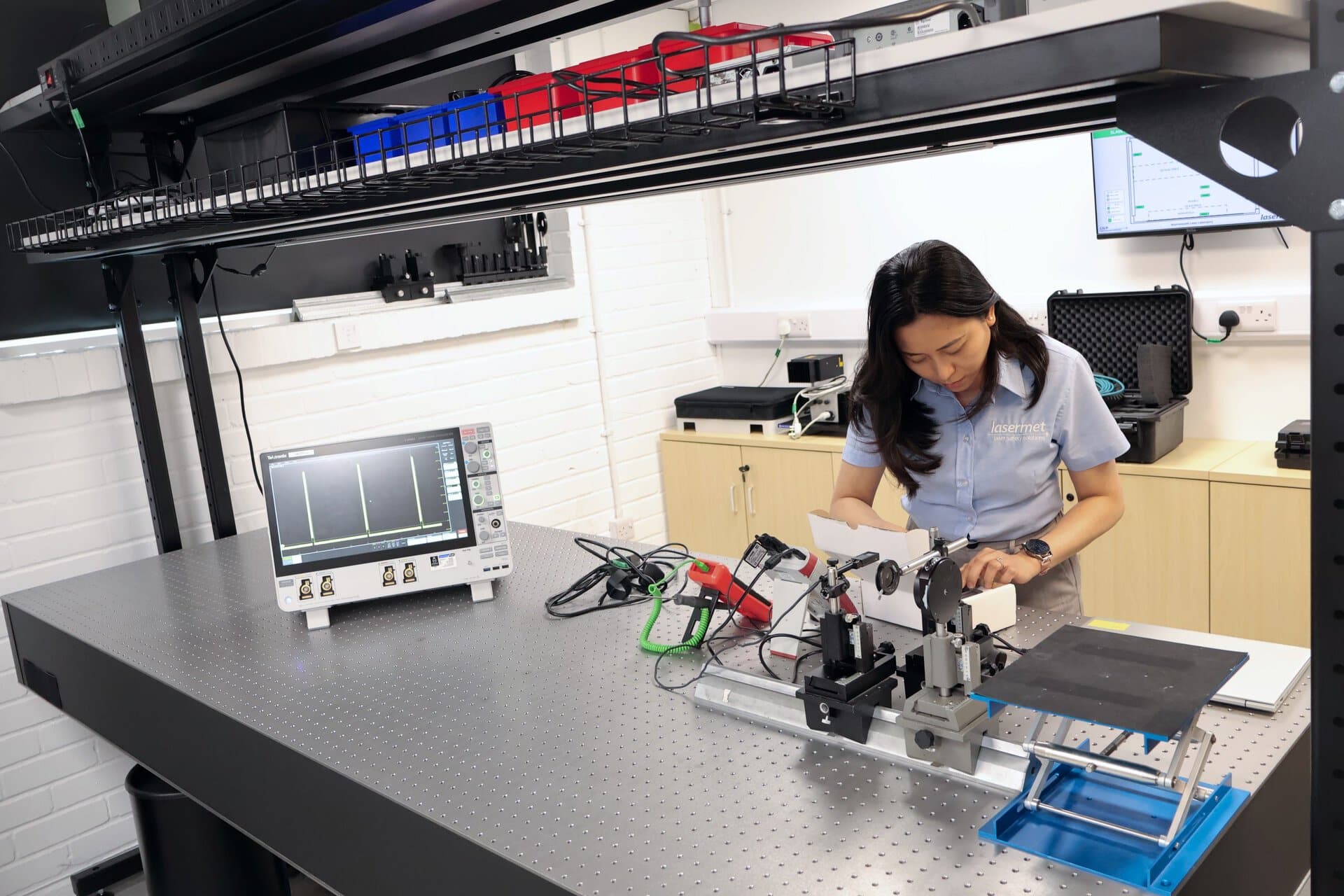
Our Laser and LED Testing Laboratory in Bournemouth provides specialist testing services for manufacturers, engineers and organisations working with laser and LED products. We are able to test laser and LED products in a controlled laboratory environment using specialist equipment and established testing procedures.
What Does UKAS Accreditation Mean?
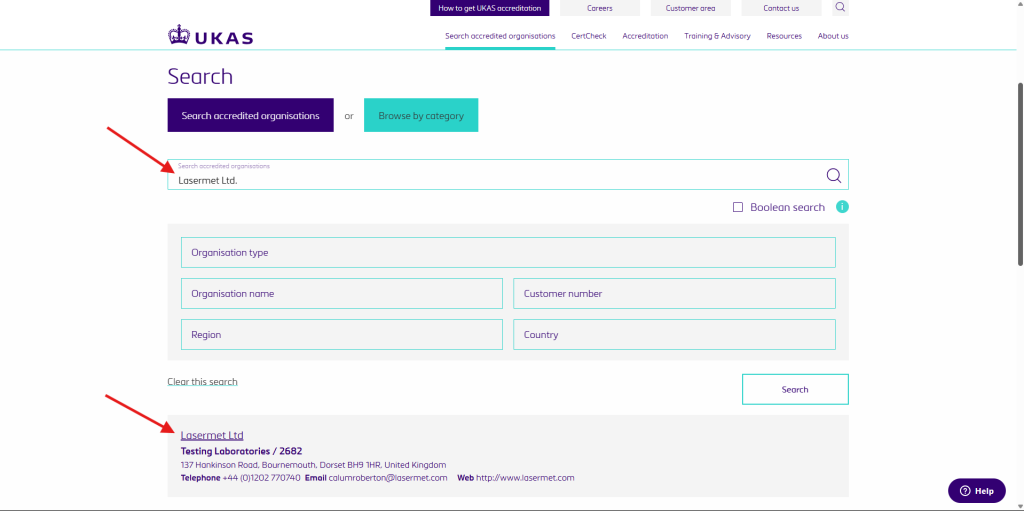
One of the most important aspects of Lasermet’s Laser and LED Testing Laboratory is its UKAS accreditation.
UKAS stands for the United Kingdom Accreditation Service.
UKAS is the national accreditation body for the United Kingdom and is responsible for assessing organisations that provide services such as testing, calibration, inspection and certification.
Accreditation is different from simply stating that a company is capable of performing a particular type of test.
An accredited laboratory has undergone an independent assessment of its competence to carry out the specific testing activities included within its accredited scope.
This assessment looks at a number of important areas within the laboratory.
Lasermet is the only Testing House in the UK with UKAS accreditation for LASER and LED Testing
These can include the competence of the personnel performing the tests, the suitability and calibration of the equipment being used, the laboratory’s testing procedures, record keeping, quality management processes and the way test results are produced and reported.
In other words, accreditation provides independent recognition that a laboratory has the technical systems and competence required to perform the testing activities covered by its accreditation.
For manufacturers, this can be particularly important.
Laser and LED products can involve complex safety requirements. The amount of optical radiation emitted by a product, the wavelength of the radiation, the duration of exposure and the way the product can be accessed by the user can all influence how the product is assessed.
Testing therefore needs to be carried out carefully and consistently.
What We Test
Our UKAS-accredited laboratory provides specialist testing for laser products and LED products, helping manufacturers understand the optical radiation produced by their products and assess them against the relevant safety requirements.
Every product is different.
A compact laser module used inside a laboratory instrument, for example, may present very different testing requirements from a high-power industrial laser system.
Similarly, an LED product may not behave in the same way as a laser, but sufficiently powerful optical sources can still present potential hazards to the eyes or skin.
Our role is to help manufacturers understand the optical radiation produced by their products and assess the product against the relevant safety requirements.
Laser Product Testing
Laser product testing is one of the core activities carried out within our testing laboratory.
Lasers can produce highly concentrated optical radiation, which means even relatively compact devices may require careful safety assessment.
During testing, our team can carry out measurements and assessments to determine the levels of accessible laser radiation produced by a product.
This information can then be used to help determine the appropriate laser classification and identify the safety requirements that may apply to the device.
Laser classification is an important part of laser product safety because it provides an indication of the potential hazard presented by the laser under reasonably foreseeable conditions of use.
Different laser classes are associated with different levels of risk and different safety requirements. A low-power laser product, for example, may present a very different hazard profile from a Class 3B or Class 4 laser system.
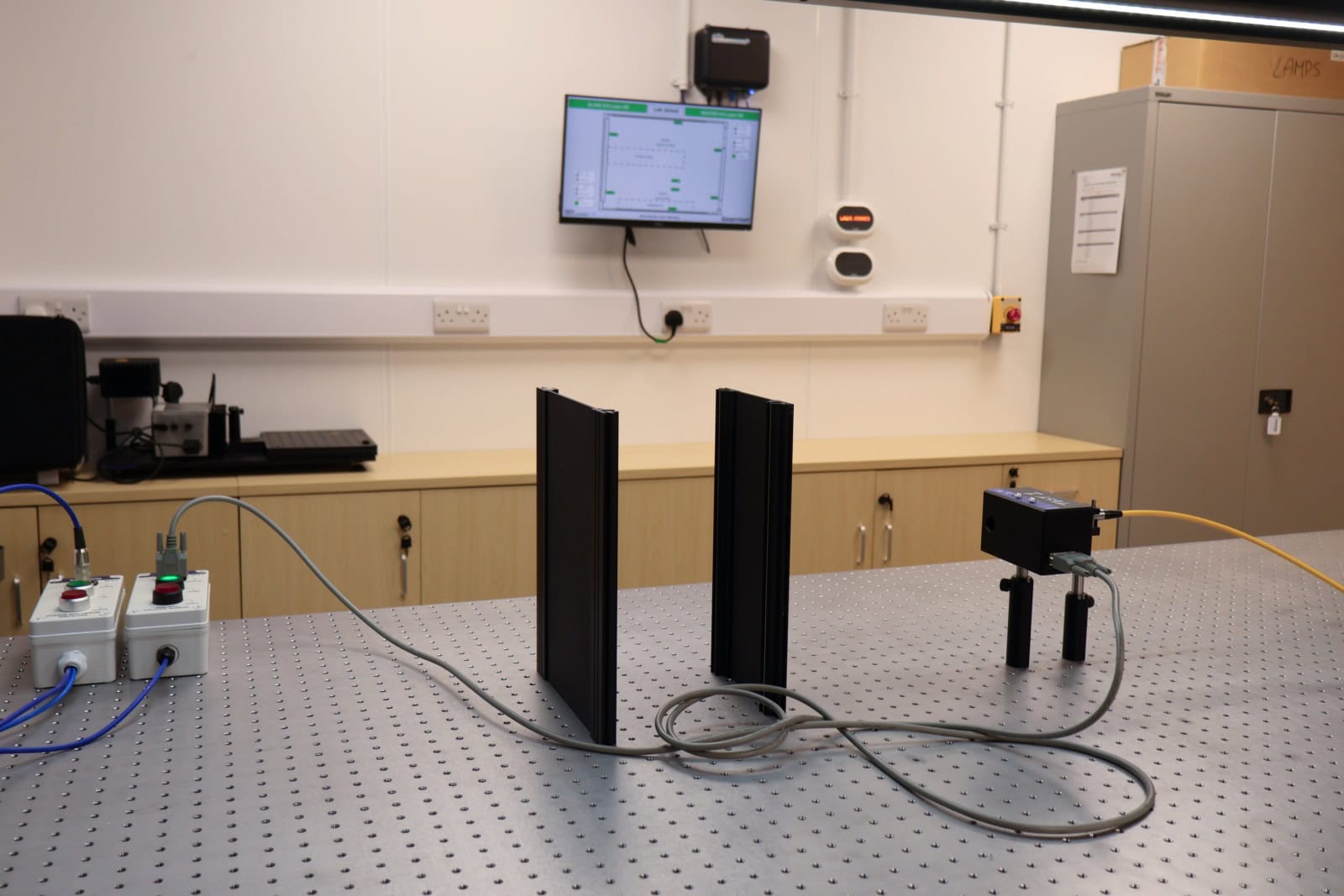
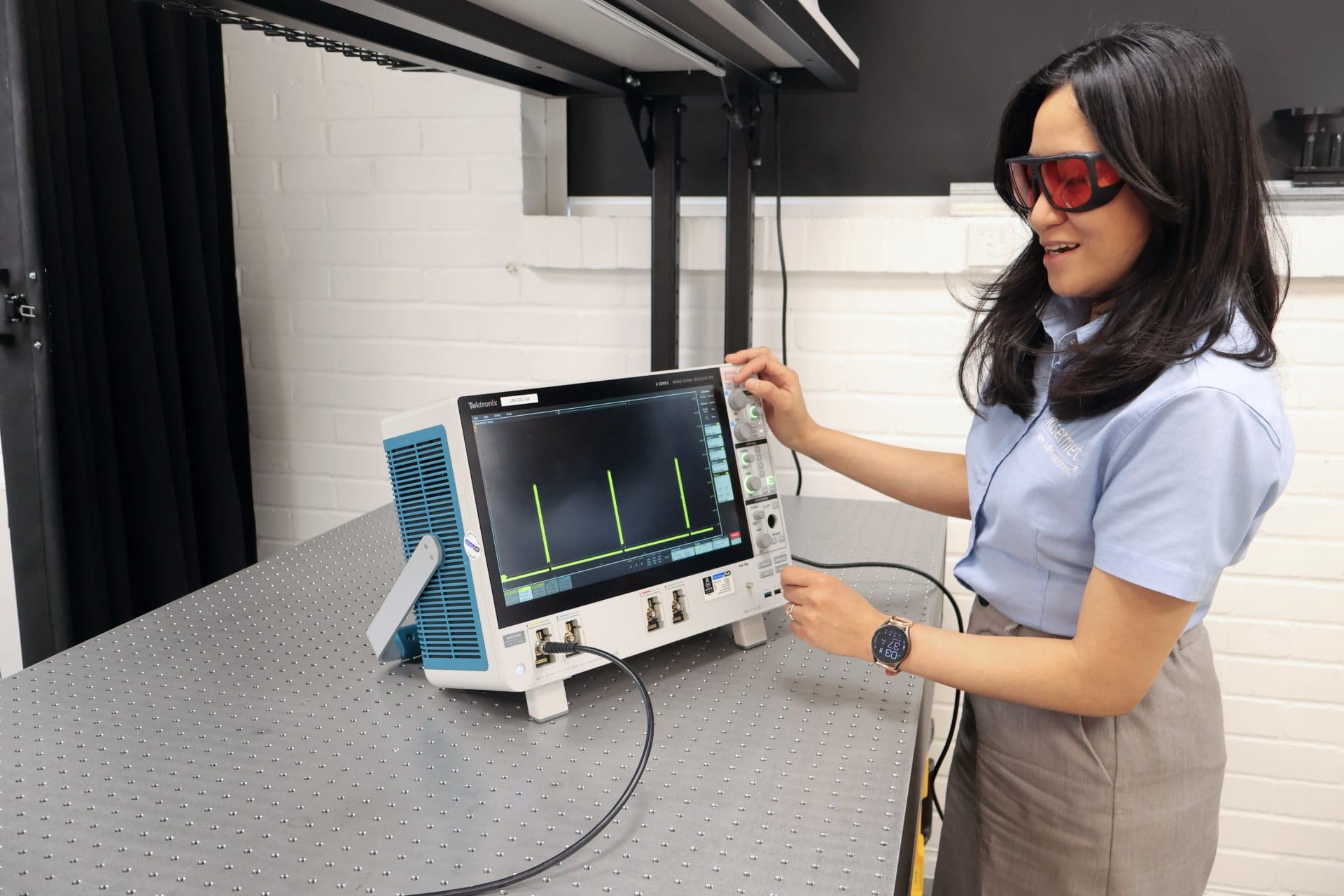
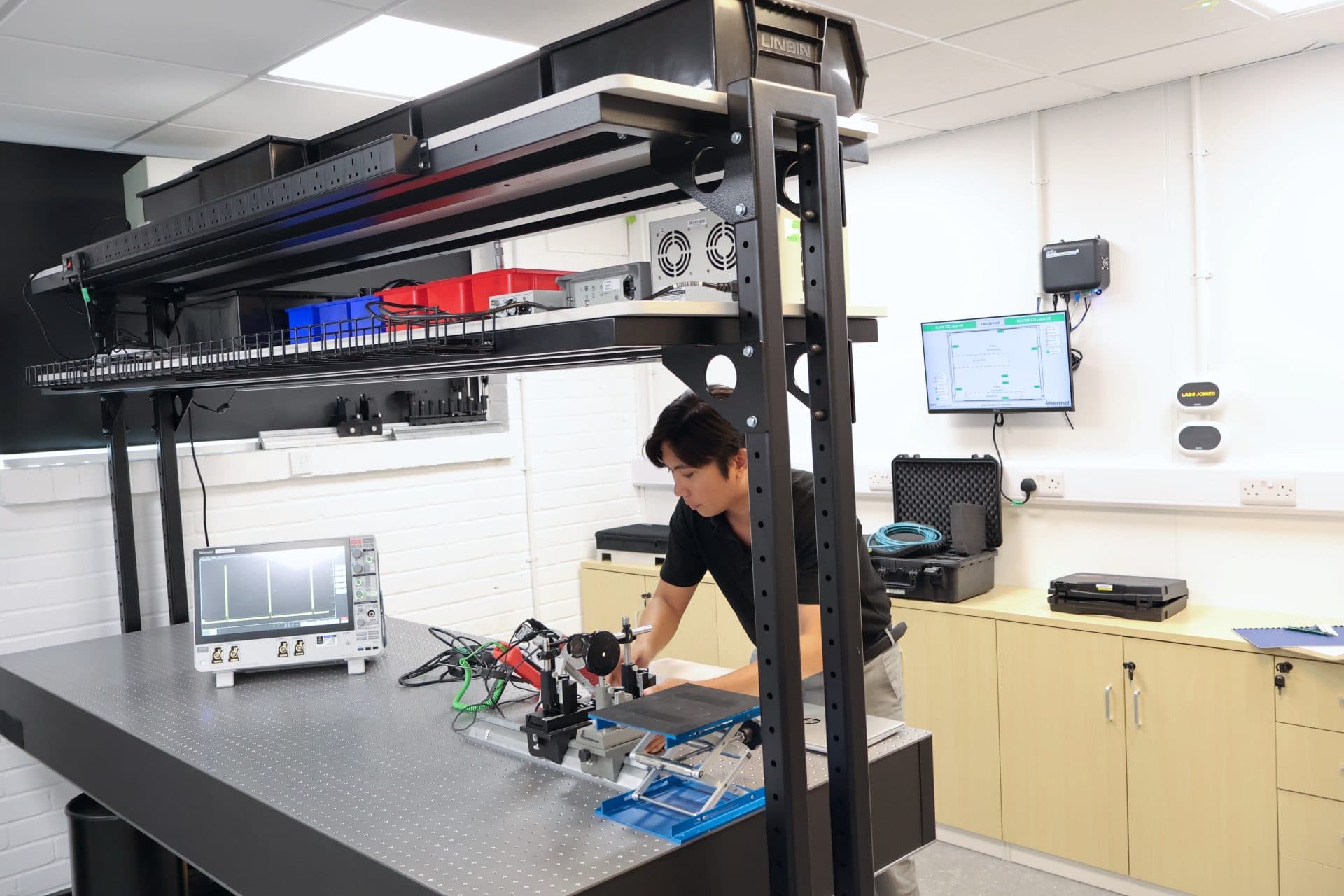
Testing therefore helps manufacturers understand exactly where their product sits within the classification framework. The process may involve examining the product under different operating conditions and taking measurements from locations where optical radiation may be accessible.
UKAS Accredited Laser Testing Lab
Lasermet is the UK’s leading test house for testing to the following standards:
UKAS Accredited Laser Testing Services
- Laser Testing to IEC 60825-1: 2014
- Laser Testing to BS EN 60825-1: 2014 +A1: 2021
Other Laser Testing Services
Lasermet also offer testing to the following standards (non-UKAS):
- Laser Testing to EN 50689: 2021 Consumer Laser
- BS EN IEC 60601-2-22: 2020 Medical Lasers
- IEC 60825-2: 2004 +A2: 2010 Optical Fibre Communication System
- IEC 60825-12: 2019 Free Space Optical Communication Systems
- ISO 15004-1:2020 Ophthalmic instruments
- IEC 60825-1:2014, 2007, 2001 (off-site)
Other Testing Services
- Nominal Ocular Hazard Distance
- Beam Divergence
Fill up a scope of works form today and get a quote from our team. Testing schedules are subject to availability.
LED Testing
Lasermet’s laboratory also provides testing for LED products.
LED technology is used in an enormous range of products, from lighting systems and industrial equipment to medical devices and specialist scientific instruments.
Although LEDs operate differently from lasers, high-intensity optical sources can still create photobiological hazards.
For this reason, certain LED products may need to be assessed to understand the potential exposure produced by the source. Testing can involve measuring the optical radiation emitted by the product and evaluating the potential risk associated with exposure.
The specific measurements required will depend on the characteristics of the source.
Talk to Our Testing Team
Every laser and LED product presents its own set of testing requirements.
The appropriate test depends on factors such as the type of optical source, wavelength, output power, product design and intended application.
If you are developing a laser or LED product and would like to understand the testing requirements that may apply, speak with the Lasermet team.
Our UKAS-accredited Laser and LED Testing Laboratory in Bournemouth can help you determine the appropriate testing approach for your product and support you through the testing process.
Fill up a scope of works form today and get a quote from our team. Testing schedules are subject to availability.