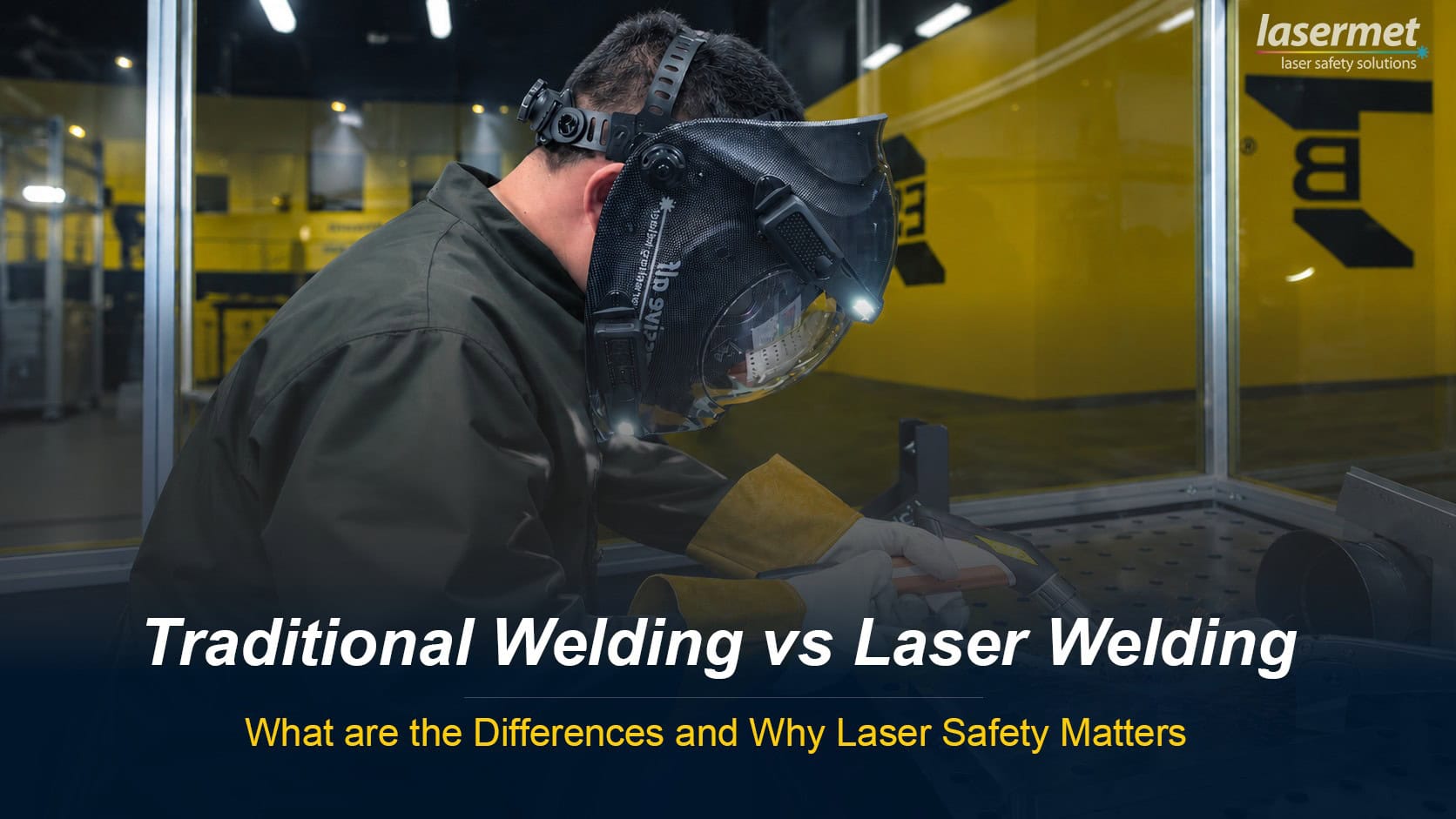
Welding has been the backbone of manufacturing for decades, helping industries produce everything from vehicles and aircraft to medical devices and industrial equipment. While traditional welding remains a trusted and widely used process, laser welding has become increasingly popular for applications that demand greater precision, faster production, and improved repeatability.
Both methods offer unique advantages and limitations, and choosing the right one depends on the application, materials, production requirements, and budget. Understanding these differences is also essential for maintaining a safe working environment, particularly when using high-powered industrial lasers.
In this article, we’ll compare traditional welding and laser welding, highlight the strengths and limitations of each, and explain why laser safety plays a crucial role in modern laser welding operations.
The Evolution of Welding Technology
Welding technology has continuously evolved to meet the growing demands of industries. From manual processes to advanced laser systems, each innovation has improved efficiency, precision, and the quality of welds.
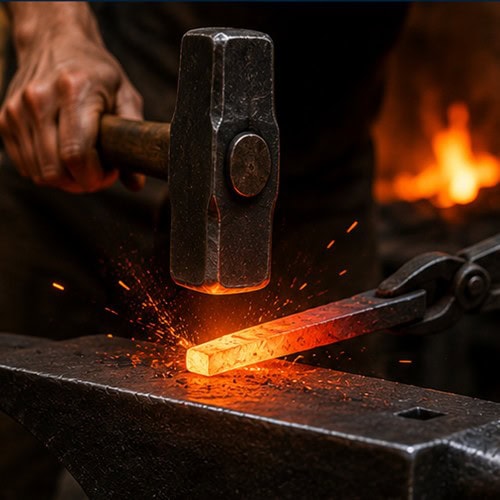
FORGE WELDING
| Before 1800s
Forge welding is one of the oldest metal joining techniques, dating back thousands of years, where blacksmiths heated metal in a forge and hammered the pieces together to create a solid bond. Although labour-intensive, it laid the foundation for the development of modern welding technologies.
Key Advancement
Manual process using heat and hammering
ARC WELDING
| Late 1800s
Introduced in the late 19th century, arc welding uses an electric arc to generate the heat needed to join metals. It revolutionised manufacturing by providing stronger, faster, and more reliable welds than traditional forge welding.
Key Advancement
Electric power enables strong and continuous welding
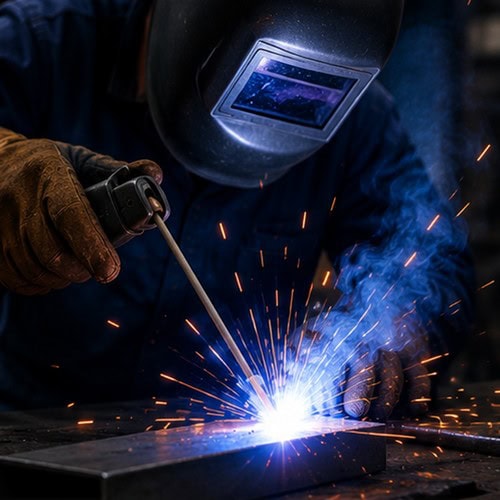
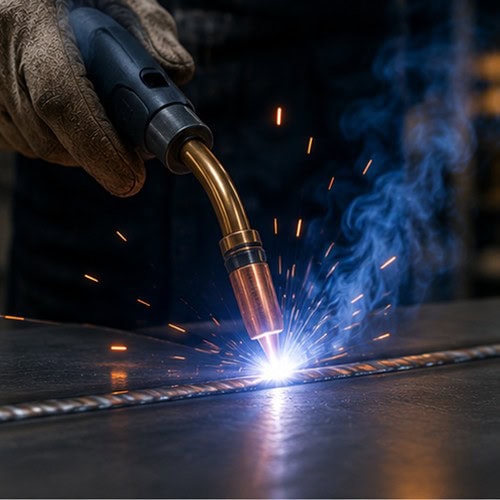
MIG / TIG WELDING
| Mid 1900s
Developed in the mid-20th century, MIG (Metal Inert Gas) and TIG (Tungsten Inert Gas) welding offered greater control, cleaner welds, and improved versatility for a wide range of materials. These processes quickly became industry standards in automotive, fabrication, aerospace, and general manufacturing.
Key Advancement
Better Control, weld quality, and suitability for more applications
LASER WELDING
| 2000s – Present
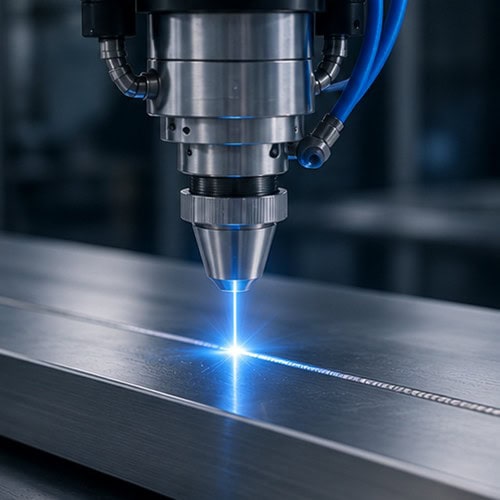
Laser welding uses a highly focused laser beam to create precise, high-quality welds with minimal heat distortion. As its adoption continues to grow across advanced manufacturing, ensuring proper laser safety has become an essential part of modern welding operations.
Key Advancement
Precision, speed, automation, and minimal thermal distortion
Where does Welding play a Critical Role?
Welding is one of the most essential manufacturing processes in the world, forming the foundation of countless products and structures we rely on every day. From building vehicles and aircraft to producing life-saving medical devices and advanced electronics manufacturers to create strong, reliable, and high-quality assemblies.
Today, both traditional welding and laser welding play vital roles across a wide range of industries. While the choice of welding method depends on the application, each industry demands the same fundamental objective-producing durable, precise, and dependable welds.
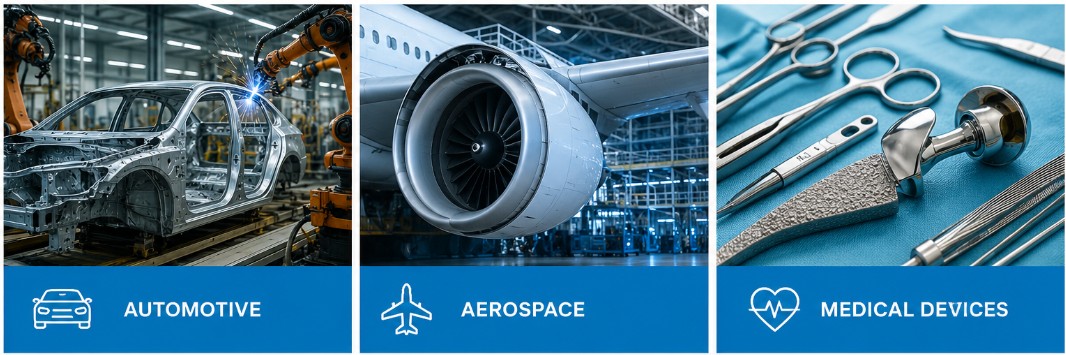
The automotive industry relies on welding to manufacture vehicle bodies, chassis, exhaust systems, battery packs, and structural components. Traditional welding remains widely used for heavy structural assemblies, while laser welding is increasingly adopted for lightweight materials, high-speed production, and electric vehicle manufacturing.
Aircraft and spacecraft require exceptionally strong, lightweight, and highly precise welds. Laser welding offers excellent accuracy and minimal heat distortion, making it well suited for critical aerospace components where performance and reliability are paramount.
Medical devices demand clean, precise, and repeatable welds. Laser welding is commonly used to manufacture surgical instruments, implants, and diagnostic equipment because it produces high-quality joints with minimal thermal impact on delicate components.
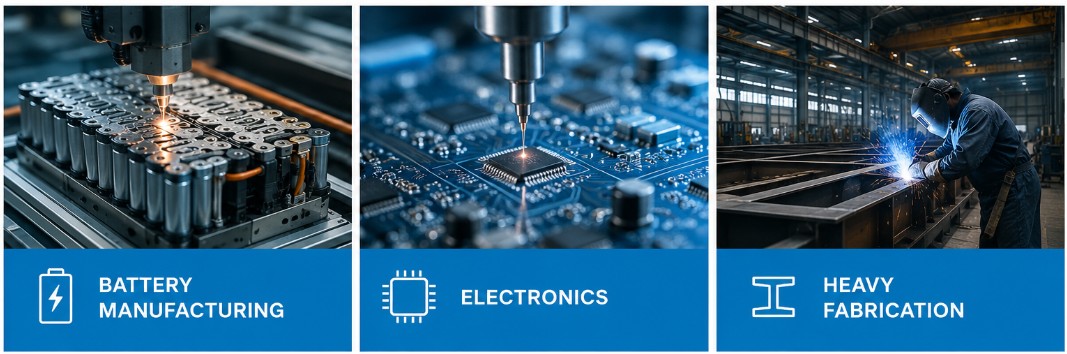
As electric vehicles and energy storage systems continue to grow, battery manufacturing has become one of the fastest-growing applications for laser welding. It enables precise joining of battery cells, tabs, and electrical connections while maintaining product consistency and production efficiency.
Modern electronic devices contain miniature components that require highly accurate welding. Laser welding is ideal for joining small, delicate parts without affecting surrounding materials, making it widely used in sensors, circuit assemblies, and precision electronics.
Heavy fabrication industries such as construction, shipbuilding, and industrial equipment manufacturing continue to rely heavily on traditional welding for large structural assemblies. However, laser welding is increasingly being introduced for applications that require greater precision, faster production, and reduced post-processing.
Understanding Traditional Welding
Traditional welding has been the backbone of metal fabrication for more than a century, enabling manufacturers to join metals through the application of heat, pressure, or both. It remains one of the most widely used manufacturing processes due to its versality, reliability, and ability to produce strong, durable joints across a broad range of materials and applications.
Several welding techniques fall under the category of traditional welding, each designed to meet specific manufacturing requirements. Among the most commonly used are Metal Inert Gas (MIG) welding, Tungsten Inert Gas (TIG) welding, Shielded Metal Arc Welding (Stick welding) and Resistance Spot Welding. These processes continue to play a vital role in industries such as construction, automotive manufacturing, shipbuilding, and heavy fabrication.
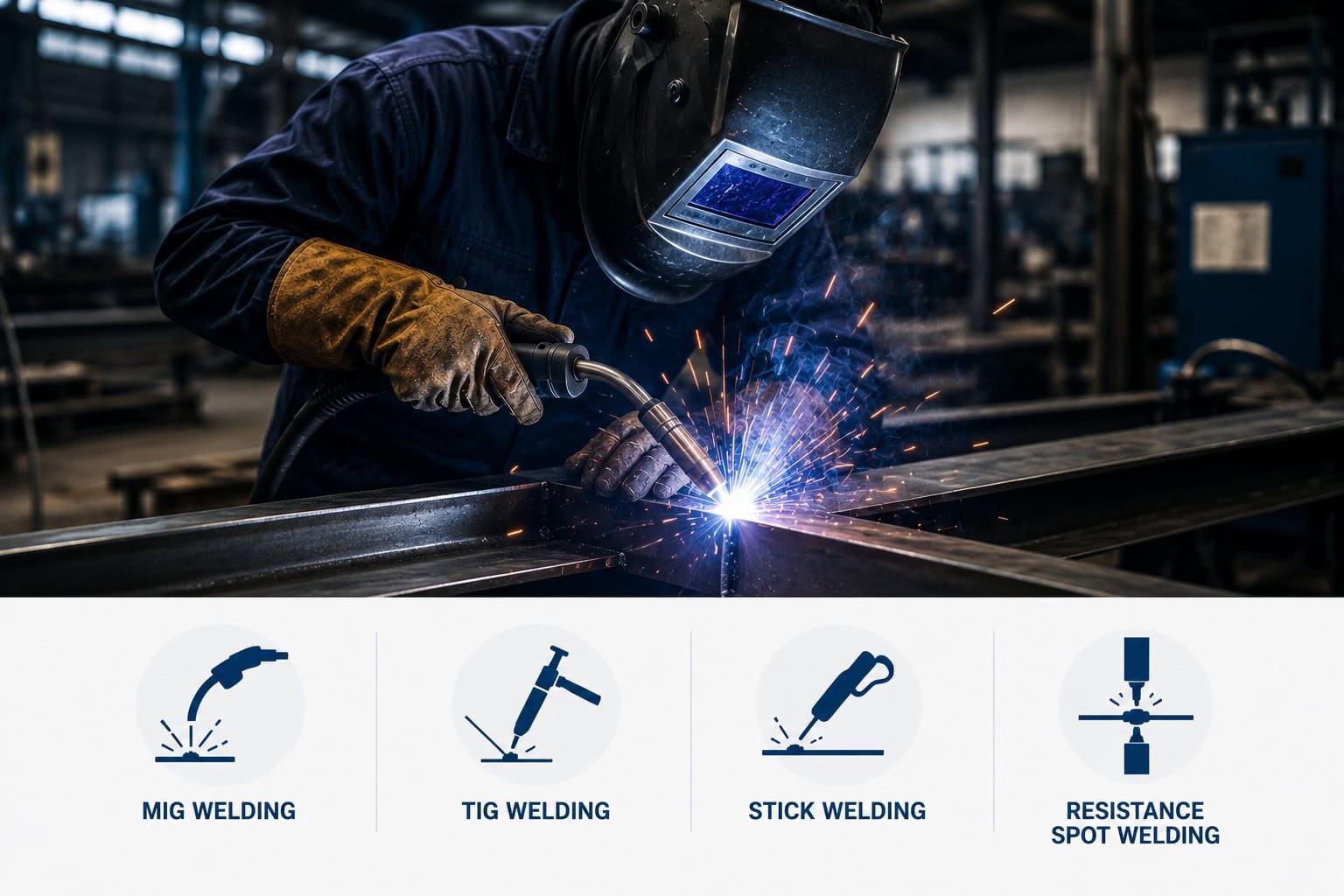
Advantages of Traditional Welding
Traditional welding remains the preferred choice for many applications because it offers several practical benefits:
Limitations of Traditional Welding
Despite its widespread use, traditional welding also has limitations that can affect productivity and weld quality in certain applications.
Understanding Laser Welding
Laser welding is an advanced welding process that uses a highly focused laser beam to join metal components with exceptional precision. Unlike traditional welding methods that rely on electric arcs or gas flames, laser welding concentrates energy into a very small area, creating deep, narrow welds while minimizing heat transfer to the surrounding material.
This controlled heat input results in cleaner welds, reduced distortion, and improved repeatability, making laser welding particularly well suited for industries where precision and consistency are essential. Today, it is widely used in automotive manufacturing, aerospace, medical device production, electronics, and battery manufacturing, where high-quality welds and automated production are critical.
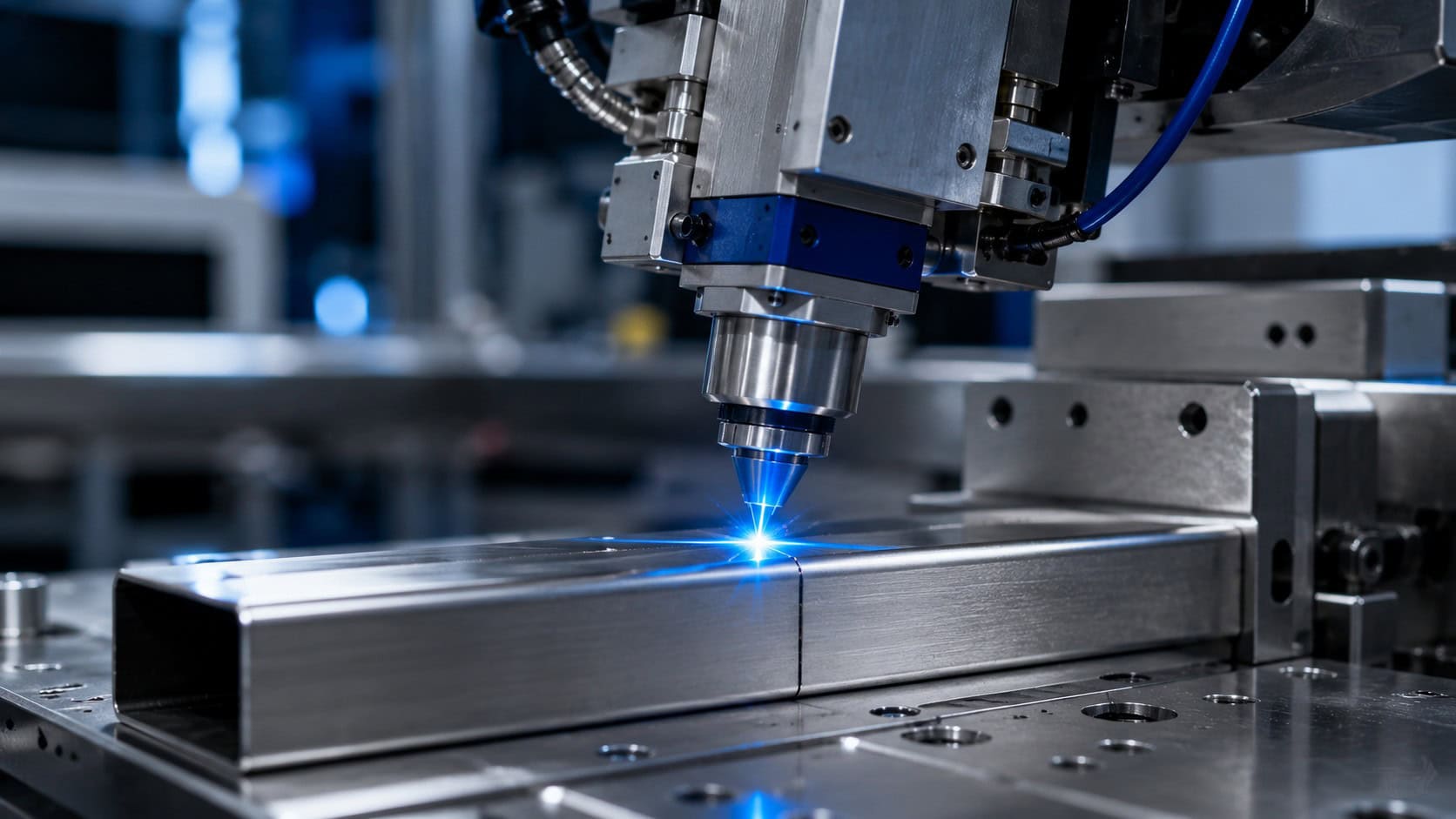
Advantages of Laser Welding
Laser welding has become the preferred choice for many precision manufacturing applications because it offers several significant advantages:
Limitations of Laser Welding
Despite its many advantages, laser welding also has limitations that should be considered when selecting the most suitable welding process.
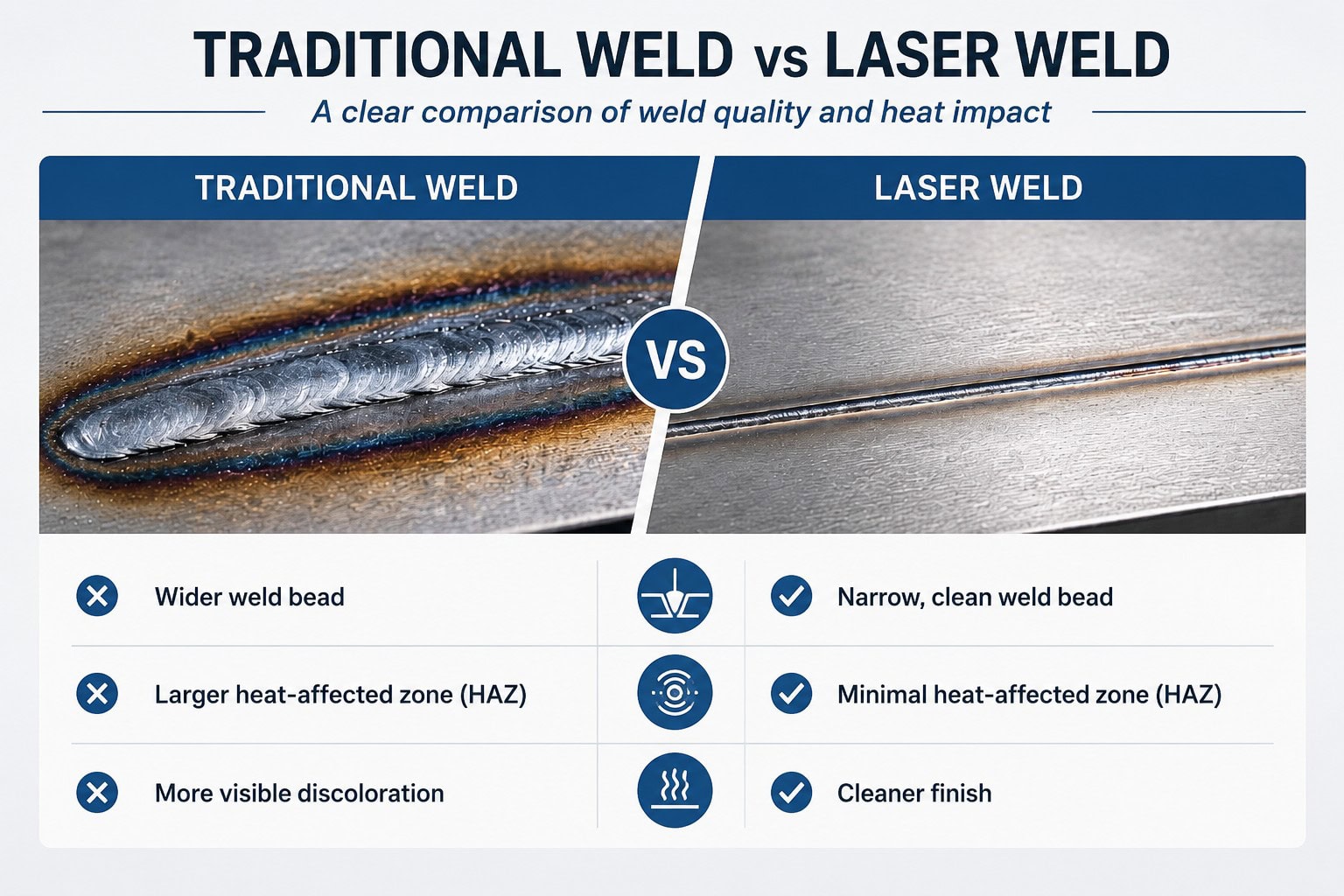
Why Laser Safety Matters
As industries continue to adopt laser welding for its precision, speed, and automation capabilities, ensuring safe operation becomes just as important as selecting the right welding process. Unlike traditional welding, laser welding uses concentrated beams of high-powered laser radiation that can pose serious hazards to both operators and nearby personnel if not properly controlled. Direct or reflected laser beams can cause severe eye injuries and skin burns, making effective engineering controls essential.
A safe laser welding environment relies on more than personal protective equipment. It requires a combination of engineering controls such as laser safety interlock systems, protective enclosures, certified laser safety windows, access control devices, emergency stop systems, and illuminated warning signs. Together, these measures help prevent accidental exposure while allowing laser systems to operate safely and efficiently.
Laser safety systems should also be designed in accordance with recognized international safety standards. Standards for laser guards provide guidance on the safe design, installation, and operation of laser systems and protective equipment. Following these standards helps organizations create safer workplaces while supporting regulatory compliance and industry best practices.

Relevant Laser Safety Standards
How Lasermet Supports Safe Laser Welding Operations
As laser welding becomes increasingly common across industries, implementing effective engineering controls is essential to help protect personnel and maintain safe operations. A comprehensive laser safety system extends beyond personal protective equipment (PPE) by integrating multiple engineering controls that work together to control access, monitor system status, and prevent accidental laser exposure.
Lasermet provides a complete range of laser safety solutions designed to support safe and compliant laser welding environments. Whether protecting a single laser workstation or an entire automated manufacturing cell, these integrated technologies work together to help organizations create safer workplaces without compromising productivity.
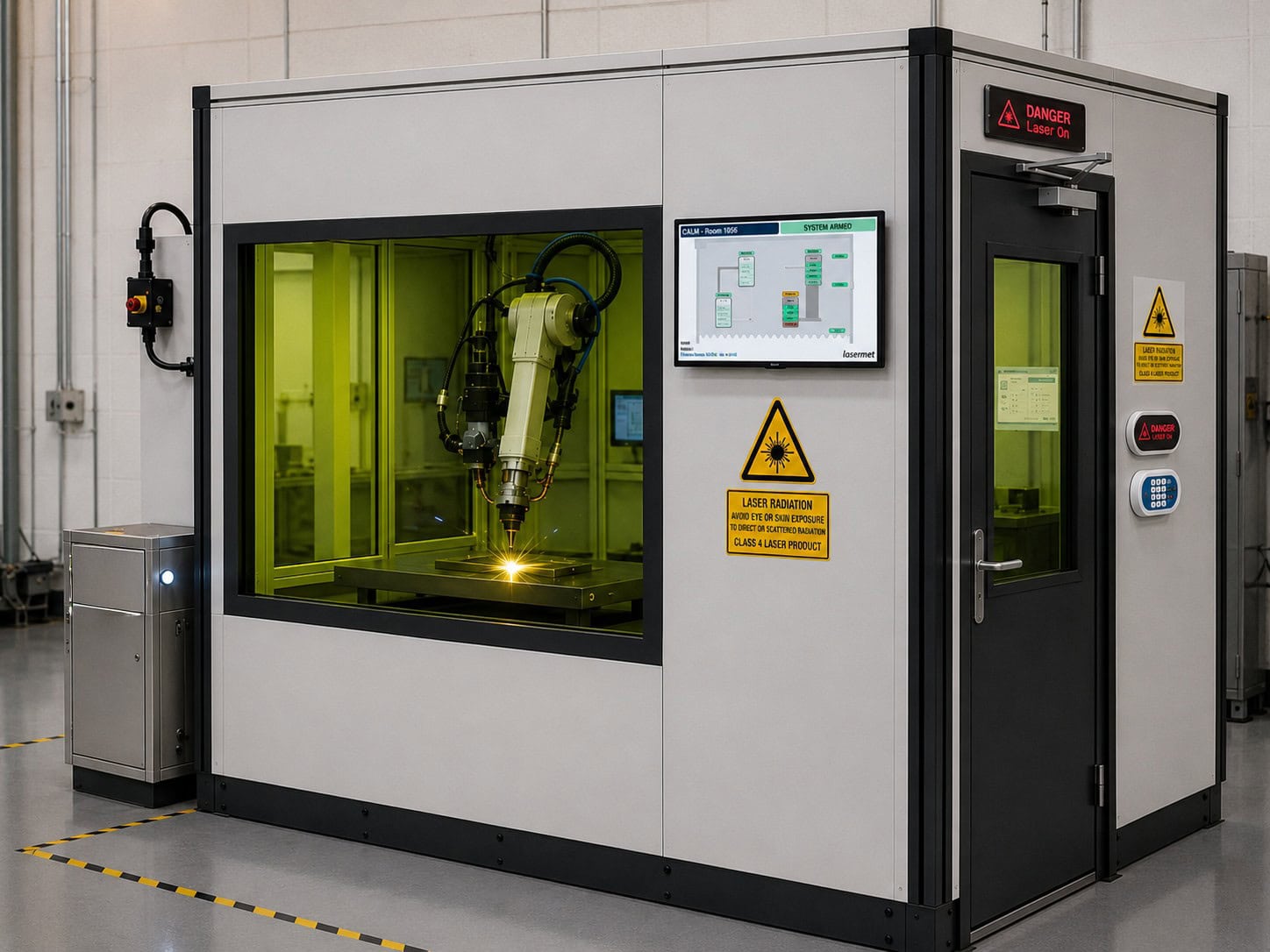
Integrated Laser Safety Solutions
A complete laser welding safety system combines multiple engineering controls that work together to create a safe and compliant working environment.
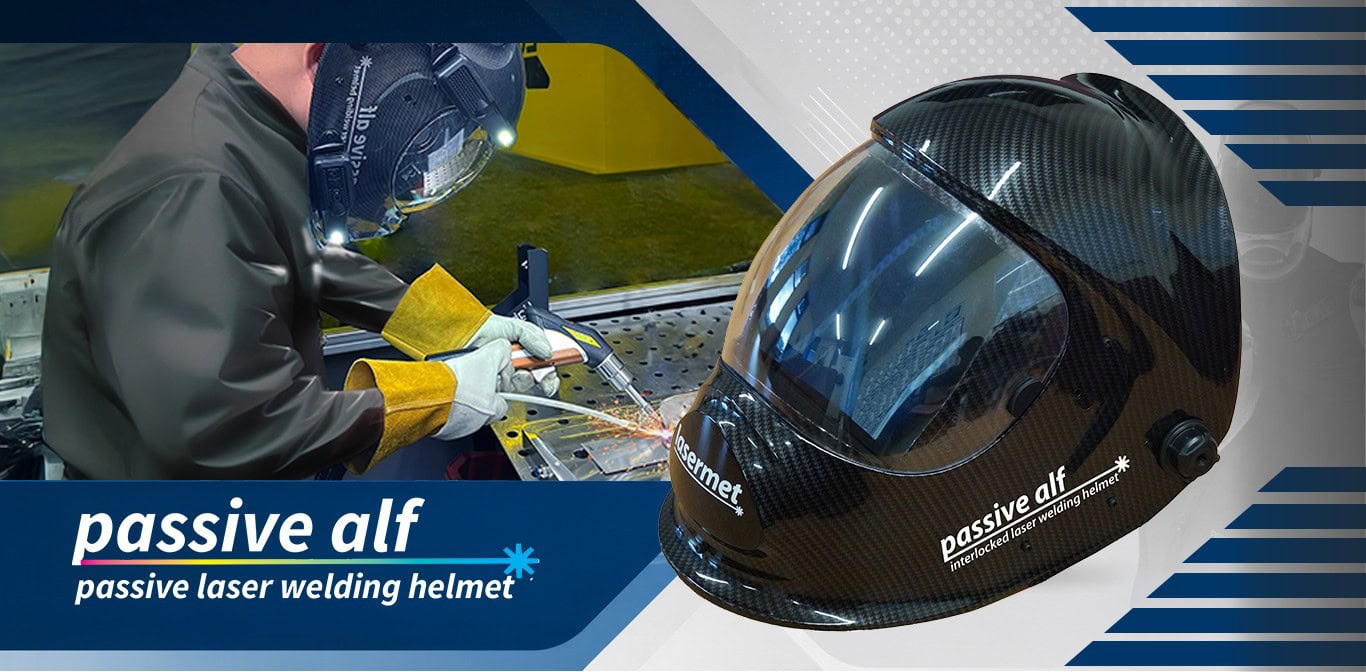
Passive ALF Laser Welding Helmet
Illuminated warning signs clearly communicate the operational status of the laser system, displaying messages such as Laser On, Laser Off, or No Hazard. These visual indicators help personnel quickly determine when it is safe to enter a controlled laser a
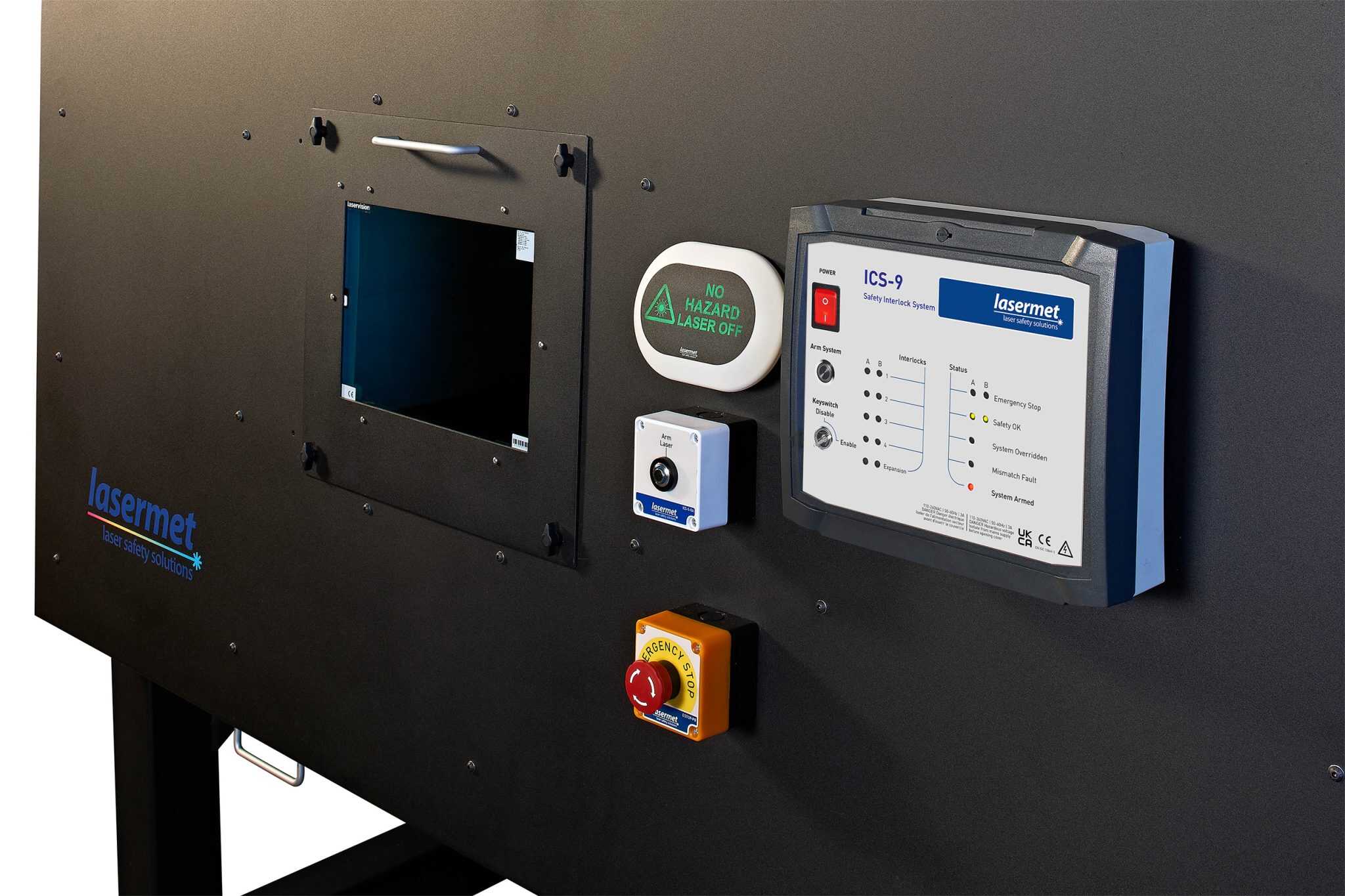
Laser Safety Interlock Systems
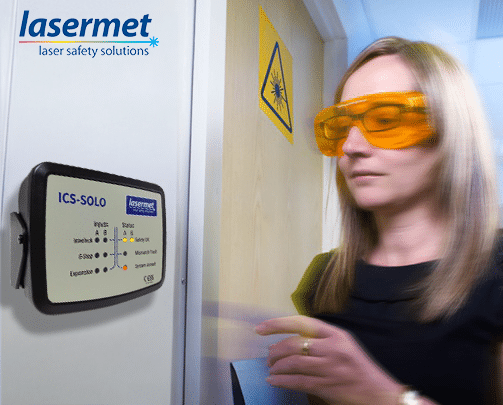
The laser safety interlock controller is the heart of the laser safety system. It continuously monitors interlocked doors, emergency stop devices, shutters, warning signs, and other safety components to ensure the laser can only operate when every configured safety condition has been satisfied. If a fault or unsafe condition is detected, the system automatically places the laser into a safe state.
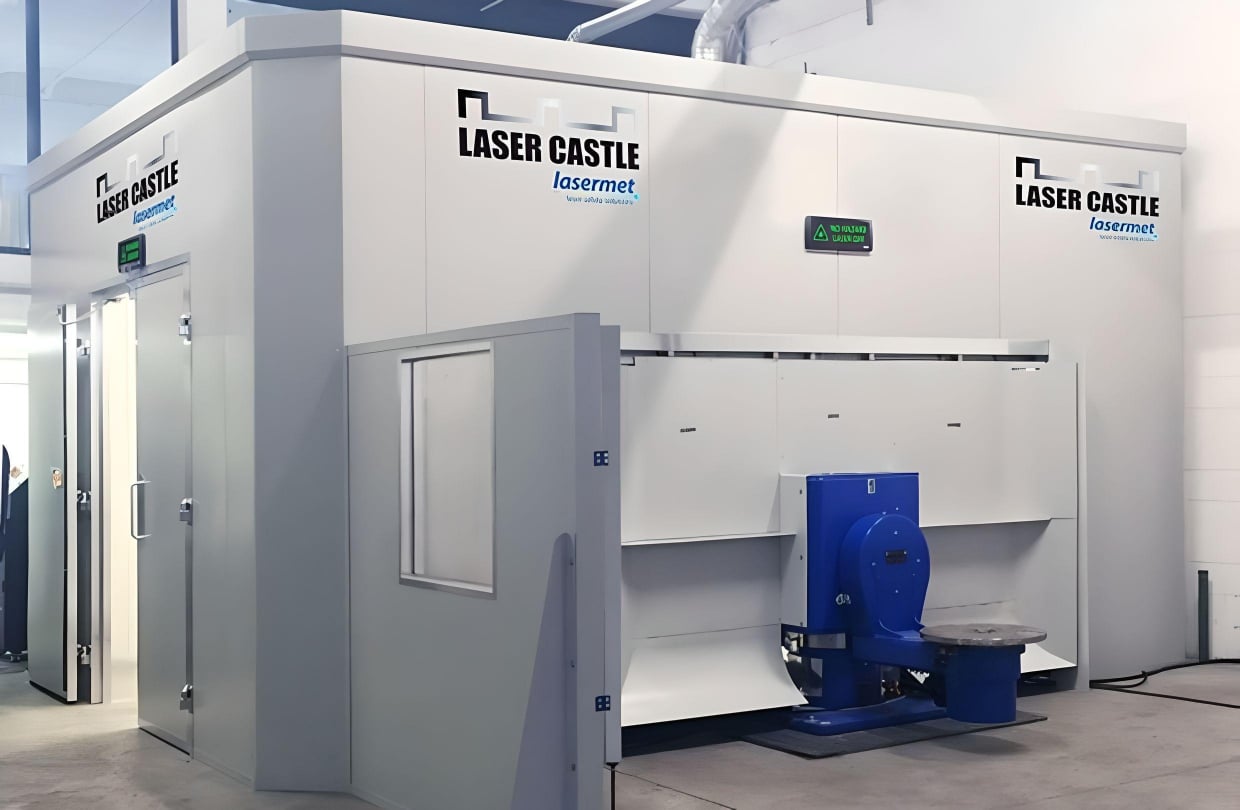
Laser Safety Enclosures
Laser safety enclosures physically contain hazardous laser radiation within the controlled working area. Designed to meet recognized laser safety standards, they help prevent accidental exposure while allowing laser welding processes to operate safely and efficiently.
Bringing It All Together
Effective laser safety is achieved when every component works together as part of an integrated system. From laser safety interlocks and monitoring systems to protective enclosures, certified viewing windows, warning devices, and access control, each element plays a critical role in protecting personnel and supporting safe laser welding operations.
By implementing a comprehensive laser safety solution, manufacturers can confidently adopt laser welding technology while helping maintain compliance with recognised safety standards, reducing operational risks, and improving overall workplace safety.
Traditional welding and laser welding each play an important role in modern manufacturing, with the choice ultimately depending on the application’s requirements. While traditional welding remains a proven solution for structural and heavy-duty fabrication, laser welding offers significant advantages in precision, speed, automation, and repeatability for high-performance manufacturing.
As laser welding continues to grow across industries, ensuring a safe working environment is just as important as achieving high quality welds. Implementing appropriate engineering controls, including laser safety interlock systems, protective enclosures, certified viewing windows, warning devices, and access control systems, helps protect personnel while supporting safe and efficient operations.
Whether you are integrating a new laser welding system or upgrading an existing facility, investing in effective laser safety solutions is essential for creating a safer, more productive, and standards-compliant workplace.