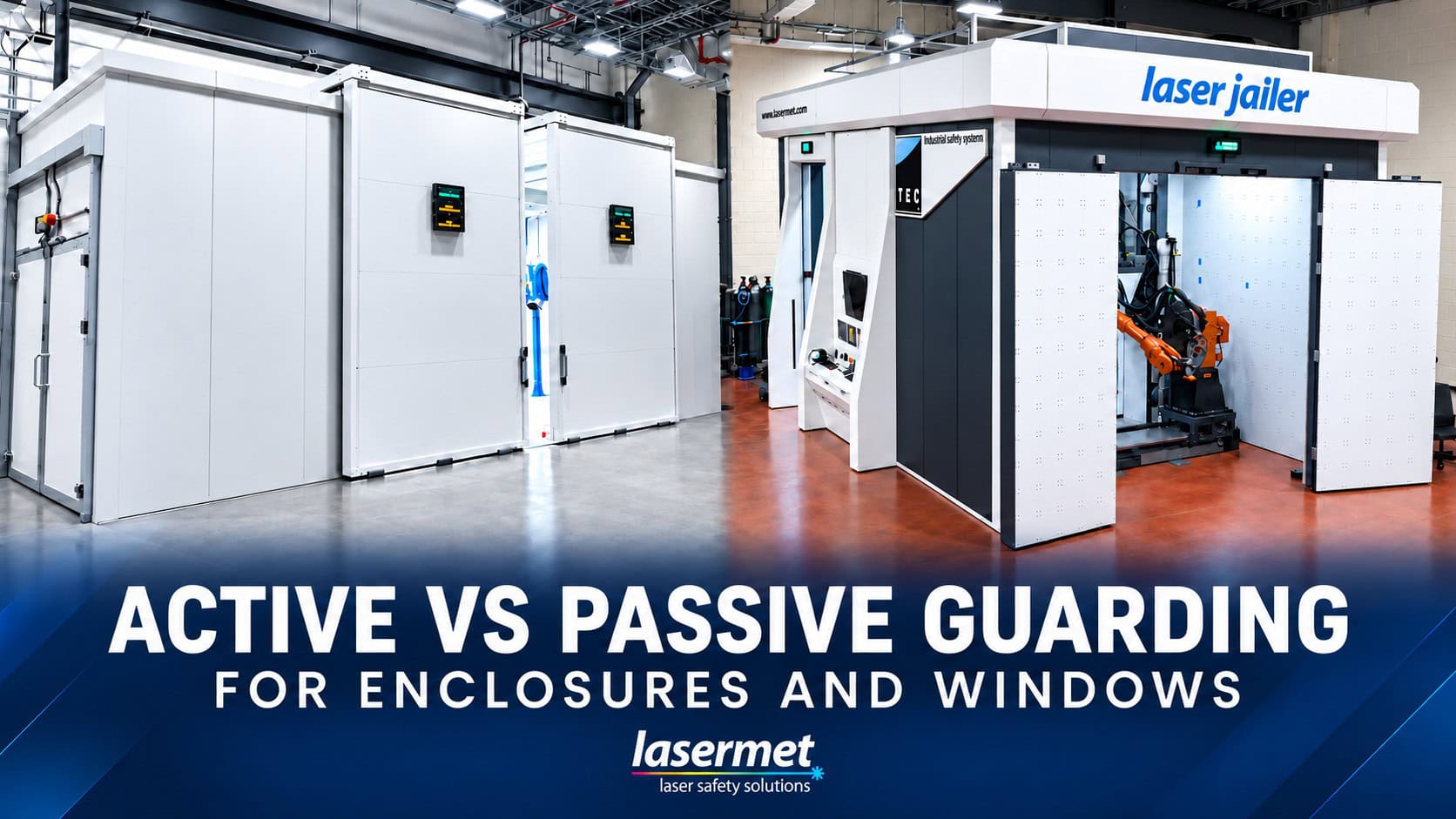
Laser safety is a critical consideration wherever hazardous laser radiation is present. Whether in manufacturing, research, medical, or industrial environments, protecting personnel from accidental laser exposure is essential for maintaining a safe and compliant workplace.
One of the most effective methods of safeguarding personnel is the use of appropriately designed laser guarding systems. These systems create a protective barrier that contains hazardous laser radiation and helps prevent accidental exposure to laser beams during operation. Selecting the right guarding solution is not only important for safety but also for meeting the requirements of international laser safety standards.
Laser guarding generally falls into two categories: Passive Guarding and Active Guarding. While both are designed to protect personnel, they achieve this in different ways and are suited to different applications. Understanding the differences between these approaches enables organisations to choose the most appropriate solution for their specific laser process, improve overall safety, minimise operational risks, and support compliance with recognised laser safety standards.
At Lasermet, we believe that understanding both passive and active laser guarding is fundamental to designing effective laser safety systems. By recognising the strengths, limitations, and ideal applications of each approach, organisations can make informed decisions that provide the highest level of protection for both personnel and equipment.
In this article, we explore the key differences between passive and active laser guarding, their advantages and limitations, and how each contributes to creating a safer laser working environment.
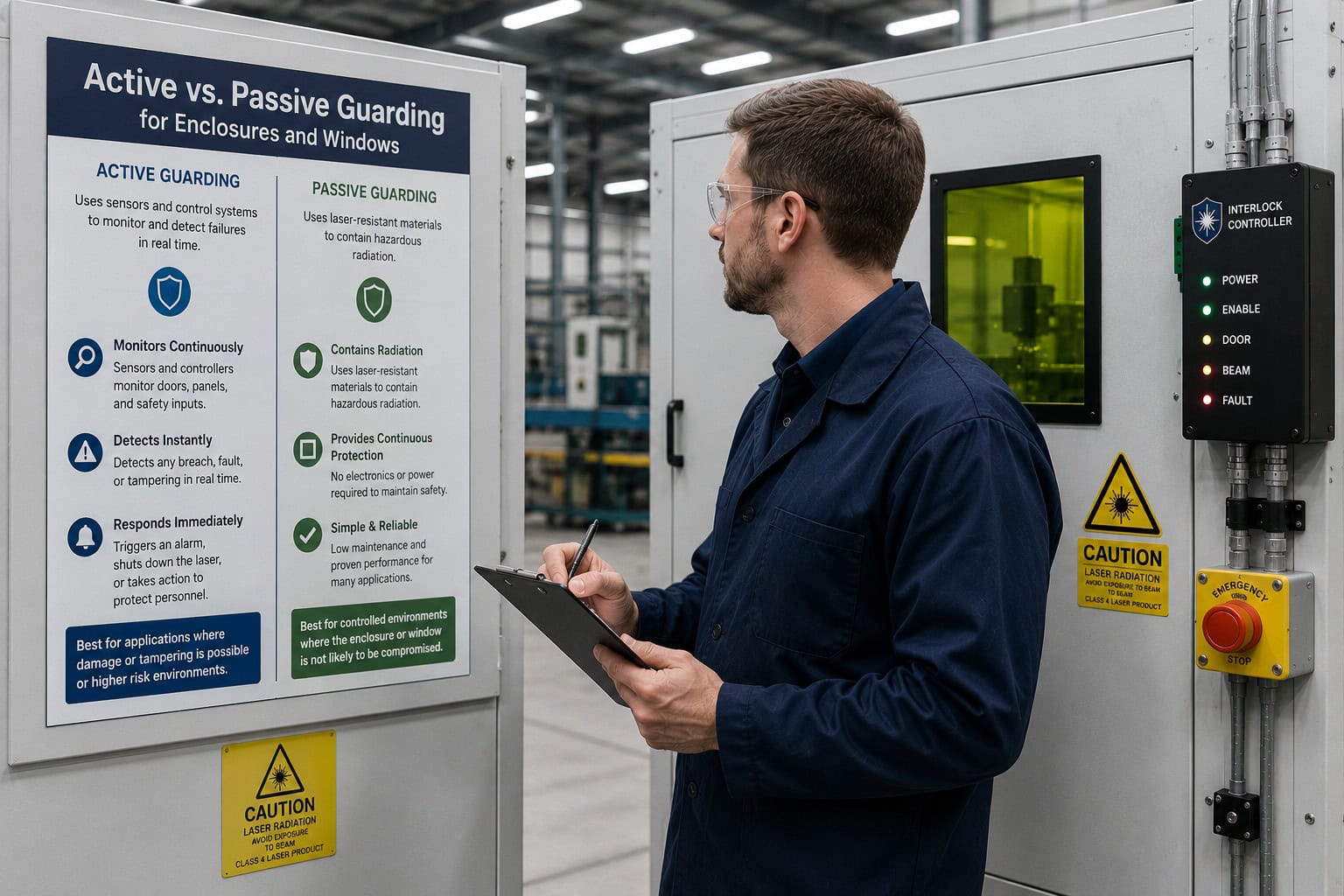
But what exactly is the difference between passive and active guarding?
What Is Passive Guarding?
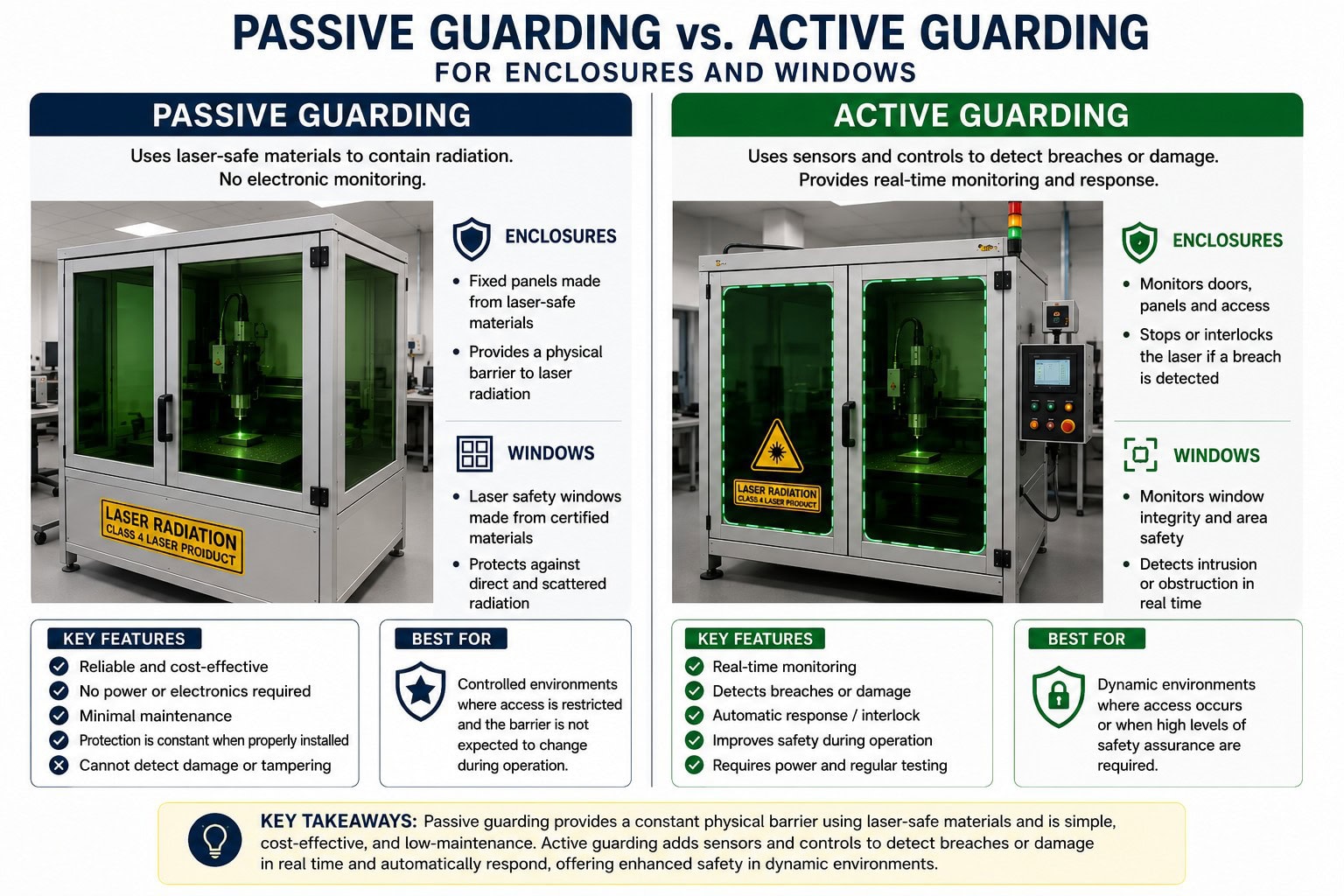
Passive Guarding uses specially engineered laser-resistant materials to contain hazardous laser radiation and prevent it from escaping the controlled area. These protective materials are tested and certified to withstand specific laser wavelengths, power levels, and exposure conditions in accordance with recognised laser safety standards. Unlike active systems, passive guarding relies solely on the physical properties of the material and does not require electronic monitoring or safety circuits.
Typical passive guarding solutions include:
- Laser safety windows
- Laser safety curtains
- Fixed laser enclosure panels
- Laser-safe viewing screens
- Laser safety barriers and partitions
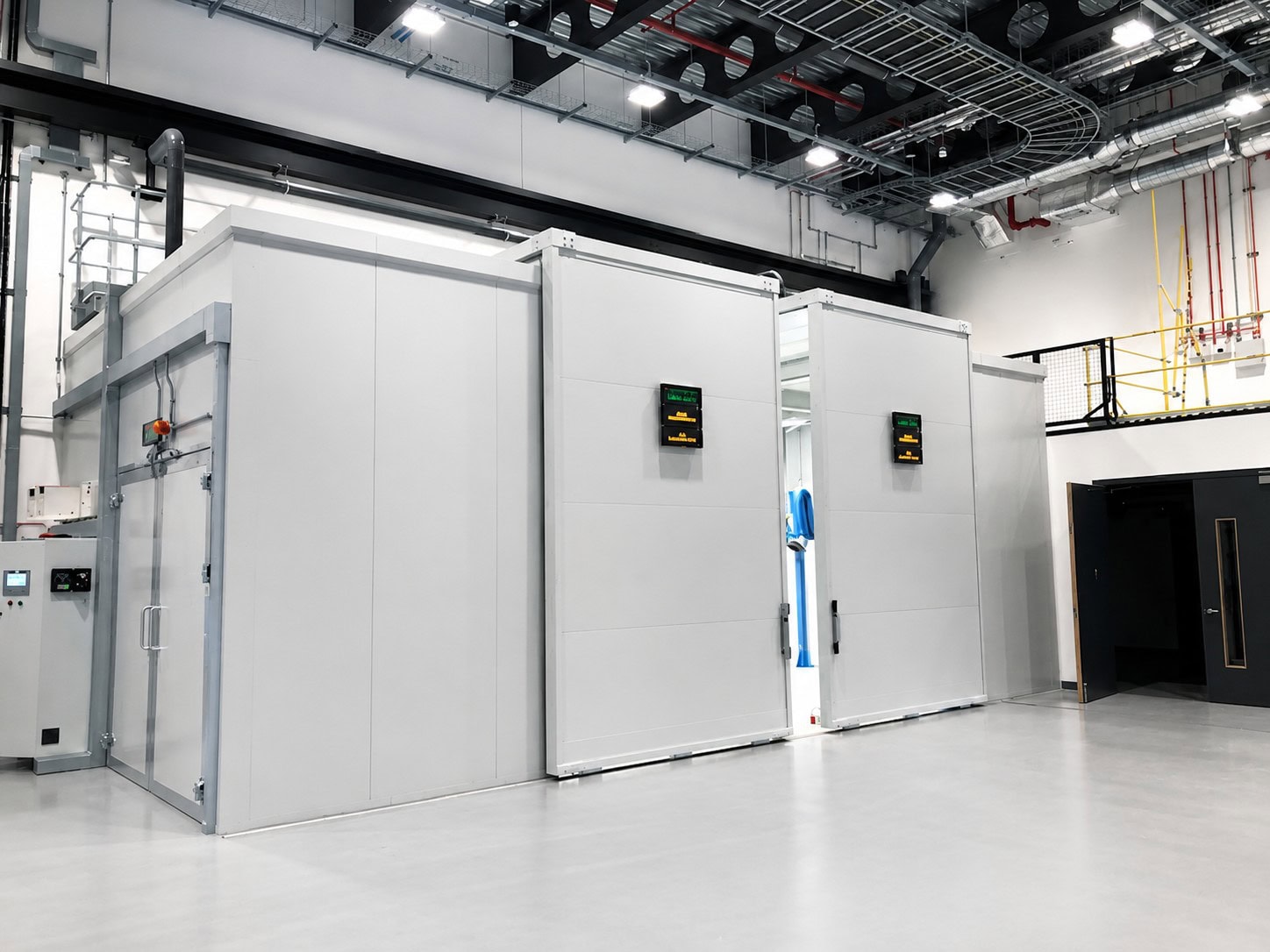
When properly installed and maintained, passive guarding provides continuous protection by absorbing, reflecting, or attenuating hazardous laser radiation. It is a reliable and cost-effective solution for many laser applications, particularly where the risk of sustained or excessive laser exposure to the guarding material is low.
Advantages of Passive Guarding
- Simple installation
- No electronic components
- Minimal maintenance
- Cost-effective protection
- Ideal for many enclosed Class 1 laser systems
The primary limitation of passive guarding is that it cannot determine whether the protective material has been damaged during operation. If excessive laser energy compromises the barrier, the system itself has no means of detecting that failure.
What Is Active Guarding?
Active Guarding combines certified laser-resistant materials with an integrated monitoring system that continuously verifies the integrity of the protective barrier.
If the enclosure or safety window is damaged due to excessive laser exposure or physical impact, the monitoring system immediately communicates with the laser safety interlock, placing the laser into a safe state before hazardous radiation can escape.
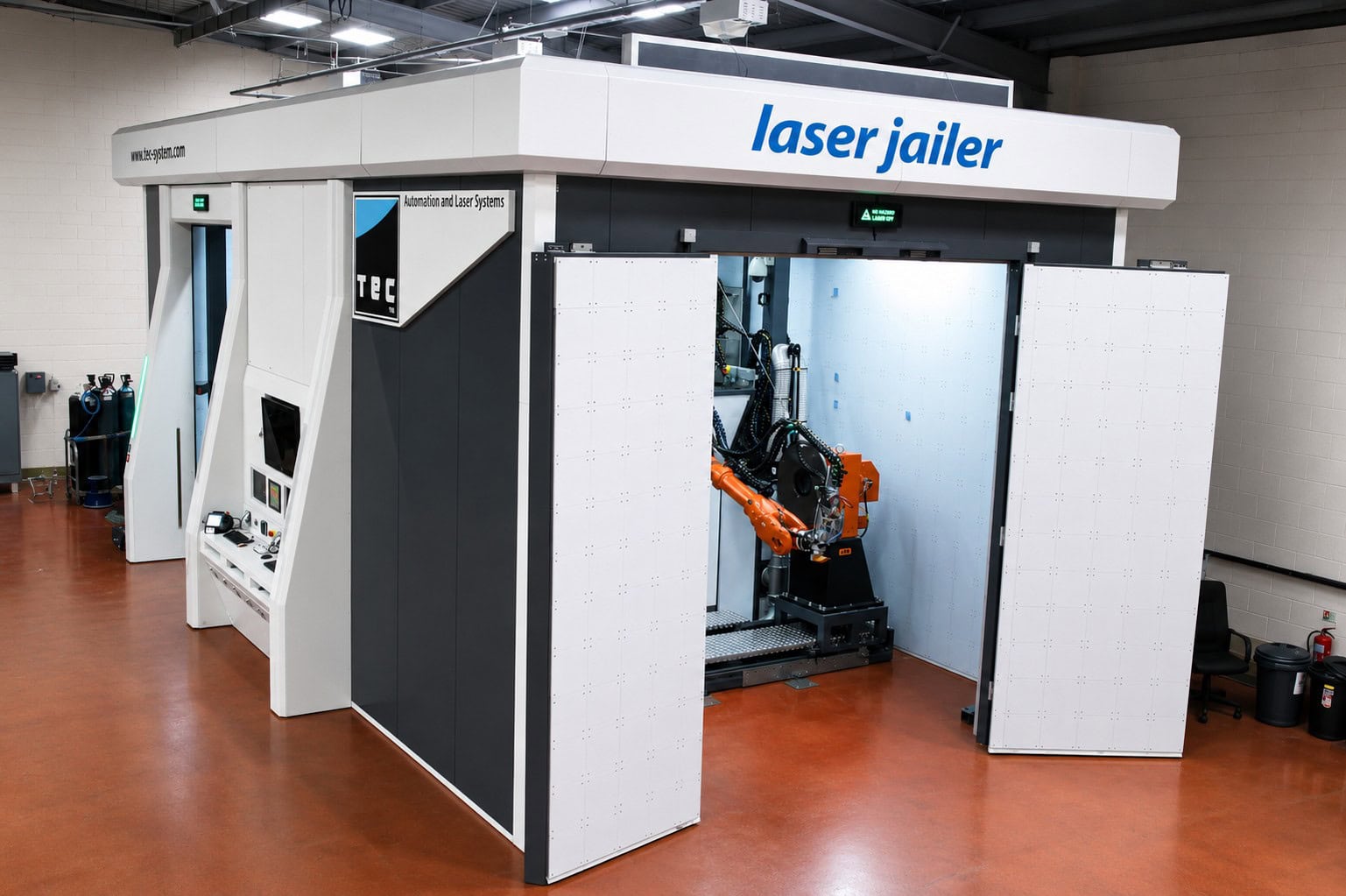
An active guarding system typically includes:
- Fault detection electronics
- Monitored laser safety windows
- Active laser curtains or enclosure panels
- Laser safety interlock controllers
- Safety-rated monitoring circuits
- Fault detection electronics
Rather than relying solely on the laser-resistant properties of the material, active guarding continuously confirms that the protective barrier remains fully effective throughout operation.
Advantages of Active Guarding
- Continuous real-time monitoring
- Automatic detection
- Immediate safety response
- Enhanced personnel protection
- Improved operational safety
- Early fault detection
- Ideal for high-power and high-risk laser applications
- Provides an additional layer of protection
Active guarding continuously monitors the integrity of laser enclosures and windows, automatically detecting damage and initiating a rapid safety response to enhance protection, reliability, and operational safety.
Why High-Power Lasers Require Additional Protection
Modern fibre lasers used in industrial manufacturing frequently operate between 4kW and 30kW, with some systems exceeding 100kW.
As laser power increases, so do the potential hazards.
Higher-power laser beams can produce:
- More energetic reflections
- Increased thermal loading on guarding materials
- Faster degradation of protective barriers
- Greater risk of localised damage following beam misalignment
Although passive guarding is designed to withstand specified laser exposures, repeated beam strikes or unexpected process failures may reduce its protective performance over time.
For high-power installations, early detection of guarding damage becomes an important part of maintaining a safe laser environment.
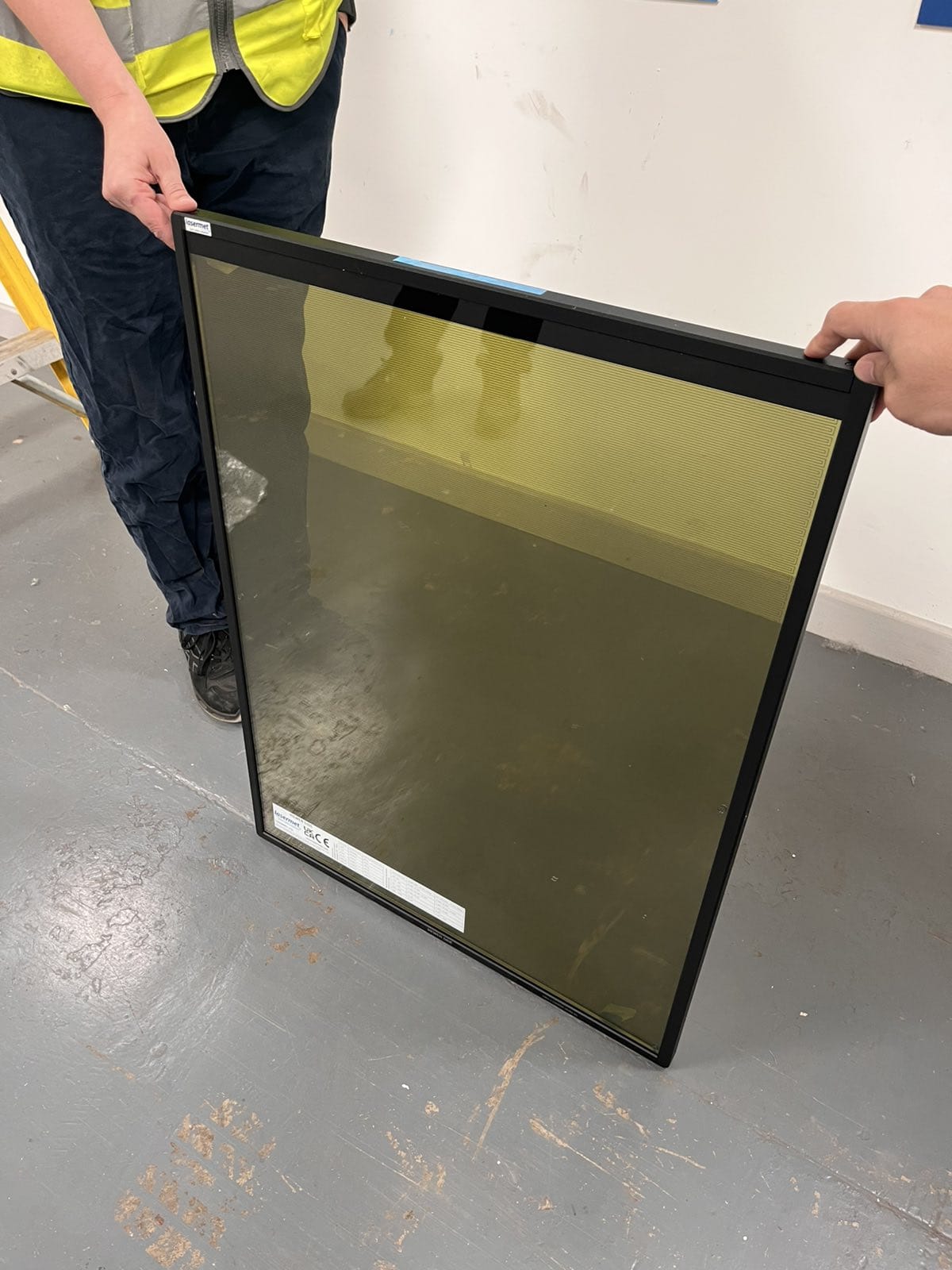
Why Lasermet Recommends Active Guarding for High-Power (>4kW) Laser Applications
Industrial laser systems continue to evolve, with fibre lasers now commonly operating at powers well above 4kW for cutting, welding, cladding, and additive manufacturing. While these higher power levels deliver greater productivity and precision, they also increase the demands placed on laser safety systems.
One of the most important considerations when designing a safe laser installation is selecting the appropriate guarding for laser enclosures and safety windows. Although passive laser guarding remains suitable for many applications, high-power laser systems can present additional risks that benefit from continuous monitoring.
For laser systems operating above 4kW, Lasermet recommends active guarding because it continuously monitors the condition of laser safety windows and enclosure materials.
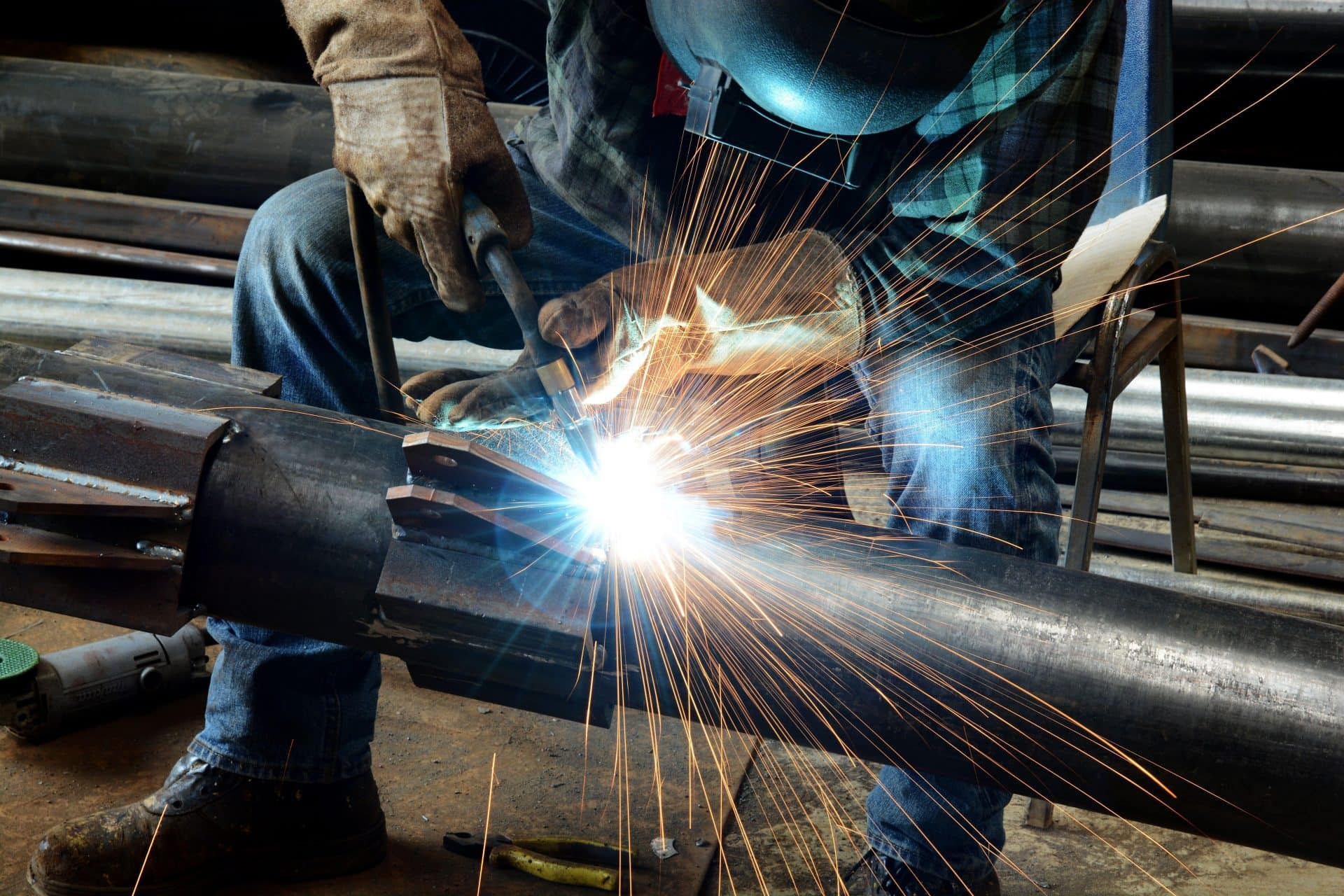
If excessive laser energy damages the protective barrier:
- The monitoring system detects the fault.
- The laser safety controller receives the fault signal.
- The laser is immediately placed into a safe state.
- Maintenance personnel can investigate and replace the damaged component before operation resumes.
Rather than relying solely on scheduled inspections, active guarding provides real-time verification that the enclosure remains fully functional during operation. While the exact guarding solution should always be determined through a comprehensive laser risk assessment, active guarding offers significant additional protection for high-power laser applications.
Passive vs. Active Guarding
| Feature | Passive Guarding | Active Guarding |
|---|---|---|
| Physical laser protection | ✔ | ✔ |
| Continuous integrity monitoring | ✖ | ✔ |
| Detects guarding damage | ✖ | ✔ |
| Automatic laser shutdown | ✖ | ✔ |
| Integration with safety interlocks | ✖ | ✔ |
| Best suited for | Low- to medium-power lasers | High-power industrial lasers (>4 kW recommended by Lasermet) |
Laser Safety Windows: Passive or Active?
Passive Laser Safety Windows
Passive laser safety windows provide certified optical protection for specified wavelengths and power levels.
They are widely used in laboratory, research, and industrial laser systems where the likelihood of barrier damage is relatively low.
Active Laser Safety Windows
Active laser safety windows incorporate monitoring technology capable of detecting thermal damage or penetration caused by excessive laser exposure.
When connected to a safety-rated interlock controller, any detected fault immediately triggers the laser safety system, preventing further hazardous laser emission.
Active laser safety windows are particularly beneficial for:
- High-power fibre laser cutting
- Laser welding
- Additive manufacturing
- Robotic laser cells
- Automated production lines
- Remote or unattended laser processing
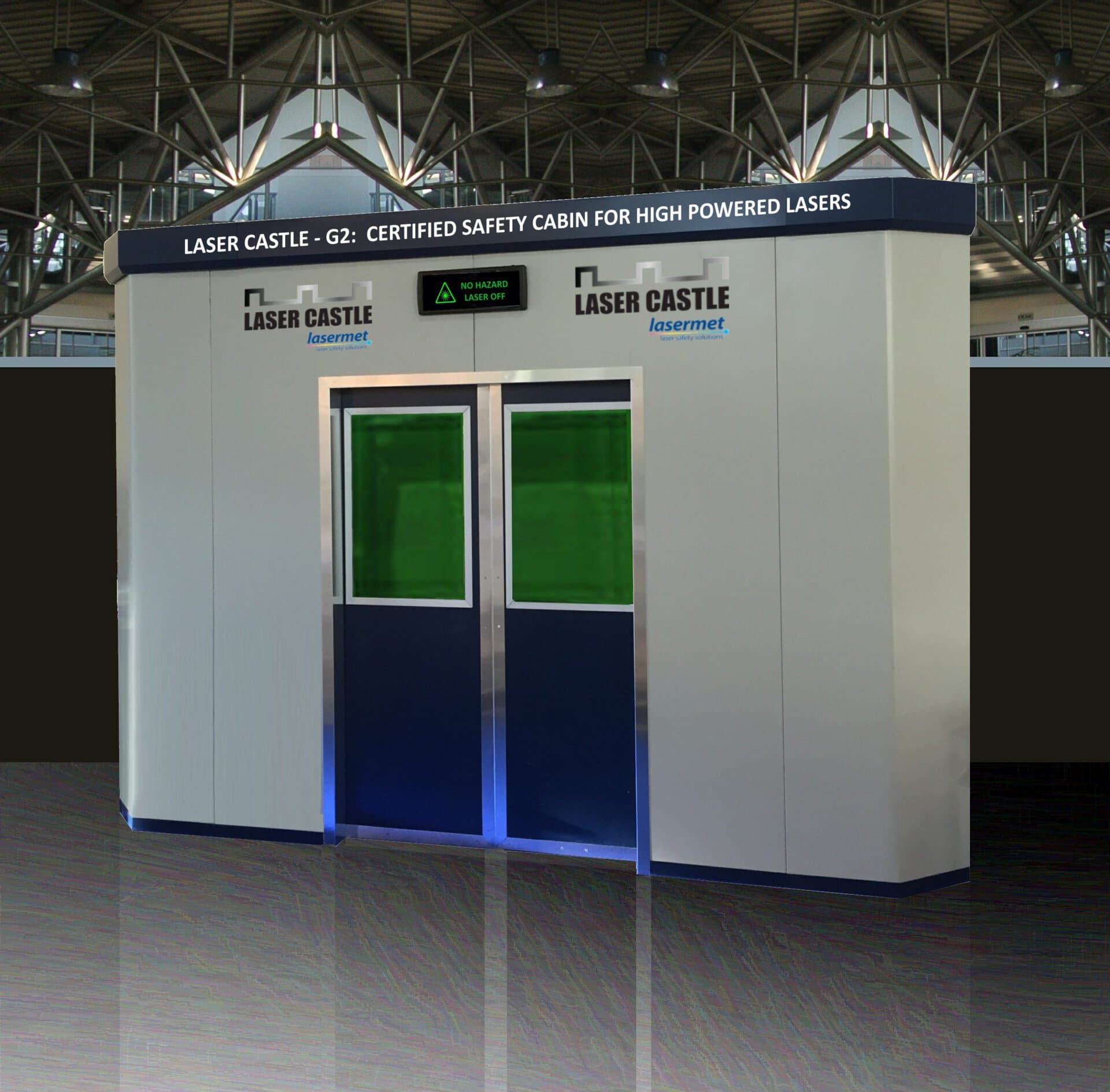
Supporting Functional Safety
Active guarding aligns with modern functional safety principles by integrating physical laser protection with electronic safety systems.
When combined with a safety-rated laser interlock controller, monitored enclosures and safety windows become part of the overall safety architecture, helping reduce the risk of hazardous laser exposure resulting from enclosure failure.
This approach supports safer operation while complementing the requirements of standards such as:
What You Need to Know
Selecting the right laser guarding solution is essential for ensuring personnel safety and maintaining the integrity of a laser-controlled area. While passive guarding provides reliable and cost-effective protection for many laser applications, active guarding offers an additional layer of safety by continuously monitoring the condition of laser enclosures and safety windows and automatically initiating a safe shutdown if a fault is detected.
As industrial laser systems continue to increase in power, the risks associated with enclosure damage and prolonged exposure become more significant. For laser applications above 4kW, Lasermet recommends active guarding to enhance protection, reduce the likelihood of hazardous laser exposure, minimise unplanned downtime, and support a safer working environment.
By combining certified laser-resistant materials with intelligent monitoring and safety interlock technology, active guarding delivers a proactive approach to laser safety. For high-power laser processing applications, it provides greater confidence that the protective barrier remains effective throughout operation, helping organisations meet the demands of modern laser manufacturing while supporting compliance with recognised laser safety standards.
Click the button below to contact us and learn more.