What Is a Laser Protection Adviser (LPA)?
If your organisation uses lasers or Intense Pulsed Light (IPL) systems, having the right equipment is only one part of maintaining a safe working environment.
You also need appropriate procedures, risk assessments, training and knowledgeable people who understand how laser safety requirements apply to your particular workplace.
This is where a Laser Protection Adviser (LPA) comes in.
An LPA is a competent laser safety specialist who advises an organisation on the safe use of lasers and other optical radiation equipment.
What Does a Laser Protection Adviser Do?
The exact work undertaken by an LPA will depend on the organisation, the equipment being used and the application.
However, an LPA’s responsibilities can include:
- Conducting laser safety site assessments
- Carrying out or reviewing laser risk assessments
- Assessing laser-controlled areas
- Reviewing laser safety eyewear
- Advising on access controls and warning systems
- Reviewing staff training and competency
- Preparing Local Rules
- Advising on safe systems of work
- Recommending appropriate engineering and administrative controls
- Providing ongoing specialist laser safety advice
The objective is not simply to produce documentation. It is to understand how the laser is actually being used and ensure that suitable measures are in place to protect operators, patients, employees and other people who may enter the area.
The LPA Site Assessment
One of the first stages of an LPA service is often a site assessment or laser safety audit.
The LPA visits the facility and examines the environment in which the laser or IPL equipment is being operated.
For a clinic or hospital, for example, this might involve looking at a treatment room or operating theatre.
In an industrial or research environment, it could involve assessing a laboratory, manufacturing process or dedicated laser-controlled area.
During the assessment, the LPA looks beyond the laser itself.
They may examine the equipment, the layout of the room, access arrangements, protective eyewear, warning signs, interlocks, operating procedures and staff training records.
This provides a much clearer understanding of how the laser is being used in practice and whether additional safety measures are required.
Creating the Local Rules
An important part of laser safety management is the preparation of Local Rules.
Local Rules establish the system of work that should be followed when operating laser or IPL equipment within a defined controlled area.
Rather than being documentation that simply sits in a folder, Local Rules should provide practical instructions for the people who actually operate or work around the equipment.
Depending on the application, they may cover areas such as:
- Who is authorised to operate the laser
- The boundaries of the laser-controlled area
- Required protective equipment
- Laser safety eyewear
- Access restrictions
- Pre-use safety checks
- Normal operating procedures
- Emergency procedures
- Responsibilities of individual members of staff
For hospitals and clinics, these procedures help ensure that doctors, nurses, therapists, dentists and other operators follow a consistent approach each time the equipment is used.
Laser Safety Eyewear
Choosing laser safety eyewear is not simply a matter of wearing any pair of protective glasses.
The protection required depends on factors including the wavelength, power and operating characteristics of the laser.
As part of an assessment, an LPA can review the eyewear being used and determine whether it is suitable for the particular laser system and application.
Lasermet’s LPA and consultancy services include advice on appropriate laser safety eyewear and other protective measures required for safe laser operation.
LPA Services for Hospitals
Hospitals can present particularly complex laser safety environments.
A single hospital may operate several different types of lasers across departments such as ophthalmology, ENT, gynaecology or operating theatres.
Lasermet’s LPAs can work alongside the hospital’s Laser Protection Supervisor (LPS) and other members of staff to establish appropriate safety arrangements.
This can include assessing individual departments, risk assessing equipment, producing Local Rules, reviewing protective eyewear and providing specialist advice when laser safety issues arise.
Because each department may use different equipment and procedures, the safety arrangements need to reflect how each laser is actually being used.
LPA Services for Clinics and Aesthetic Practices
Lasers and IPL systems are widely used for cosmetic and aesthetic procedures, including treatments carried out by beauty therapists, aesthetic practitioners and tattoo removal specialists.
These businesses may also be subject to registration or licensing requirements depending on where they operate and the treatments they provide.
The regulatory landscape differs across the UK.
Organisations may need to deal with bodies including the Care Quality Commission (CQC), Regulation and Quality Improvement Authority (RQIA), Healthcare Inspectorate Wales (HIW), Healthcare Improvement Scotland (HIS) or local authorities.
Lasermet’s LPA services can help clinics understand the laser safety requirements that apply to their business and establish the documentation and safe systems of work required for their particular operation.
For some cosmetic and aesthetic businesses, Lasermet can also provide additional support relating to Local Authority licensing and Expert Medical Practitioner requirements.
LPA and Competent Person Services for Industry and Research
Laser safety advice is not limited to medical applications.
Lasers are extensively used in universities, research laboratories, manufacturing facilities and industrial processes.
Applications can range from experimental optical systems to high-powered laser cutting, welding, marking and other manufacturing processes.
In these environments, Lasermet can provide independent laser safety assessments and Competent Person services.
Support can include:
- Independent laser safety advice
- Review and development of risk assessments
- Assistance with Local Rules and safe systems of work
- Advice on laser safety equipment and personal protective equipment
- Support when installing new laser systems
- Reviews following changes to existing processes
- Ongoing technical guidance
The aim is to help organisations establish a practical system for managing laser hazards rather than relying on individual safety measures in isolation.
Training Is Part of Laser Safety
An effective laser safety programme also depends on people understanding the hazards they are working with.
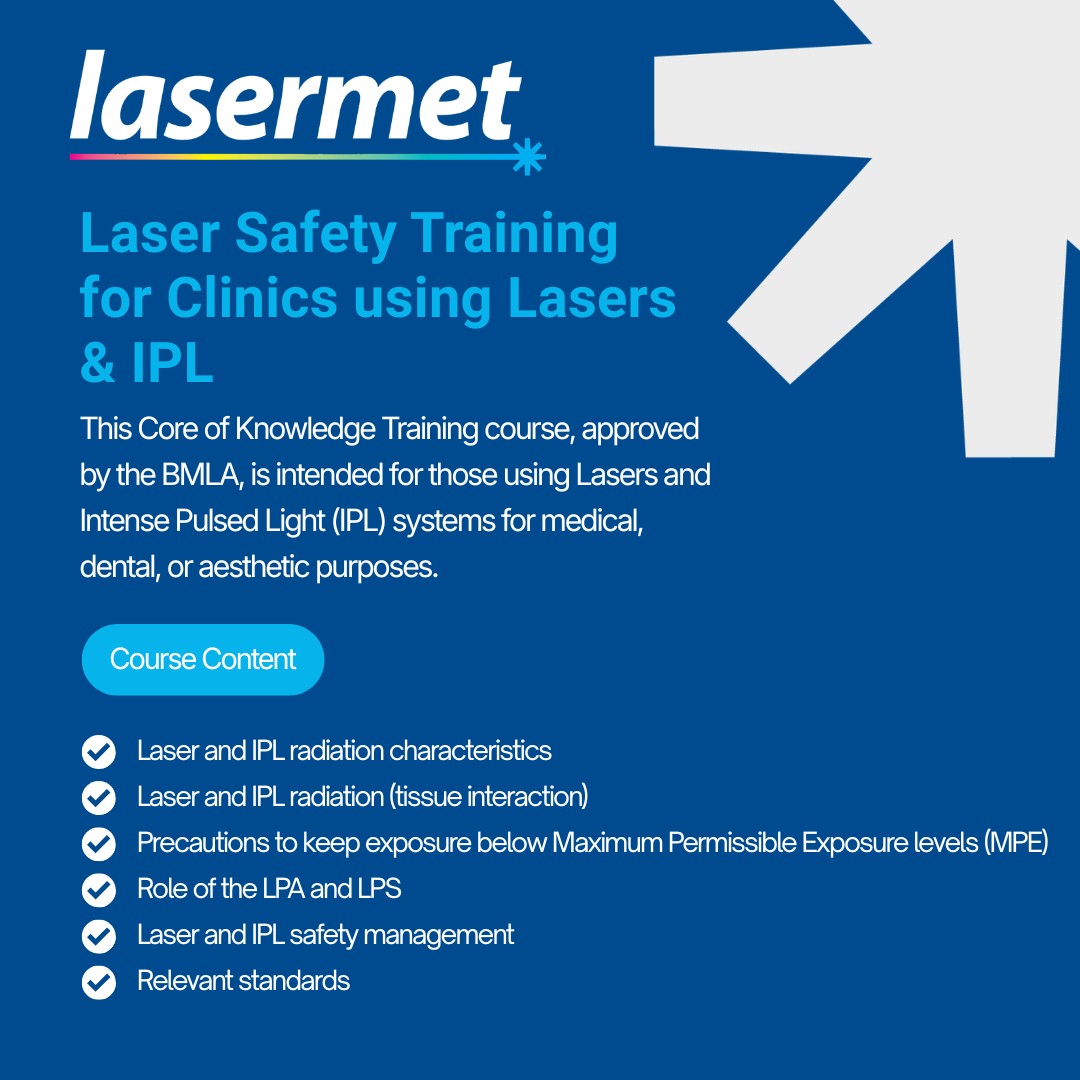
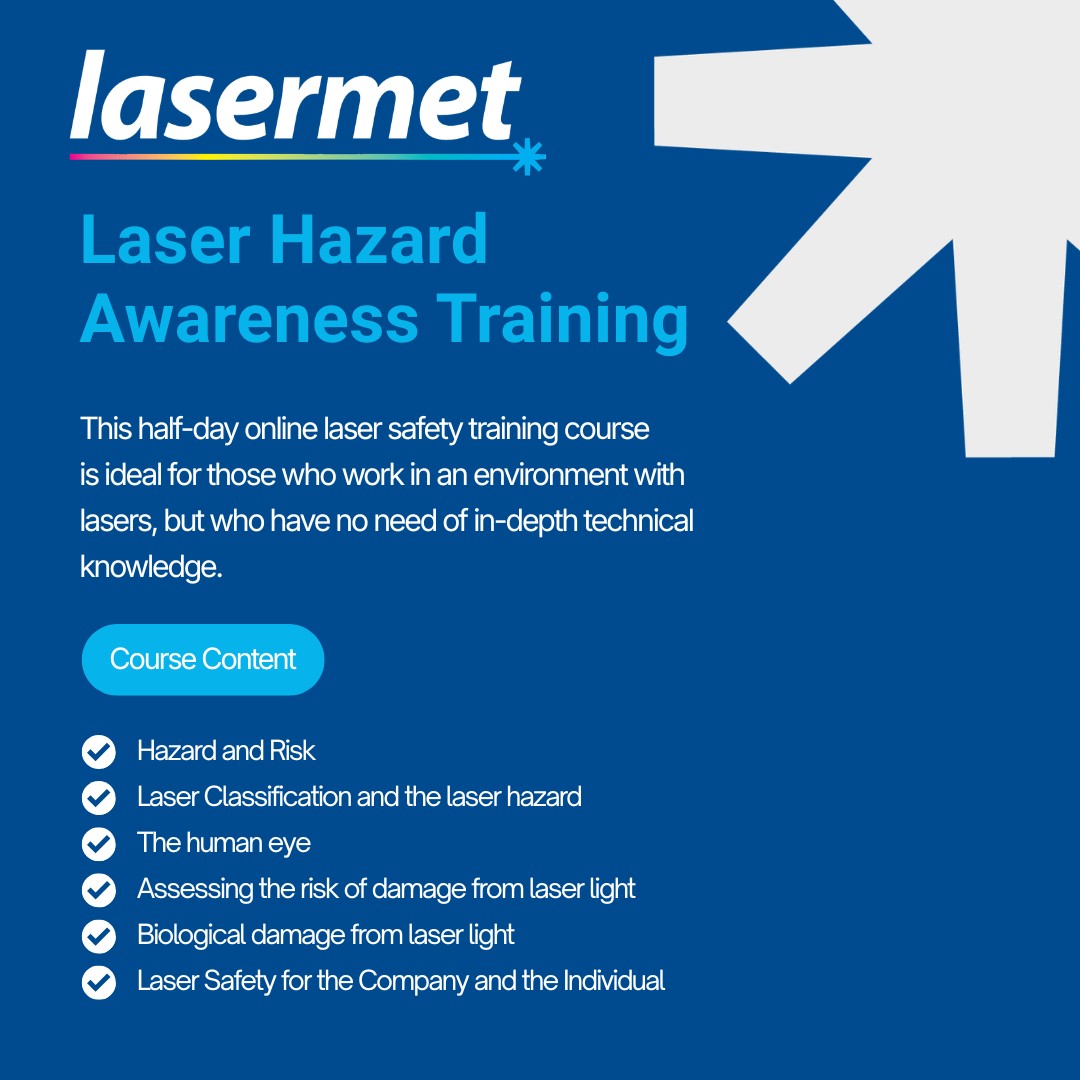
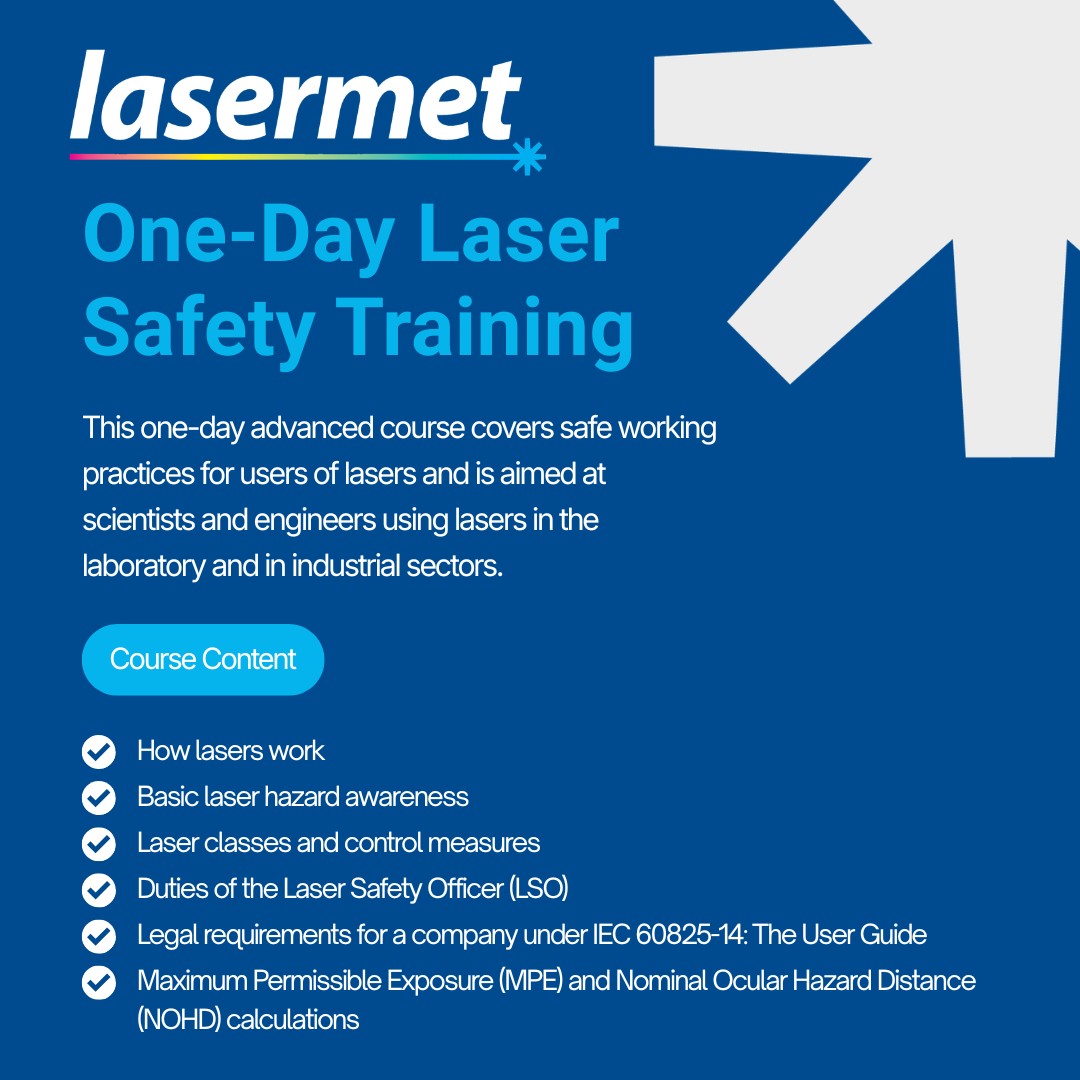
Lasermet provides laser safety training alongside its wider LPA and consultancy services, including courses delivered by experienced laser safety specialists and RPA2000-certified LPAs.
Training can help laser users understand subjects such as:
- Laser classifications
- Biological effects of laser radiation
- Laser and non-beam hazards
- Maximum Permissible Exposure
- Laser-controlled areas
- Personal protective equipment
- Engineering controls
- Administrative controls
- Safe operating procedures
This helps ensure that the procedures developed with the LPA are understood by the people expected to follow them.
Laser Safety Training
Covering all aspects of laser safety training, from Hazard Awareness and Core of Knowledge to advanced Laser Safety Training, why not contact our Sales Department for more information on our LPA-led training courses or click here to view our online options.
Talk directly with our Sales Department about your training needs, call 01202 770740 or send an email to [email protected]
Lasermet Laser Protection Adviser Services
Lasermet’s RPA2000-qualified team of Laser Protection Advisers provides laser safety support to organisations throughout the UK, with more than 40 years of combined LPA experience across England, Scotland, Wales and Northern Ireland.