
STMicroelectronics: Expanding Laser Safety Across Multiple Laboratories
A Long-Standing Relationship
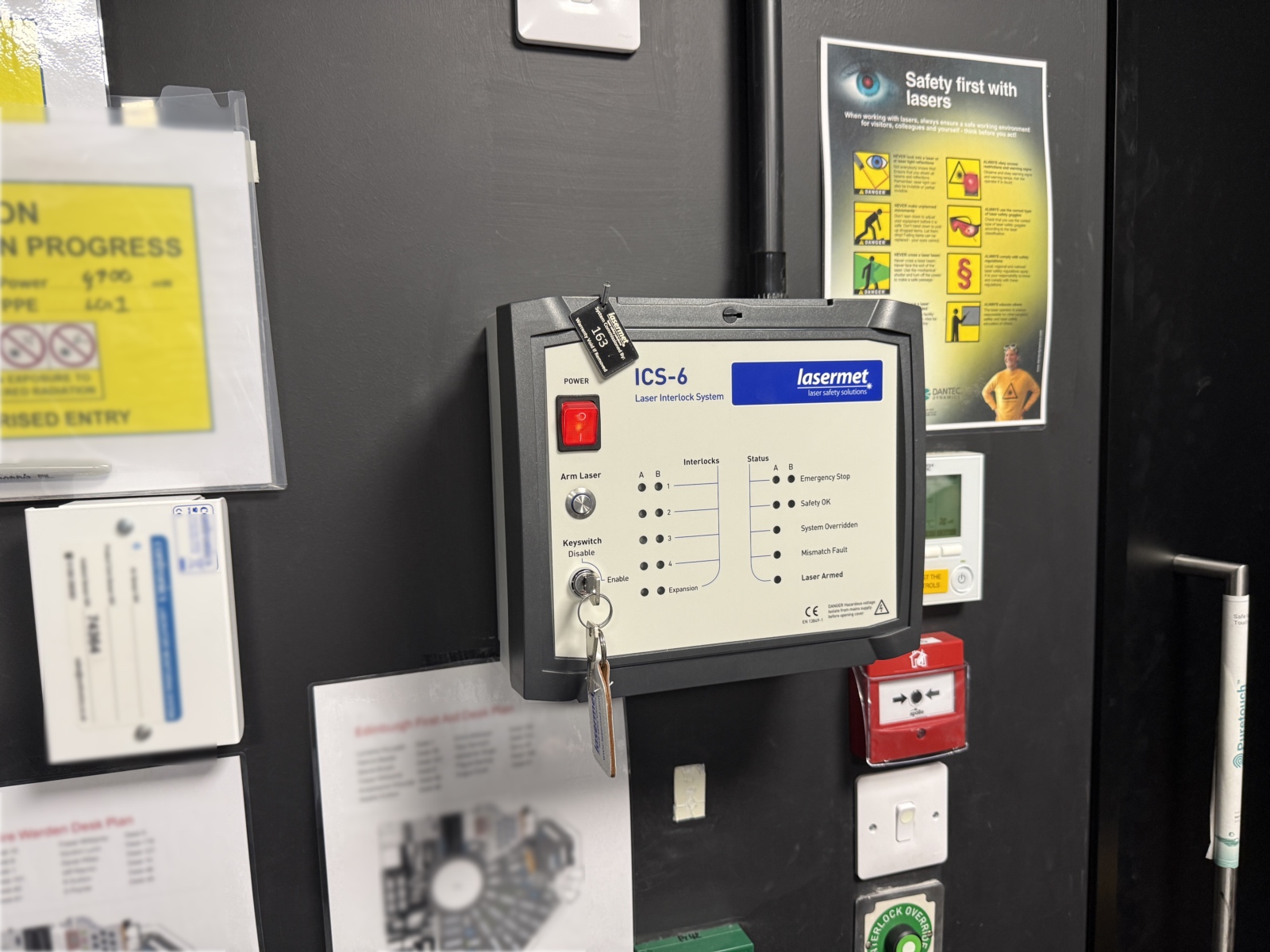
Lasermet has supported STMicroelectronics with laser safety systems over a number of years. The relationship began with the installation of an ICS-6 Interlock Control System and has continued as STMicroelectronics’ laboratory facilities and safety requirements have expanded.
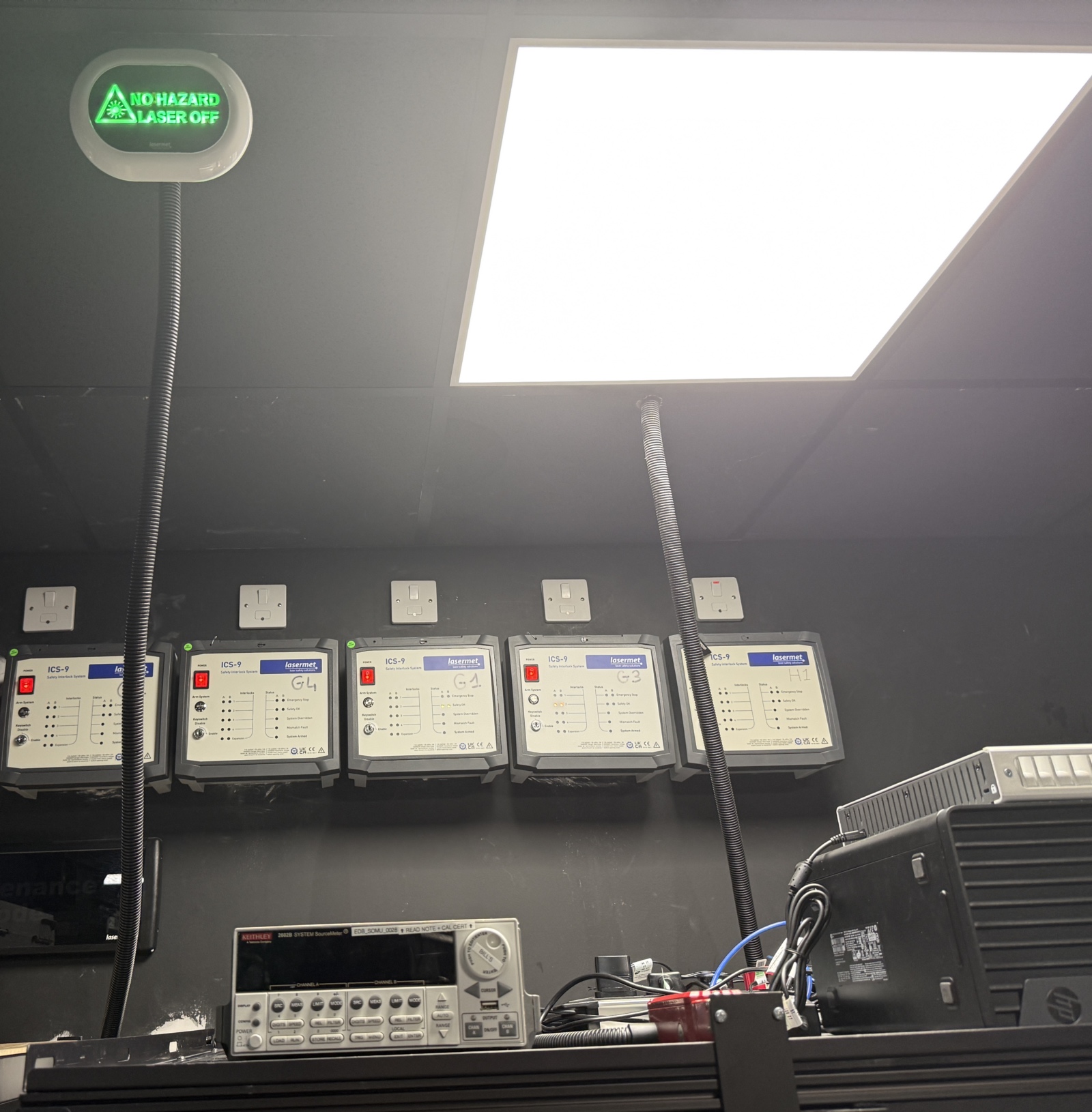
More recent projects at the company’s Edinburgh site have involved the installation of multiple ICS-9 Interlock Control Systems across several laser laboratories. Although each installation was configured around the requirements of its particular laboratory, using standard Lasermet products provided a consistent approach to operation, maintenance and laser safety throughout the facility.
ICS-9 Interlock Control System
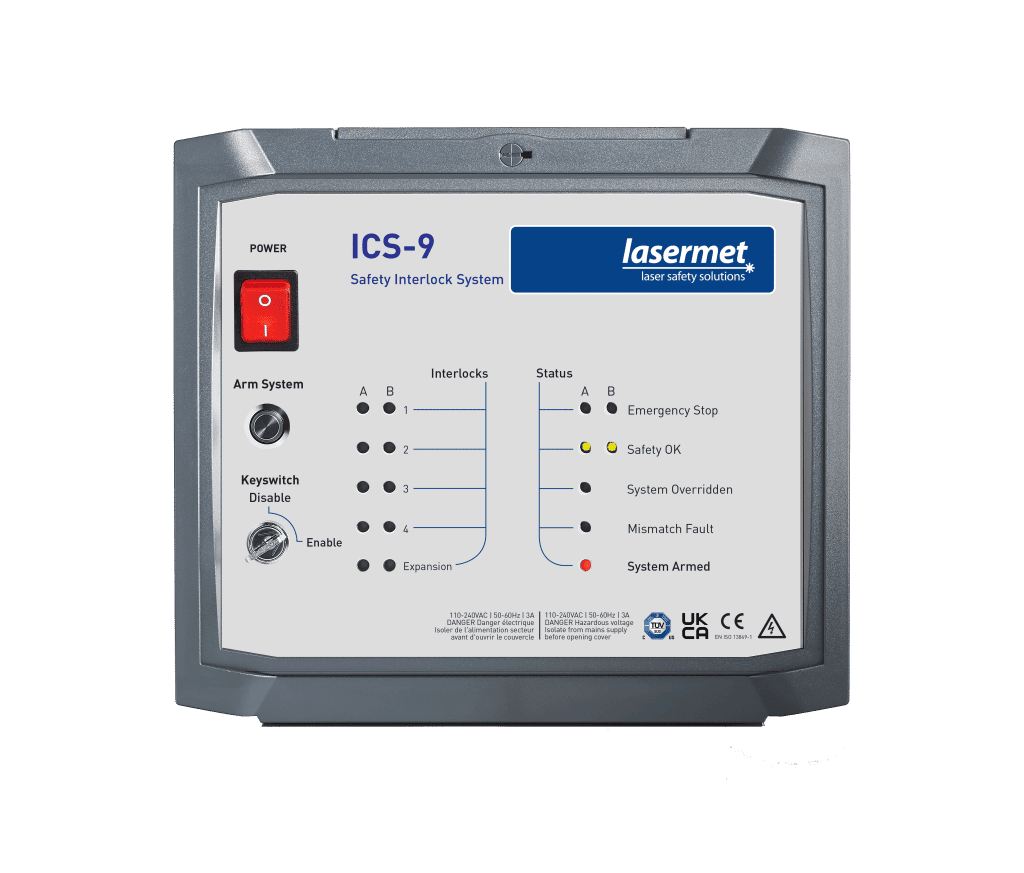
The ICS-9 Interlock® Controller can control laser interlocks, magnetic door locks, LED warning signs, laser beam shutters, and virtually all of Lasermet’s catalogue of laser safety interlock equipment.
The ICS-9 has full start-to-end dual channel architecture and fault detection to meet the latest safety standards to a much higher level than single channel systems. It has a simple, easy-to-use control panel and can be connected directly to nine interlocks (or groups of interlocks).
Interlocking the Laboratories
The principal installations covered four separate laser rooms, with each area controlled by a dedicated Lasermet Interlock Controller. Further ICS-9 Interlock Controller systems were subsequently provided for an additional laboratory, allowing the laser safety infrastructure to expand alongside the facility.
Each laboratory was equipped with its own combination of:
- An ICS-9 Interlock Controller
- Dual-channel door interlock switches
- Emergency-stop push buttons
- Interlock distribution boxes
- Remote arm units and keyswitches
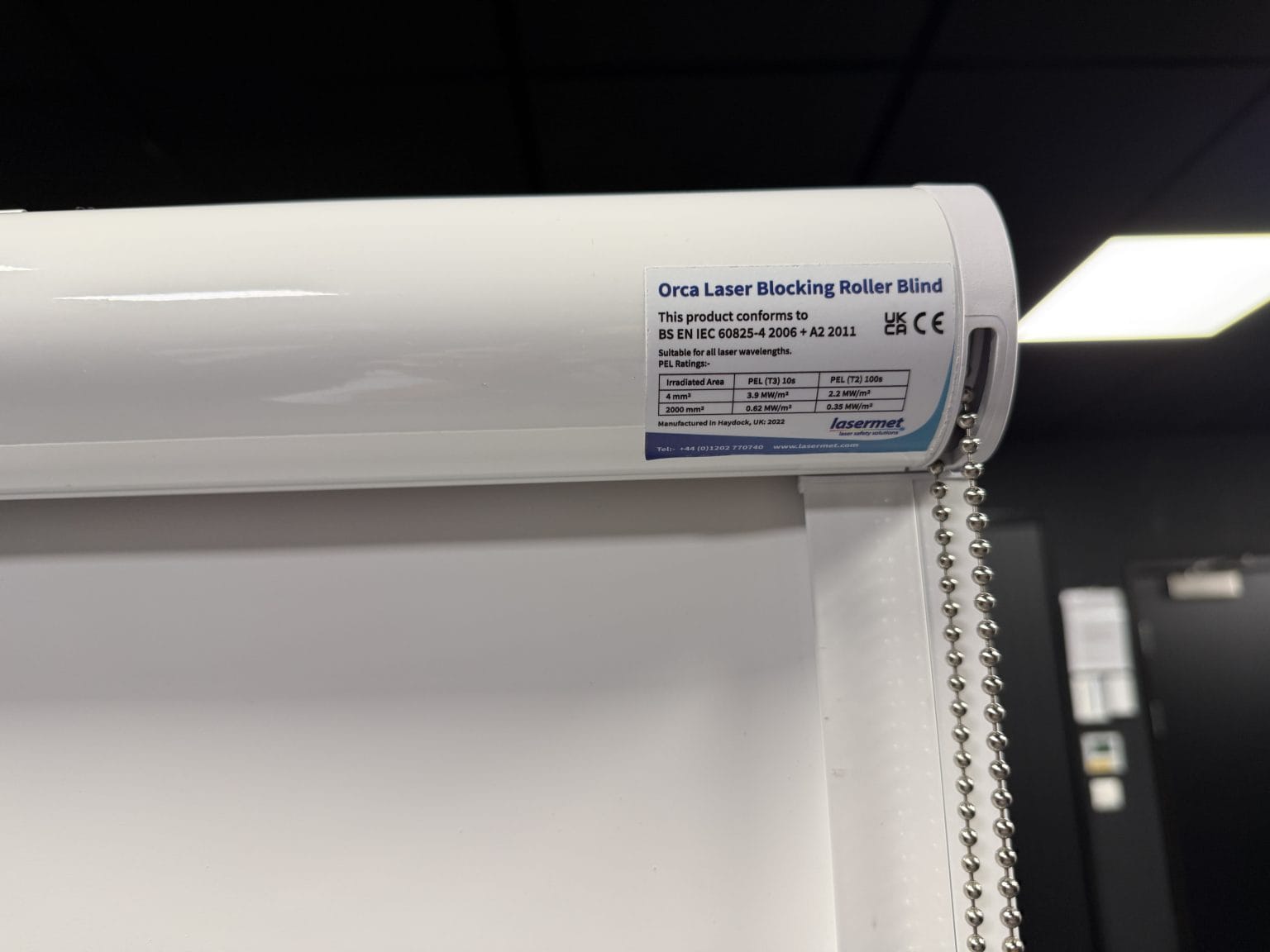
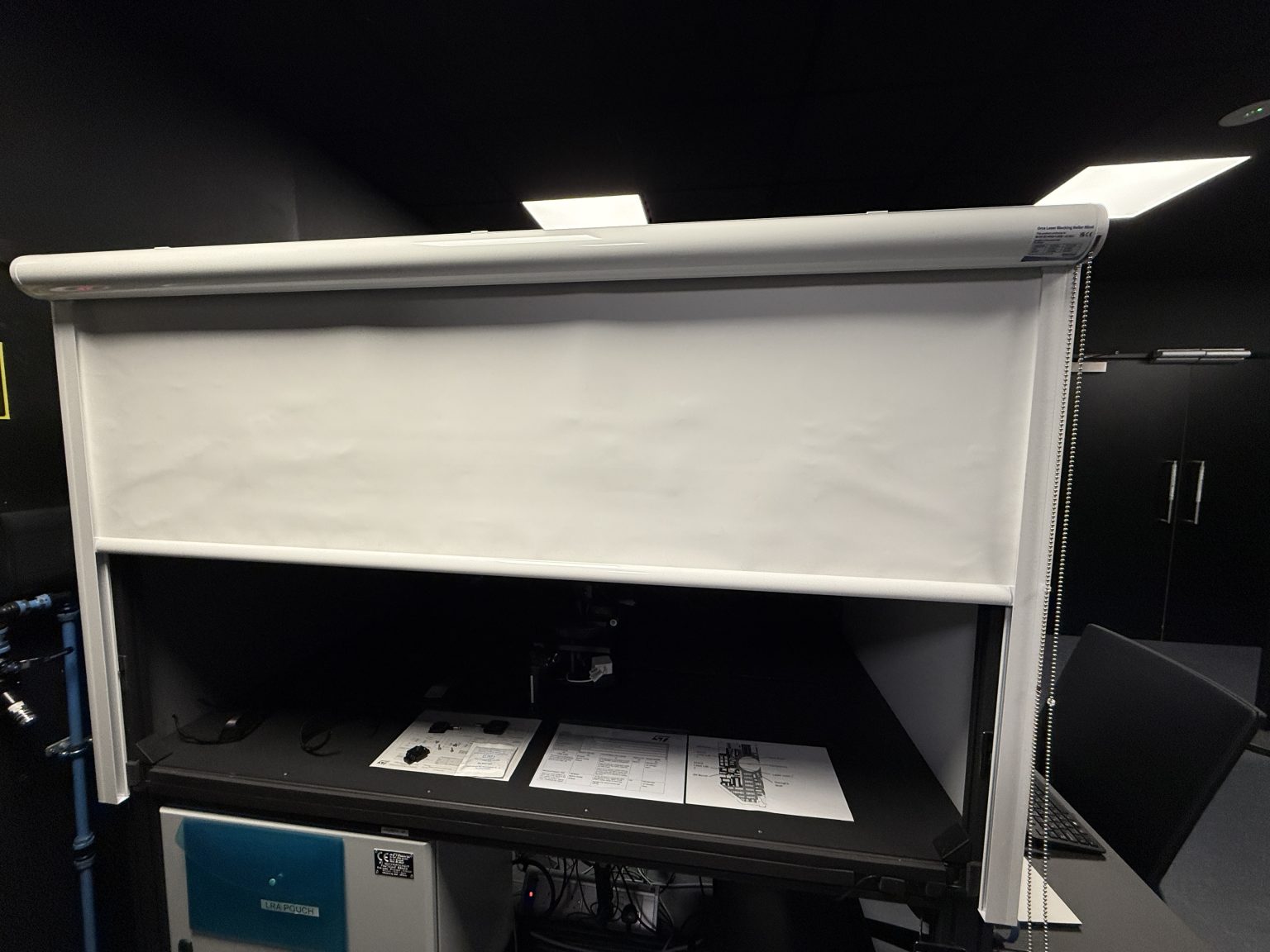
- Laser Blocking Roller Blinds
- Illuminated LED laser warning signs
- Network interface and monitoring equipment
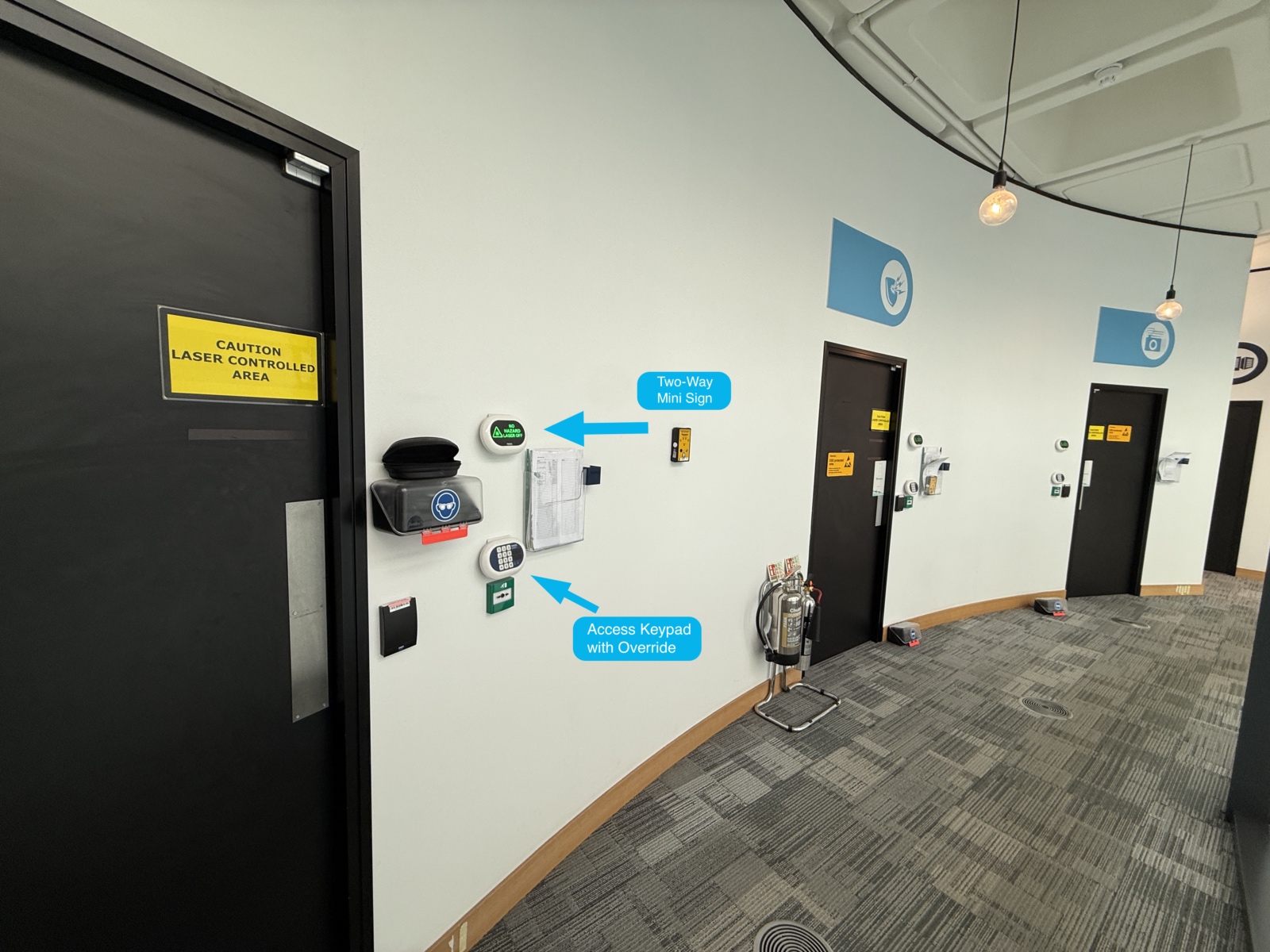
The interlock system continuously monitors the connected access points and safety devices. If an interlocked door, curtain or blind is opened while the system is armed, the system removes permission for hazardous laser operation. Emergency-stop devices provide an additional means of immediately disabling the laser safety output.
Remote arm units allow authorised users to control the system from a convenient location, while dedicated maintenance mode controls support servicing and other controlled activities. Yellow illuminated signs clearly indicate when a laboratory is operating in maintenance mode, helping personnel understand the current status before entering the area.
Centralised Status Monitoring with CaLM
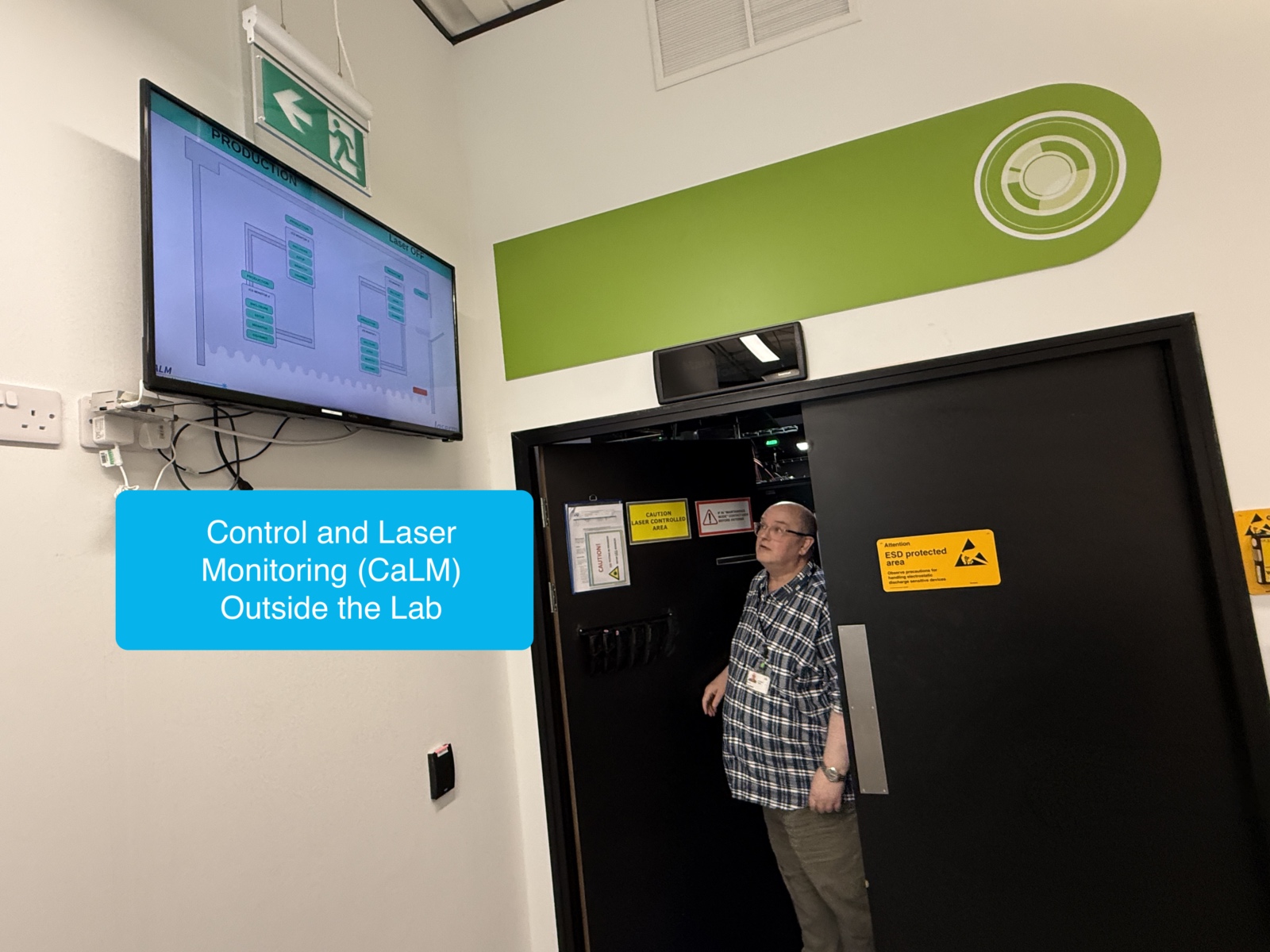
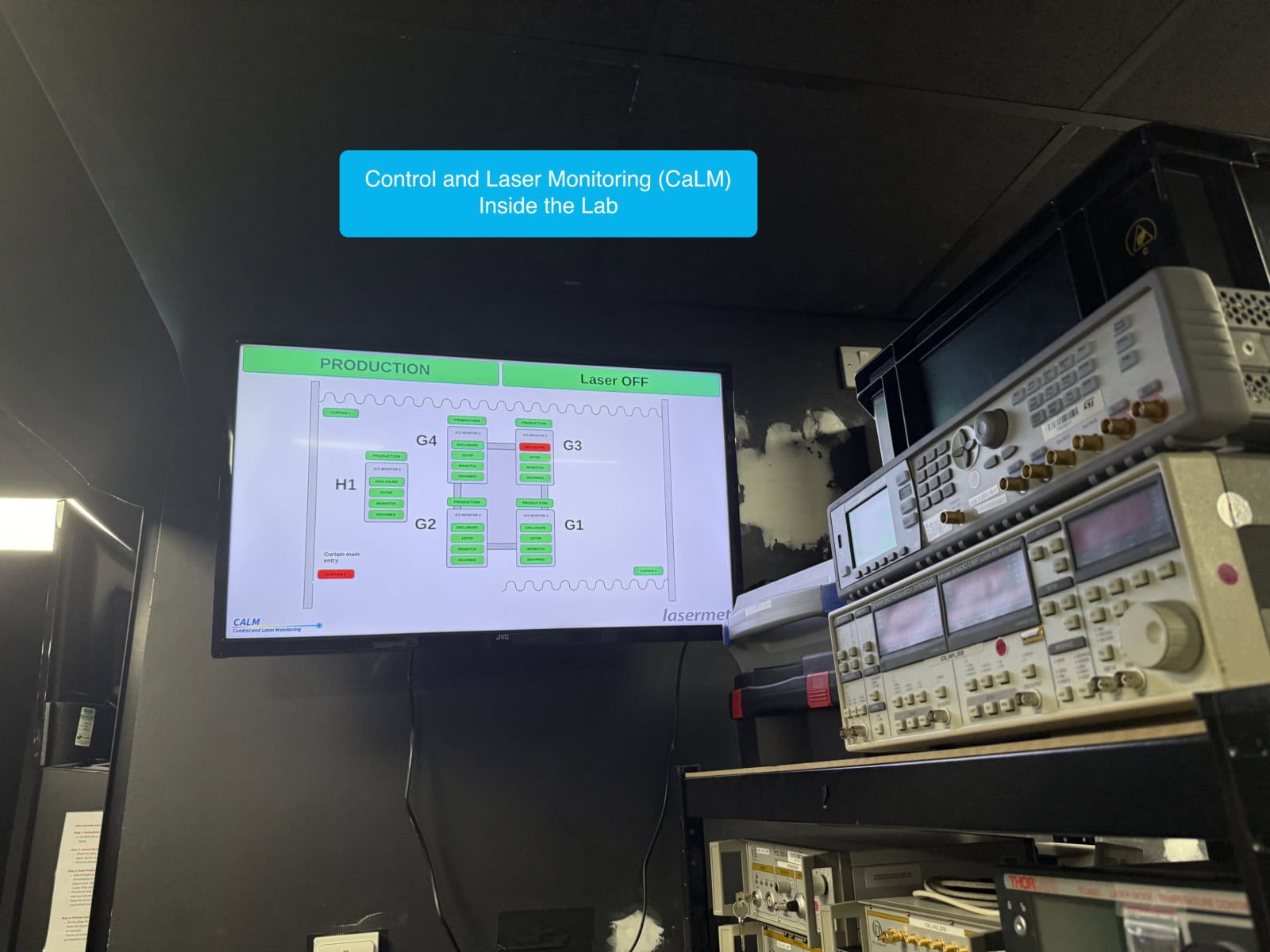
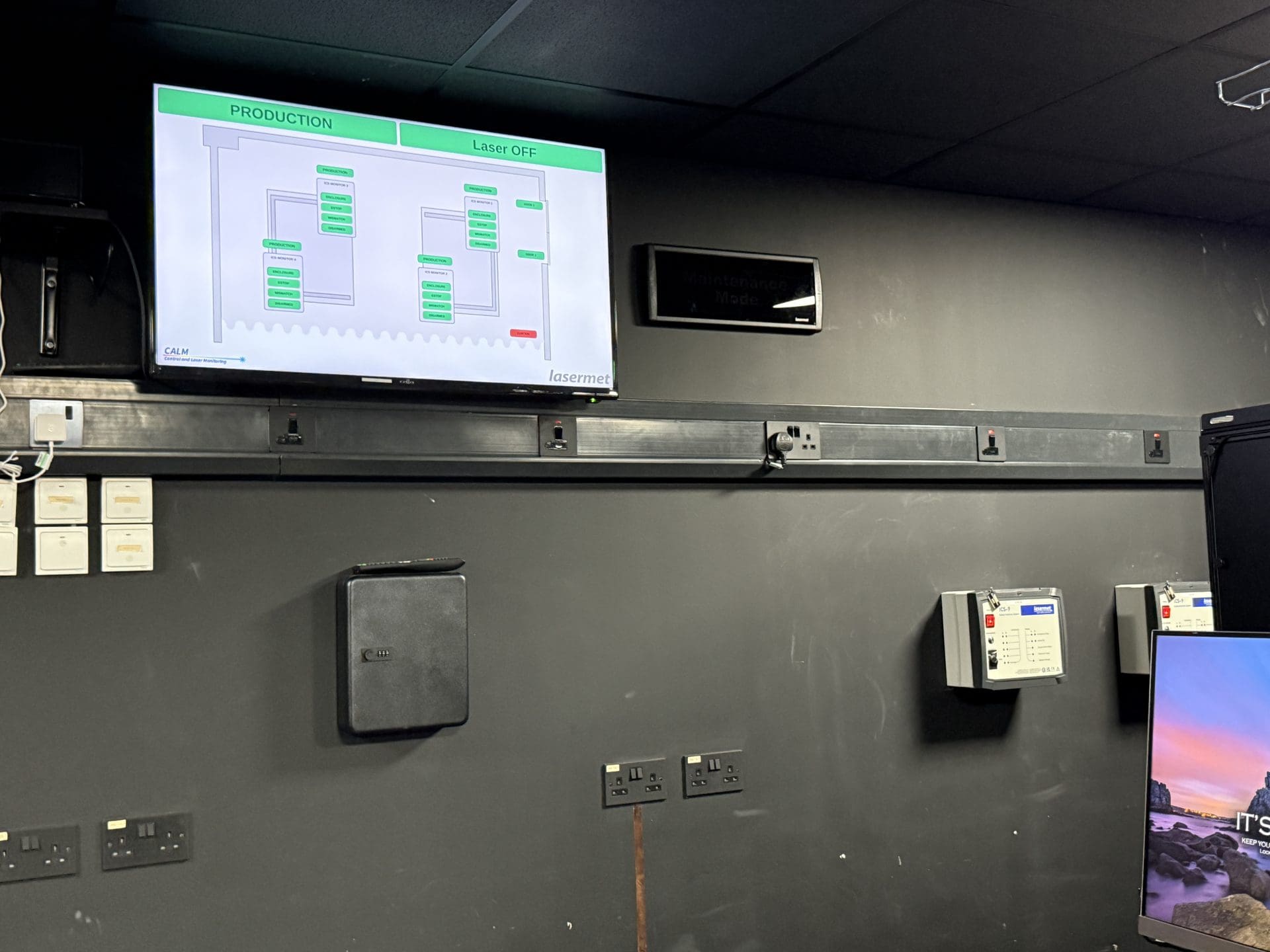
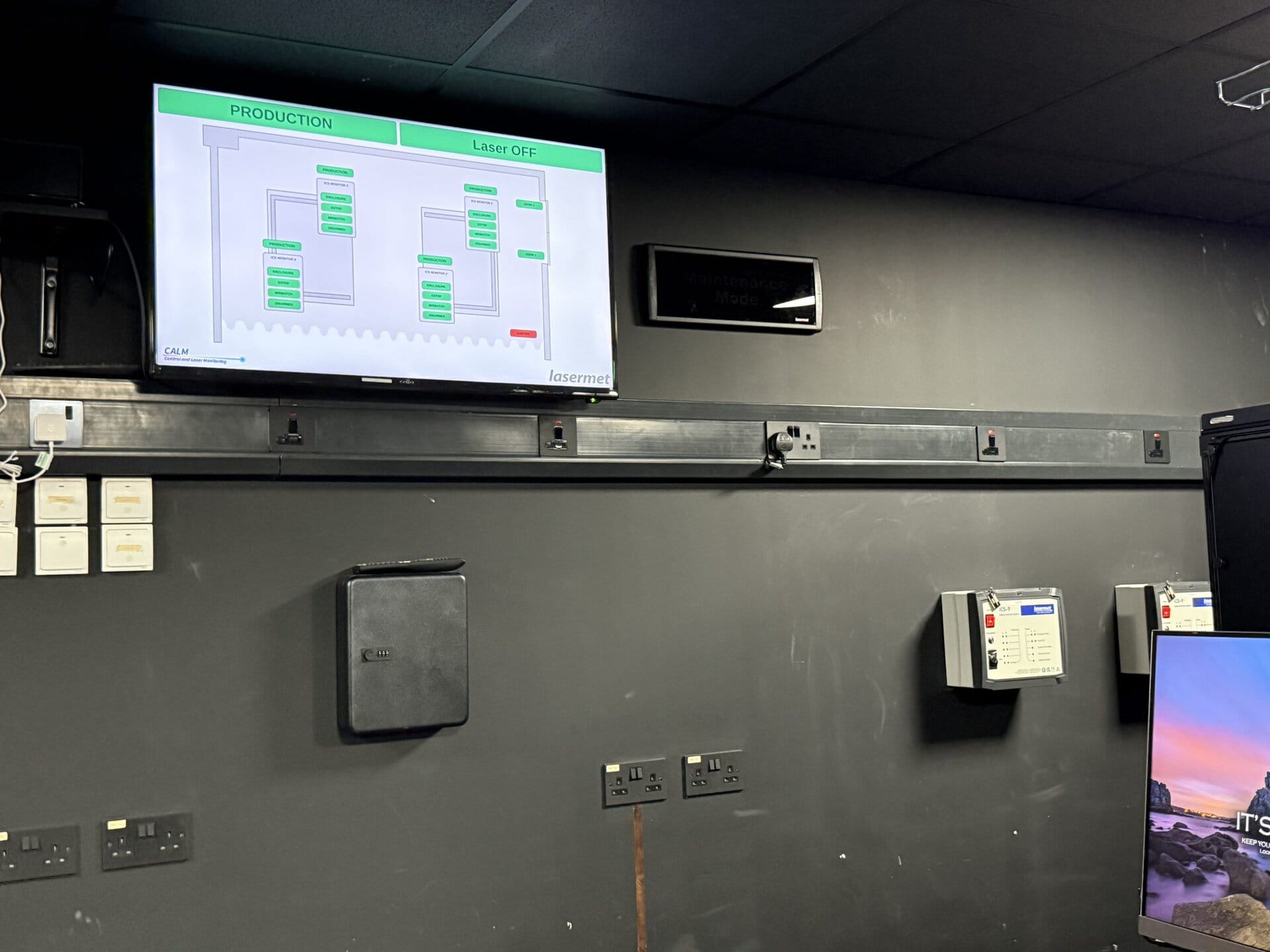
The laboratories were also integrated with Lasermet’s CaLM monitoring system. Network interface cards installed within the interlock controllers transmit system information over Ethernet, allowing the status of the laboratories to be displayed on dedicated screens.
Control and Laser Monitoring (CaLM)
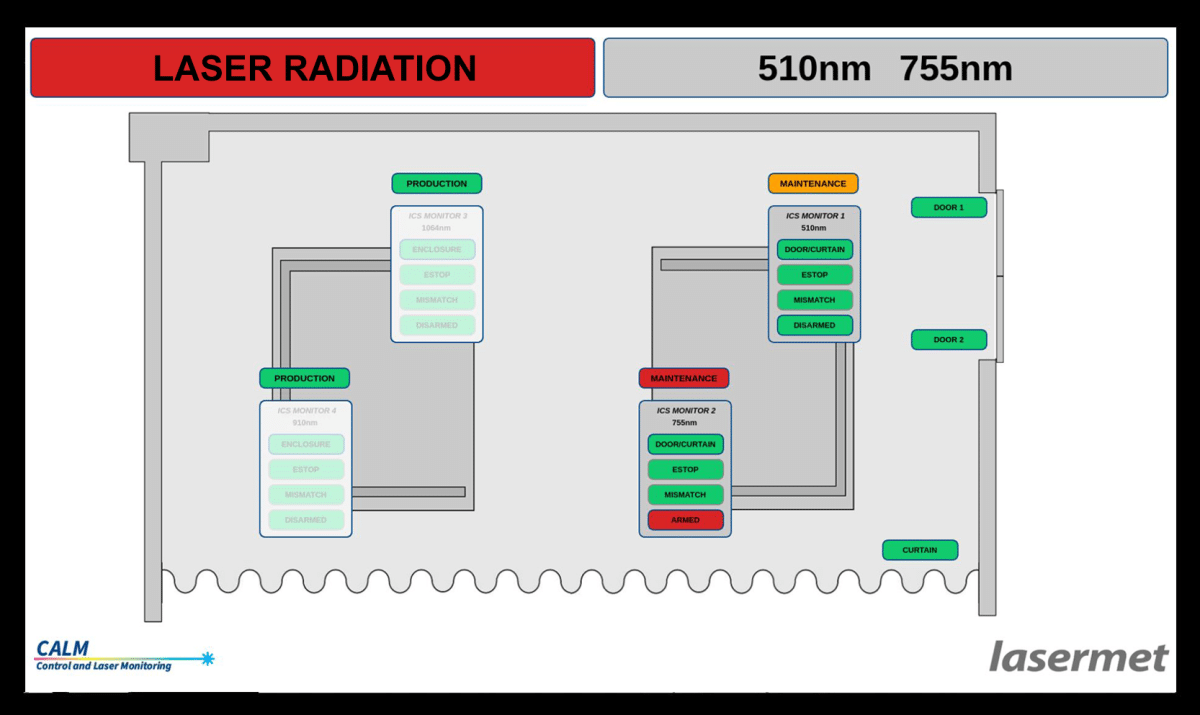
The CaLM System can monitor and control an entire interlocked laboratory on a large screen. This gives users the convenience and safety when working in laser controlled areas.
The CaLM consists of a control box and a large screen monitor which are connected to the laboratory’s Interlock System.
The CaLM screen provides personnel with a clear overview of the laser areas, including whether individual laboratories are armed, safe or operating in maintenance mode. This centralised display makes it easier to monitor several laboratories without needing to inspect each interlock controller individually.
Each CaLM screen is unique and customised to ST Microelectronics’ laboratory layout, ensuring the accurate and realtime safety status is displayed for users.
Interlocked Laser-Blocking Curtains and Blinds
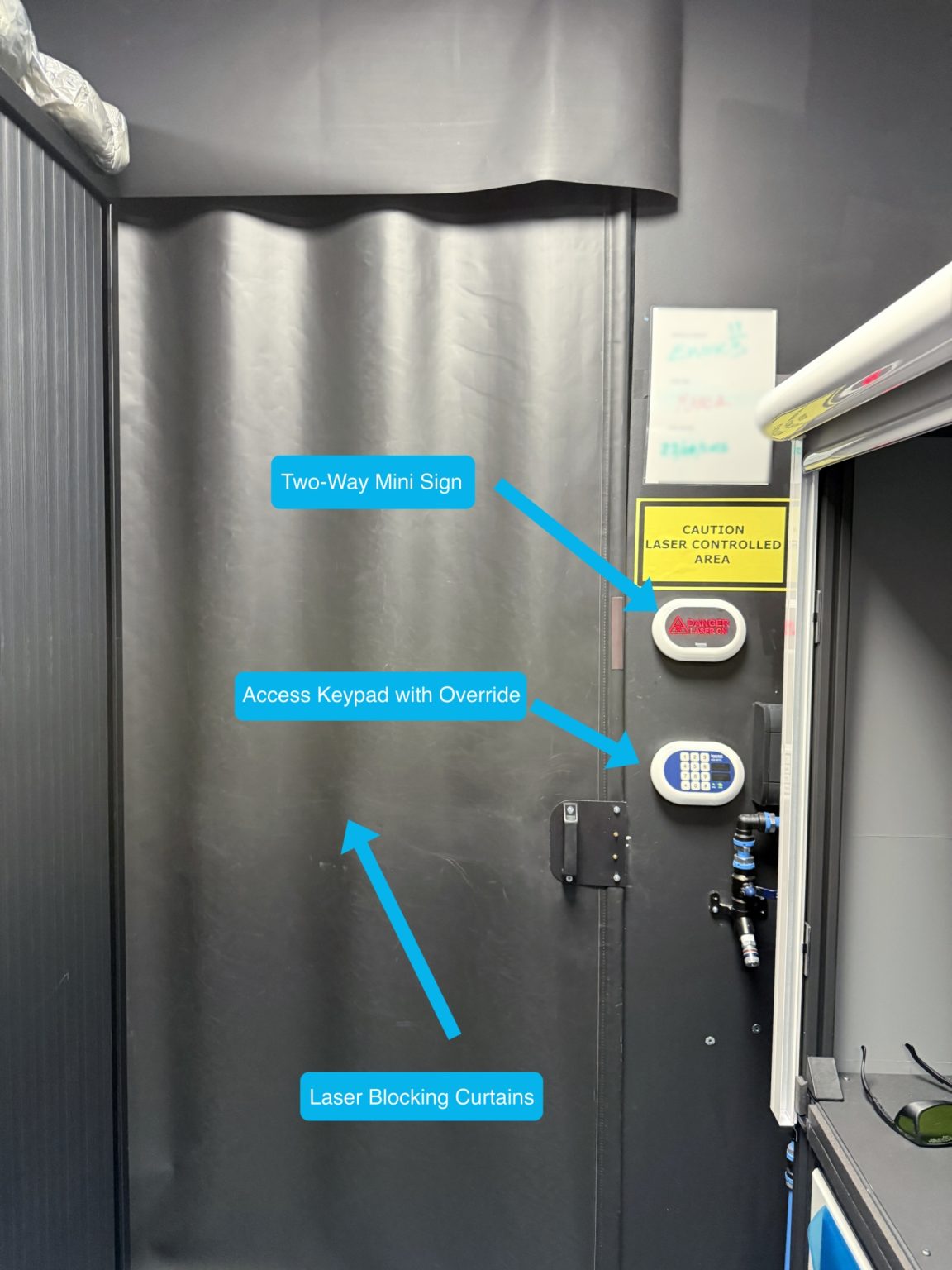
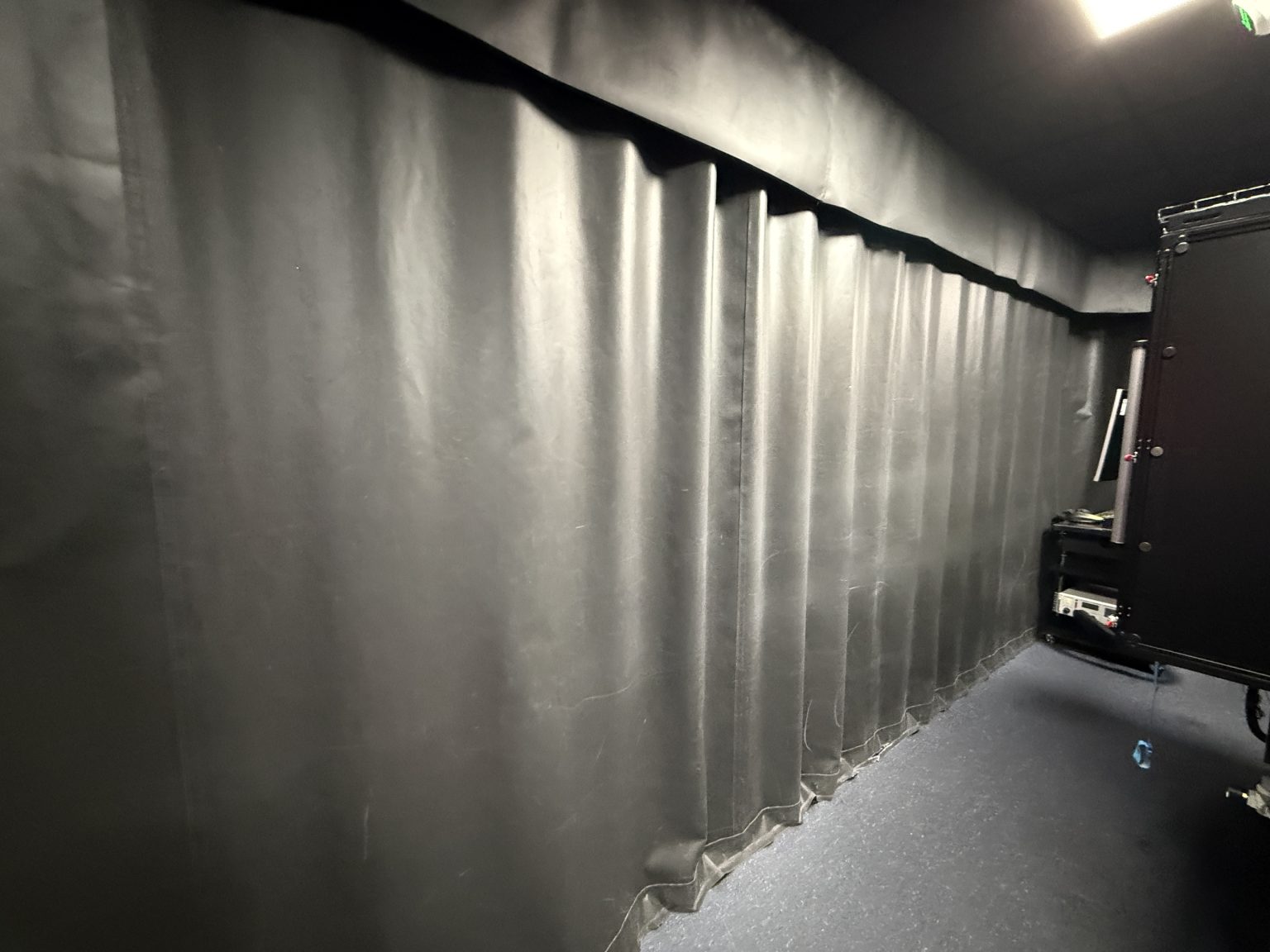
Some areas required more flexible access control than a conventional fixed wall or door could provide. Lasermet supplied laser-blocking curtains and blinds to contain hazardous laser radiation while allowing the laboratory layout to remain adaptable.
The laser-blocking curtains were fitted with interlocking bars, locking mechanisms and safety switches. Their position therefore forms part of the interlock system: hazardous laser operation is permitted only when the curtain is correctly closed and secured.
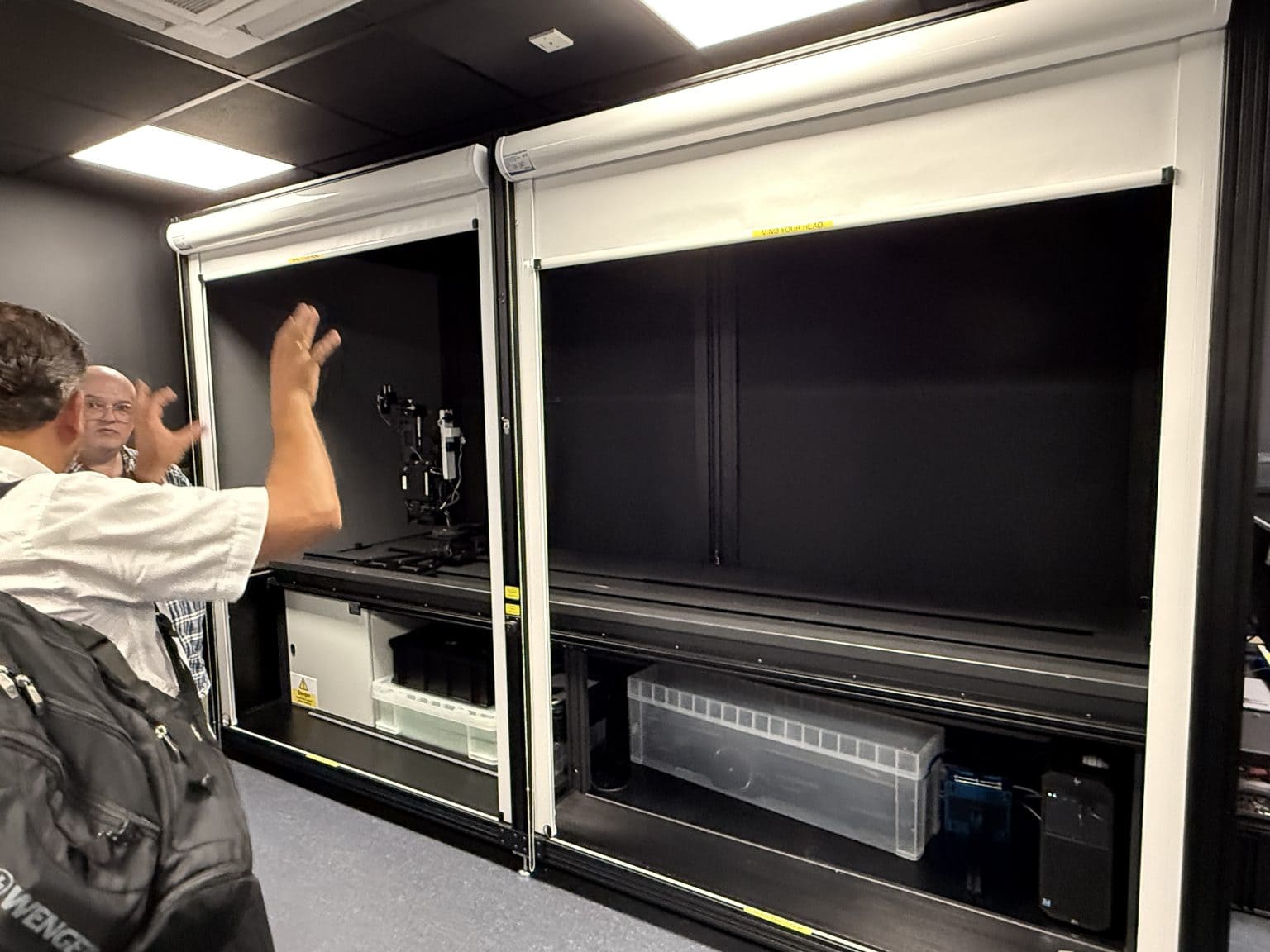
Interlocked laser-blocking blinds were adapted to cover openings in the covered optical table and laser equipment. Connecting these barriers to the main interlock system ensures that each opening is securely covered before hazardous laser operation can be enabled.
Illuminated warning signs positioned outside the doors and curtained areas provide an immediate visual indication of the laboratory status.
A Consistent and Expandable Safety Solution
The STMicroelectronics projects demonstrate how Lasermet’s standard interlock equipment can be configured to protect multiple laboratories with different layouts and operational requirements, even being able to be expanded to accommodate future expansion of the laser interlock system.
By combining ICS-9 controllers, access interlocks, emergency stops, illuminated signs, laser-blocking curtains and CaLM monitoring, Lasermet provided a coordinated safety solution across the Edinburgh facility. The modular design also allows further laboratories and safety devices to be incorporated as the site’s requirements continue to develop.

About STMicroelectronics
STMicroelectronics is a global semiconductor company that designs and manufactures technologies used across the automotive, industrial, personal electronics and communications sectors. Its products include microcontrollers, sensors, power-management devices and other semiconductor technologies found in everything from electric vehicles and industrial machinery to smartphones and data centres. The company employs approximately 49,000 people worldwide, including 9,500 employees working in research and development.