ANSI Z136.1 vs. IEC 60825: Understanding Laser Classification Differences
Laser technology plays a vital role across industries such as manufacturing, medical devices, research, telecommunications, and defense. While lasers deliver exceptional precision and efficiency, they also present potential safety risks if not properly controlled. This makes laser safety standards critical. Among the most widely recognized is the international standard IEC 60825 and ANSI Z136.1 in the USA.
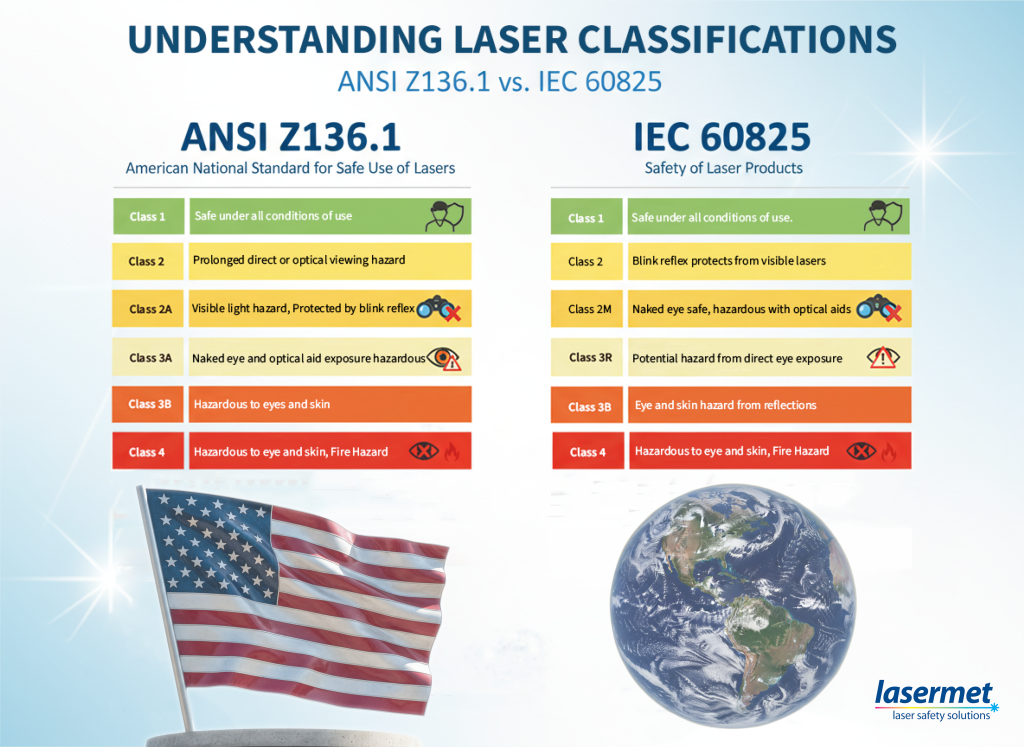
ANSI Z136.1 provides guidance on the safe use, classification, and control of lasers in the U.S., including medical, industrial, and research applications, while IEC 60825 focuses on laser product classification and safety requirements for manufacturers and users worldwide, particularly in Europe and Asia.
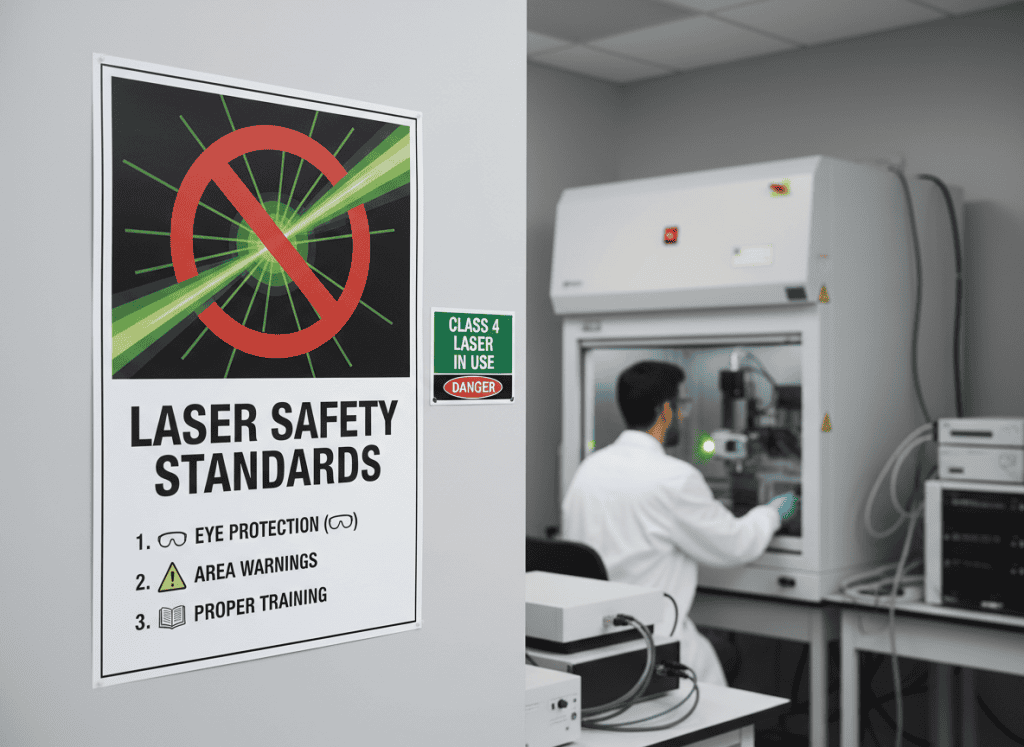
Although both IEC and ANSI standards aim to minimise laser-related hazards, they differ in scope, classification methodology, and regulatory application. Understanding these differences enables organizations to enhance safety, ensure compliance, and confidently operate in global markets.
Both standards classify lasers according to their potential to harm the eyes and skin and their exposure limits, though the specific classes and limits vary slightly.
For expert guidance, Lasermet provides laser safety consultancy services along with a full suite of Lasermet products which are designed and manufactured in accordance with the requirements of international laser safety standard IEC 60825 and ANSI Z136.1.
DID YOU KNOW?
Lasermet founder Professor Bryan Tozer held several key leadership positions in the committees responsible for the IEC 60825 series of laser safety standards.
IEC Standards
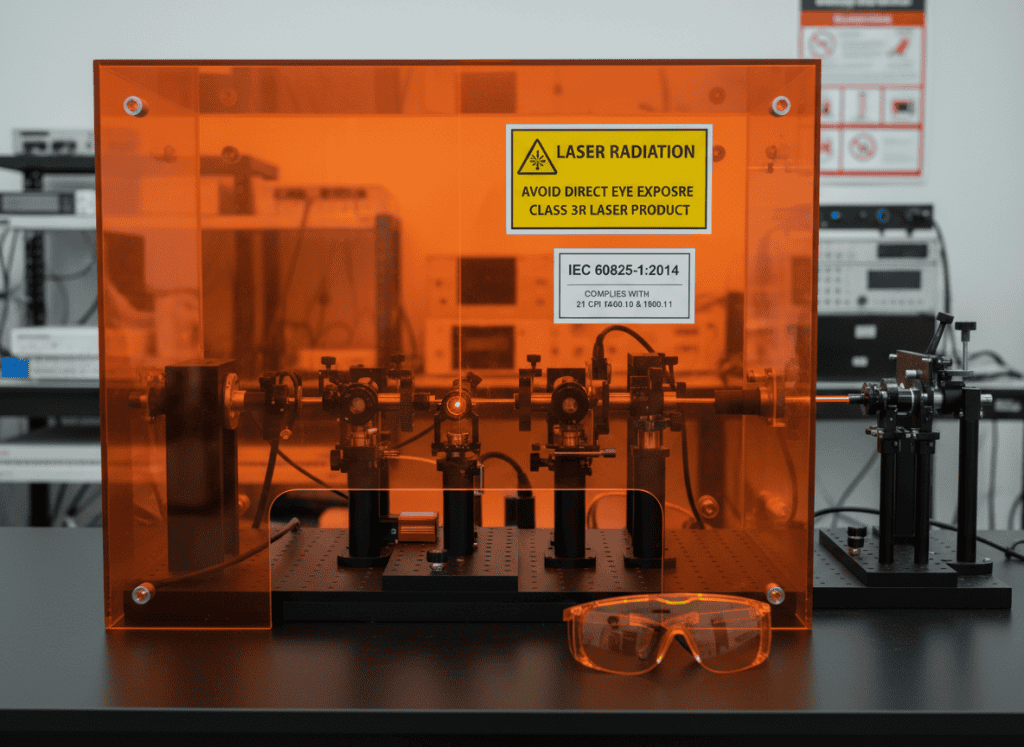
IEC 60825 is an international laser product safety standard that defines laser classification, accessible emission limits (AELs), labeling requirements, and user information for laser products placed on the global market.
Laser Classification according to IEC 60825
| Class | Description |
|---|---|
| Class 1 | Safe under all conditions of use. |
| Class 1M | Safe for naked eyes but hazardous when viewed with optical aids. |
| Class 2 | Visible lasers; Protected by the blink reflex. |
| Class 2M | Visible lasers; Safe for naked eyes but hazardous when viewed with optical aids. |
| Class 3R | Potential hazard with direct eye exposure. (Class 3A in older versions of the standard) |
| Class 3B | Eye hazard from direct or specular reflections; Skin hazard. |
| Class 4 | High-power lasers; Can cause eye/skin injury and fire risk. |
ANSI Standards
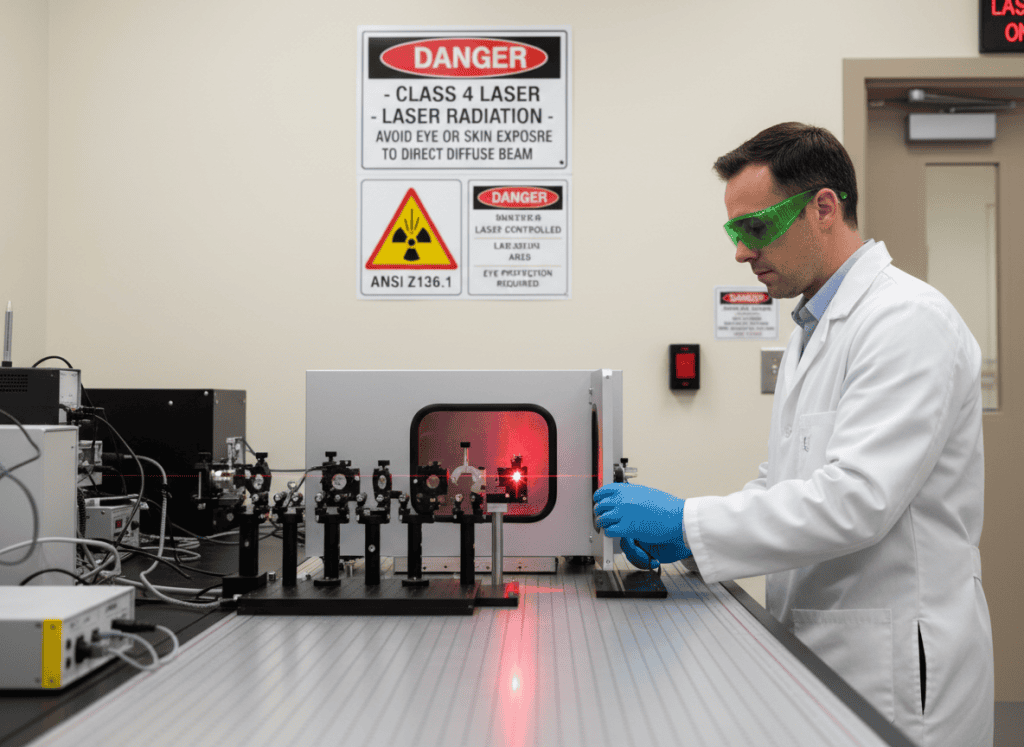
ANSI Z136.1 is a U.S. laser safety standard that establishes requirements for the safe use, control measures, and hazard evaluation of laser systems in occupational environments, including laboratories, industrial facilities, medical applications, and research settings.
ANSI laser classes are commonly written as roman numerals to differentiate from the IEC laser classes.
Laser Classification according to ANSI Z136.1
| Class | Description |
|---|---|
| Class I | Safe under all conditions of use. |
| Class II | Hazard increases when viewed directly for long periods of time. |
| Class IIa | Hazard increases when viewed directly for long periods of time; Hazardous when viewed with optical aids. |
| Class IIIa | Can be hazardous for naked eyes; Hazardous when viewed with optical aids. Diffuse reflections are generally safe. |
| Class IIIb | Hazardous for naked eyes; Skin hazard. Diffuse reflections are generally safe. |
| Class IV | Immediate skin hazard and eye hazard from direct or reflected beam; Fire hazard. |
Modern ANSI standards generally align conceptually with IEC classes but the naming conventions differ. The 2022 edition of the ANSI Z136.1 standard has introduced Class 1C, bringing the two standards closer together.
Key Differences
A key difference between IEC 60825 and ANSI Z136.1 is that IEC recognizes Class 1M and Class 2M where ANSI does not. Yet ANSI includes a Class IIa where the IEC standard does not.
Despite this the classes are broadly equivalent with Class IIIa in ANSI roughly equating to Class 3R in IEC 60825. The concepts are similar, but the exact power limits may differ.
Both standards are founded on the same laser eye and skin injury mechanisms and Maximum Permissible Exposure (MPE) models; however, they differ in classification methodologies, measurement conditions, and assumed access scenarios, which can result in different laser class assignments for the same device.
Let’s look at one example of how these two standards differ in the measurement of the Maximum Permissible Exposure (MPE).
MPE in IEC 60825
IEC 60825 defines accessible emission limits (AEL) for each class to ensure MPE compliance.
MPE in ANSI Z136.1
ANSI Z136.1 provides detailed MPE tables based on wavelength, exposure time, and body part (eye or skin) and is widely used in occupational laser safety in the USA.
THEREFORE:
A Class 2 laser under IEC may have slightly different power limits than the equivalent class under ANSI due to differences in MPE calculations.
ANSI Z136.1 and IEC 60825 share the same goal of ensuring laser safety but approach it from different perspectives. ANSI Z136.1 emphasizes workplace practices and safety management, while IEC 60825 focuses on laser product classification and global compliance. Lasermet recognizes the importance of understanding these differences, as they help organizations enhance safety, meet regulatory requirements, and operate confidently in both local and international markets.

Laser Safety Services
Many companies do not have this level of laser safety standards expertise in-house, and that is where Lasermet can provide the knowledge. As leading experts in the field of laser safety, we are able to carry out comprehensive laser classification tests and make appropriate recommendations to manufacturers.
Click the button below to contact us and learn more.