Planning a Laser-Controlled Area: Six Key Steps
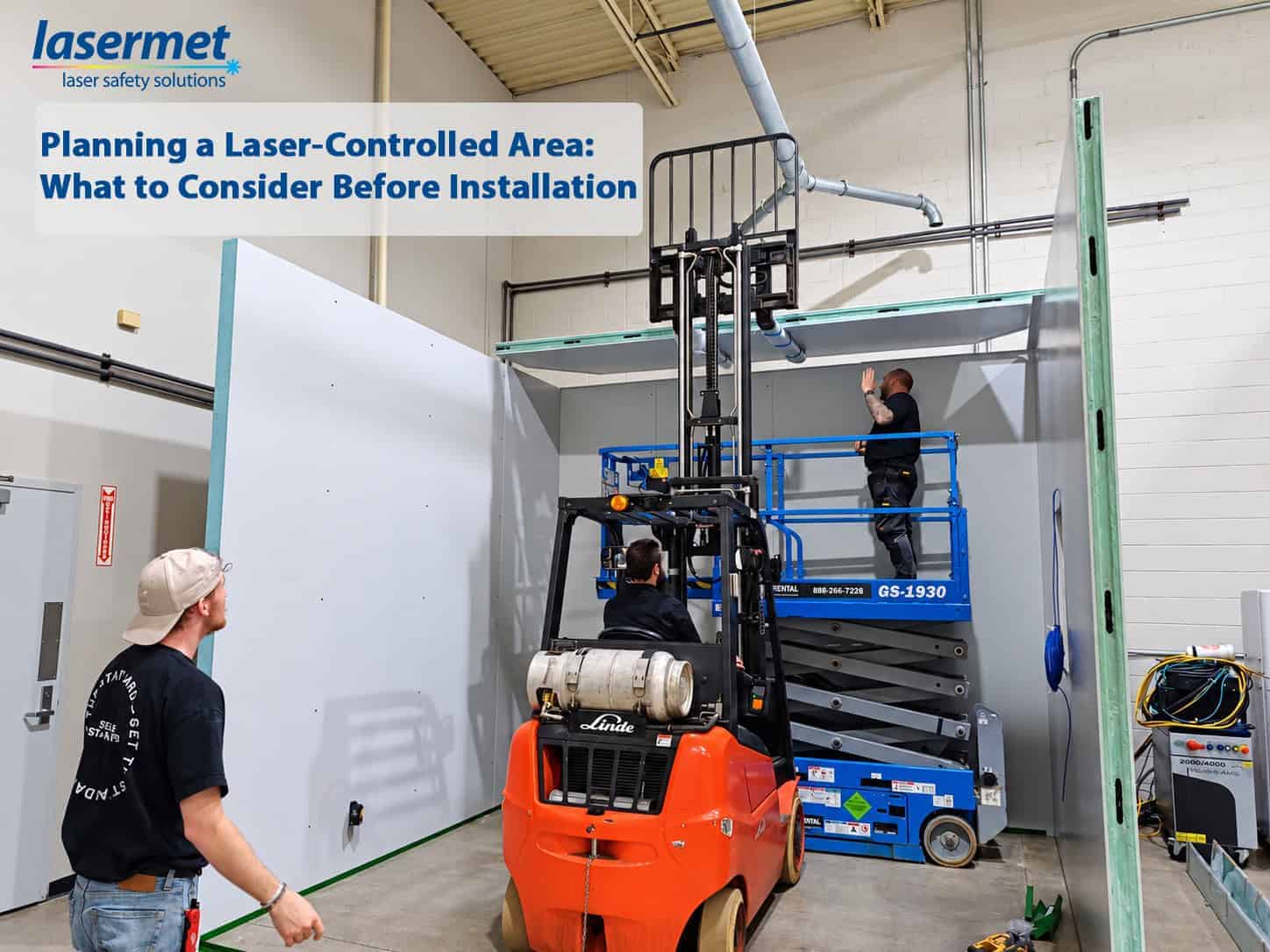
Planning a new laser facility or upgrading an existing one starts with understanding how the space will be used. Addressing laser safety, access, and day-to-day operations early helps avoid unsuitable layouts, costly rework, and installation delays.
A laser-controlled area is a designated space where access and safety measures are managed to control exposure to hazardous laser radiation. Its boundaries and protective measures should reflect the equipment, activities, and risks involved.
This guide outlines six key planning steps for project managers, facility managers, Laser Safety Officers, and teams preparing a new laser installation or upgrading an existing facility.
1. Start with a Laser Risk Assessment
A laser risk assessment establishes the safety measures needed for your facility. It should consider who could be exposed to hazardous laser radiation and how exposure could occur during normal operation, alignment, servicing, and maintenance.
These activities may present different risks. For example, equipment that encloses the beam during normal operation may allow access to hazardous laser radiation during servicing.
The assessment should also address associated hazards, such as electricity, fire, and airborne contaminants generated by laser processing. Involving a competent laser safety professional early helps establish requirements before equipment purchases and layout decisions are finalised.
Prepare this information:
Lasermet’s laser safety consultancy services can help customers assess hazards and develop safety arrangements suited to their facilities.

2. Understand Your Laser Specifications
The protective measures needed depend on the laser’s characteristics and how it will be used. Accurate equipment information helps the project team assess potential exposure and select suitable controls.
The classification of the complete laser system may differ from that of the laser inside it. Where relevant, provide details of both, particularly if alignment or servicing could expose an otherwise enclosed beam.
Prepare this information:
Provide details for every laser that will be used in the area, including any planned additions. The assessment should also consider reasonably foreseeable faults or changes that could affect exposure.
3. Plan the Layout and Laser Containment
A clear layout helps identify where laser protection is needed and how people will work safely around the equipment. Consider direct beams, reflected and scattered radiation, and foreseeable changes in beam direction.
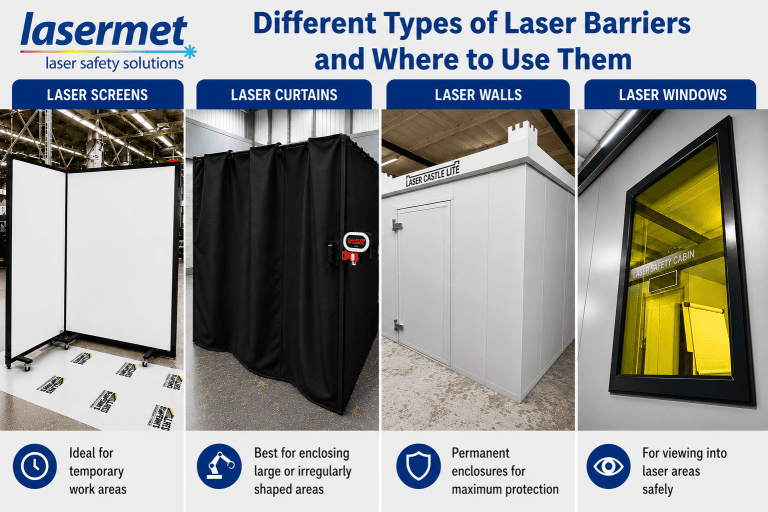
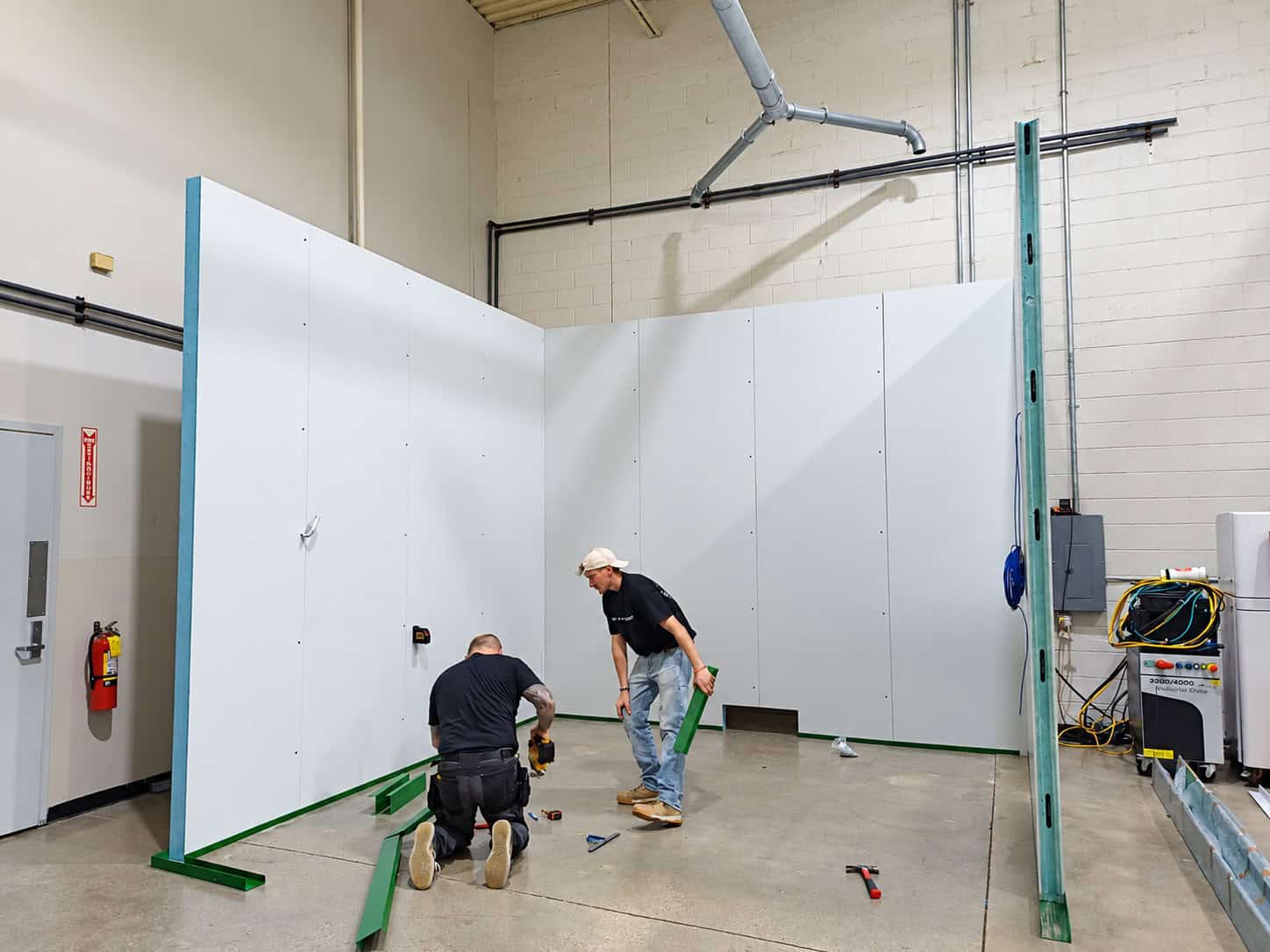
Where practicable, enclose hazardous beam paths. Walls, doors, windows, curtains, and other protective barriers should be selected for the laser characteristics and exposure conditions identified in the risk assessment.
Barrier suitability depends on more than laser power alone. Relevant factors include wavelength, incident power or energy density, exposure duration, and the barrier’s tested protection limits.
Prepare or decide:
Depending on the application, a Laser safety enclosure, laser-blocking curtains, or laser protective windows may form part of the solution. Each should be selected and installed within its specified protection limits.
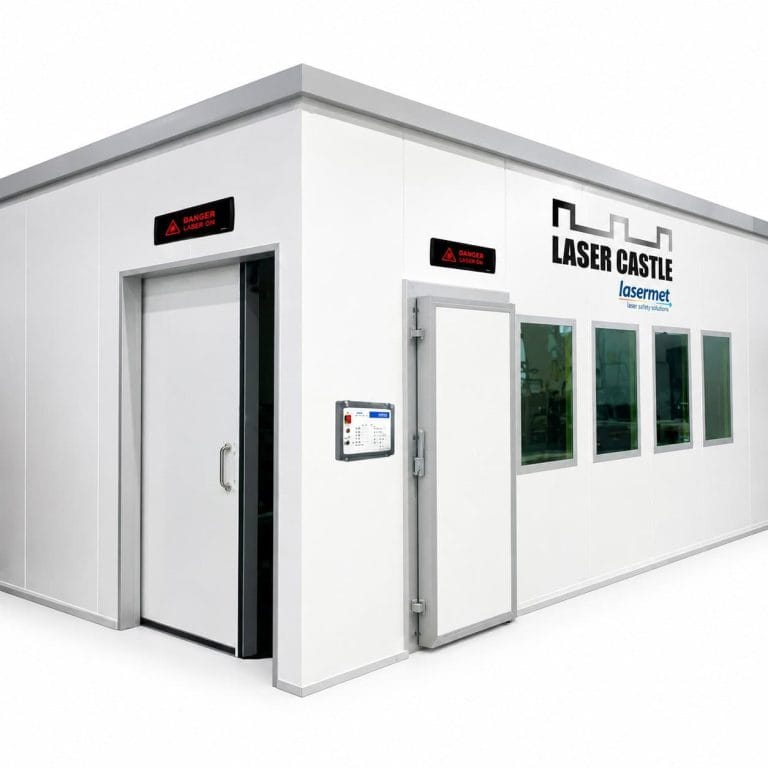
Laser Castle is a passive guarding Class 1 laser safety cabin suitable for high-power Class 4 lasers.
The system comprises modular panels made from laser-blocking material and certified to EN IEC 60825-4. The panels connect to form an enclosure, with an optional roof.
Laser Castle cabins can provide containment for robotic laser welding applications using 4 kW lasers. Higher-power applications, including 10 kW and 20 kW systems, can also be accommodated, subject to the specified laser characteristics and exposure conditions.
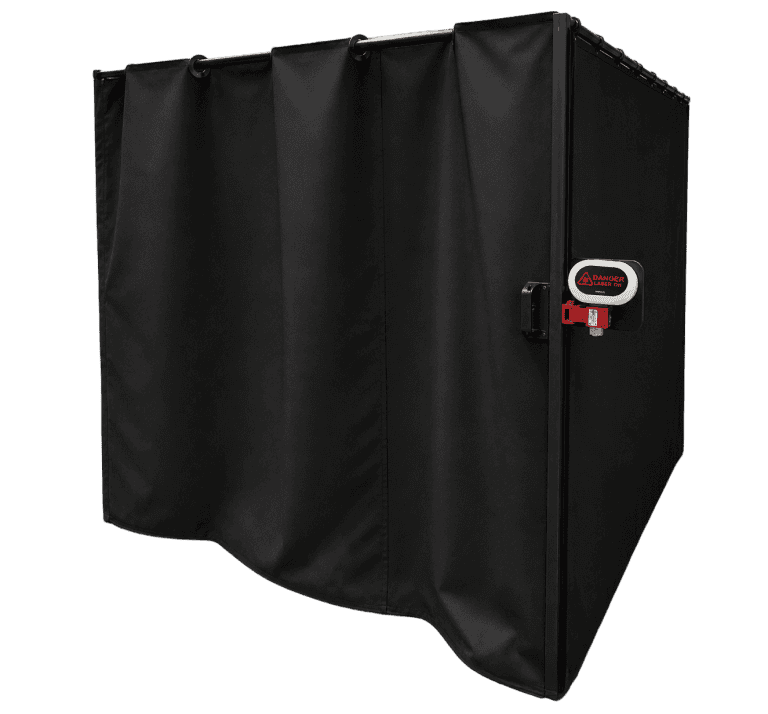
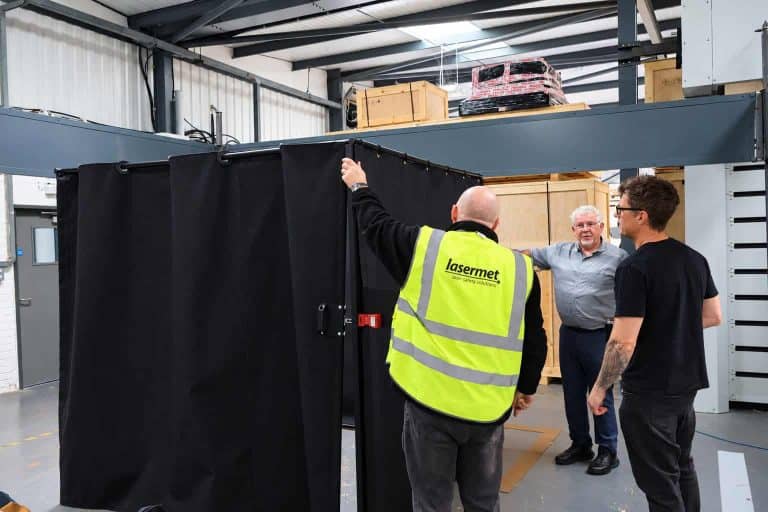
Dolphin Pod Lite is a lightweight, modular, free-standing laser safety enclosure designed to support laser-blocking curtains. It helps contain stray laser radiation from handheld laser welding, protecting nearby personnel when correctly specified and installed.
Its lightweight frame makes it easy to handle, transport, and assemble, offering flexibility for temporary installations or changing workspace layouts.
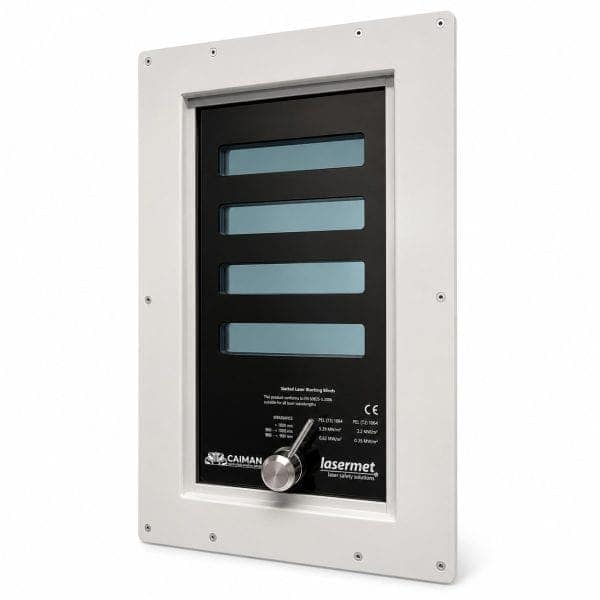
Caiman Window features slats made from certified laser-blocking material to help protect people outside the laser-controlled area from stray laser radiation while allowing controlled viewing.
The blinds are tested to IEC 60825-4, Safety of Laser Products – Part 4: Laser Guards. Suitable for medical, industrial, and research settings, they should be selected according to the laser wavelength, exposure conditions, and tested protection limits.


4. Consider Access and Interlock Requirements
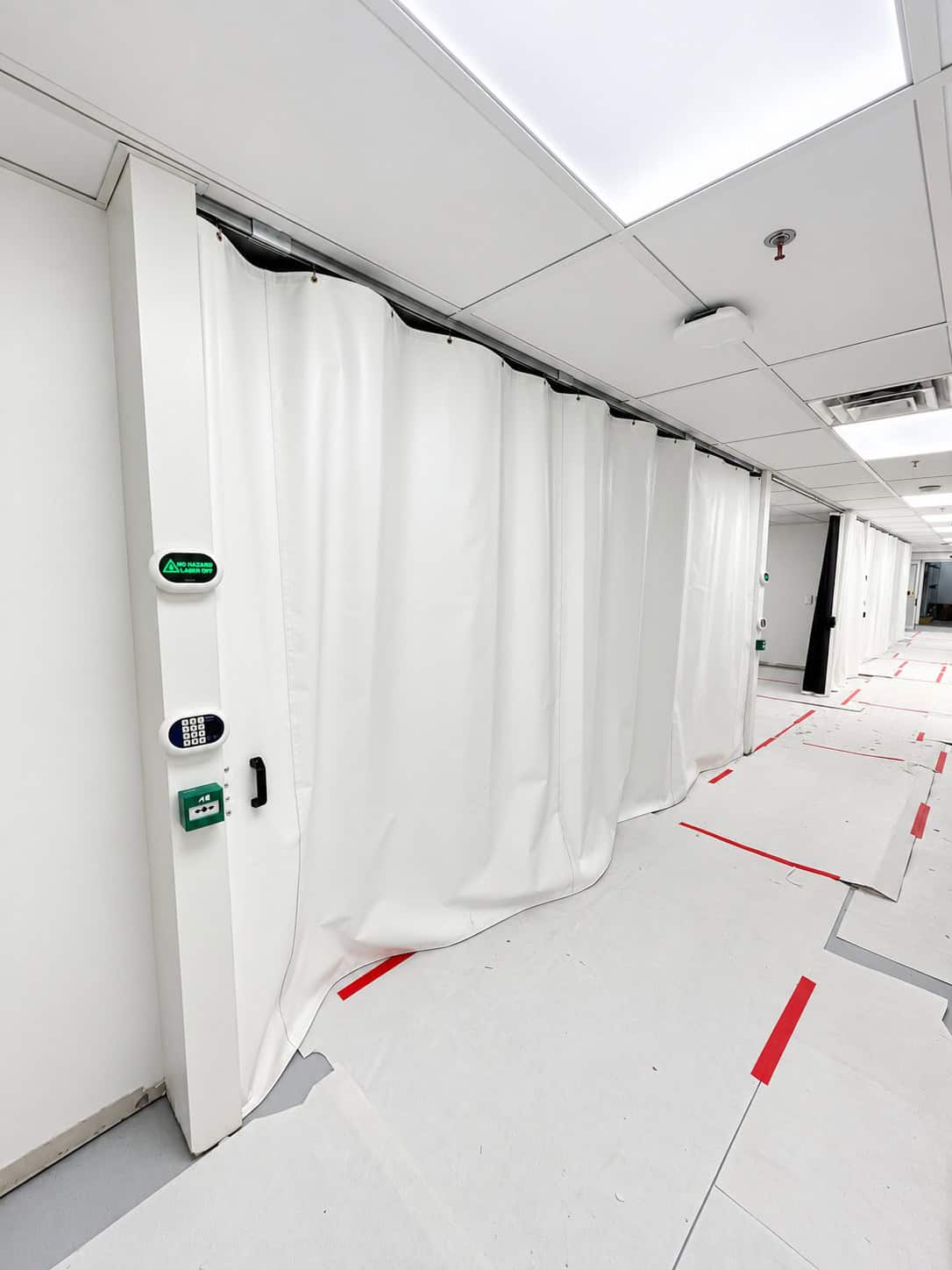
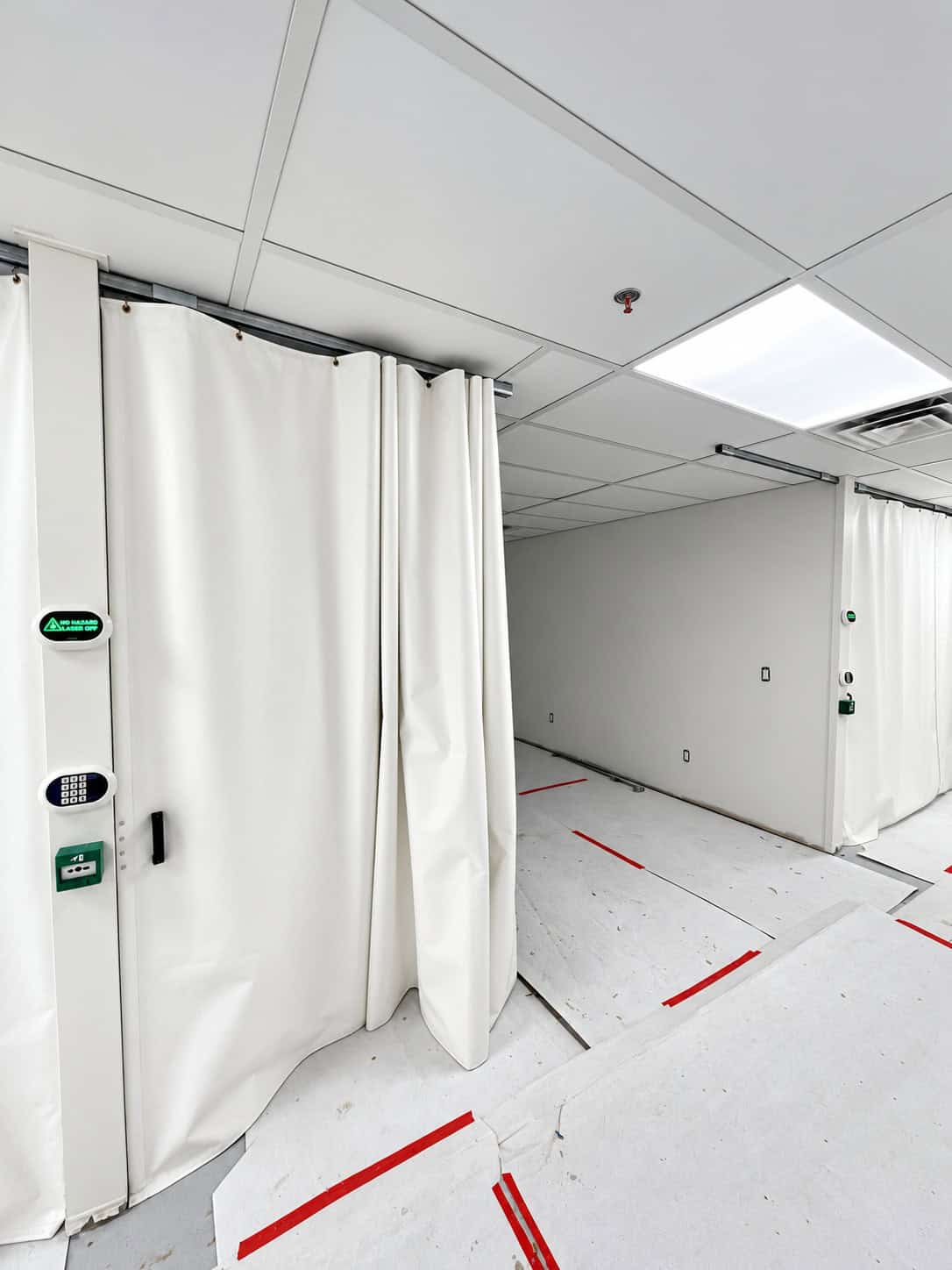
Plan how people and equipment will enter and leave the laser-controlled area, and how hazardous exposure will be prevented when access occurs.
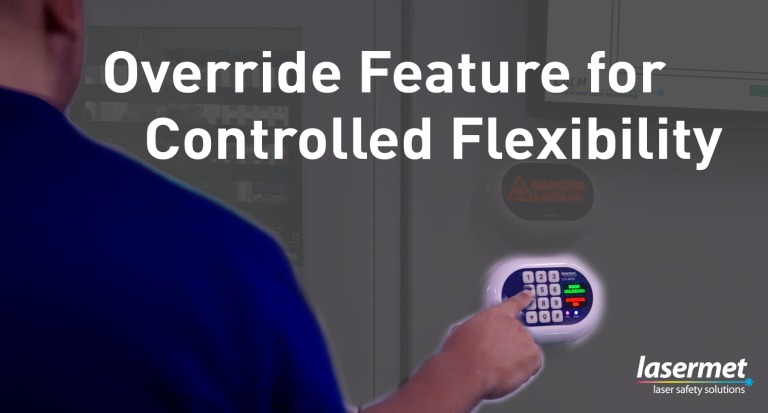
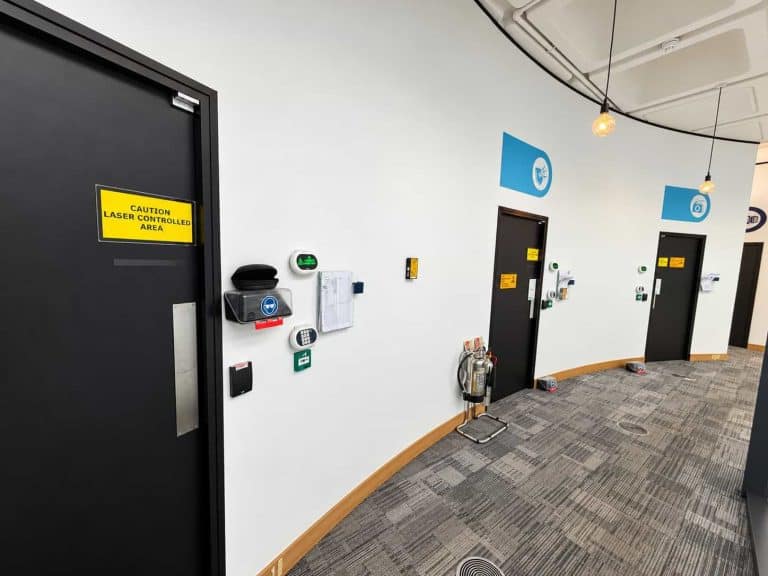
The risk assessment should inform the access arrangements and any safety functions required. These may include interlocked doors, laser safety shutters, warning signs or indicators, and associated control equipment.
Access controls should also allow safe emergency exit and appropriate access in an emergency.
Decide before installation:
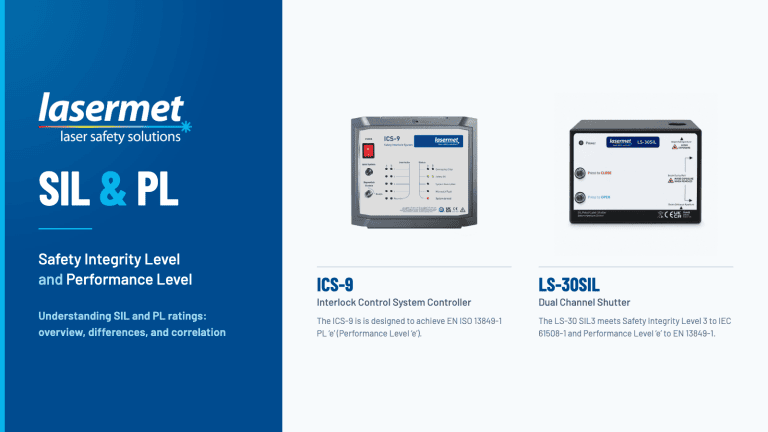
An interlock controller can coordinate access-related safety functions, while a laser safety shutter may form part of the protective response. The complete arrangement should be designed for the application and assessed risks.
5. Prepare Your Team
Before work begins, identify who will oversee laser safety, who is authorised to use the equipment, and what training each person needs.
Written procedures should cover the activities carried out in the area, including alignment, servicing, and maintenance where these require different precautions from normal operation.
Site-specific Local Rules, where appropriate, should describe the hazards, responsibilities, access restrictions, and safe working arrangements.
Decide before operation:
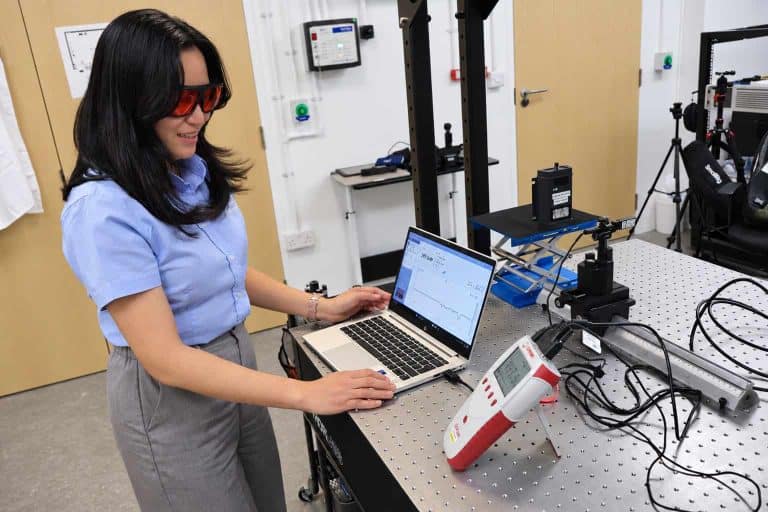
Where protective eyewear is required, it should be selected for the laser wavelengths and exposure conditions. It should support the wider safety arrangements alongside engineering controls and safe working procedures.
Lasermet’s laser safety training and consultancy services can help teams prepare for the equipment and activities within their facility.
6. Agree on Installation, Commissioning, and Handover Requirements
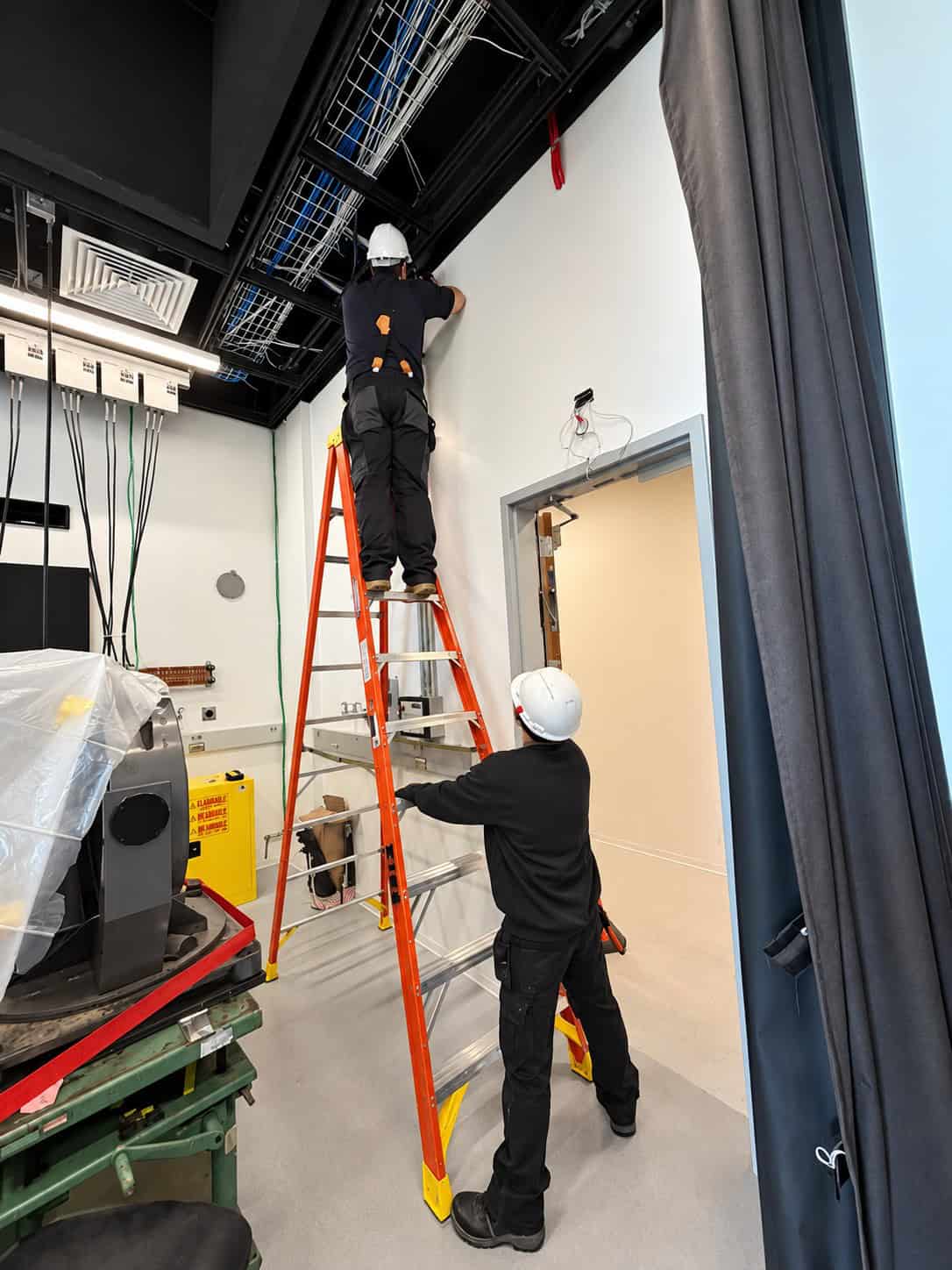
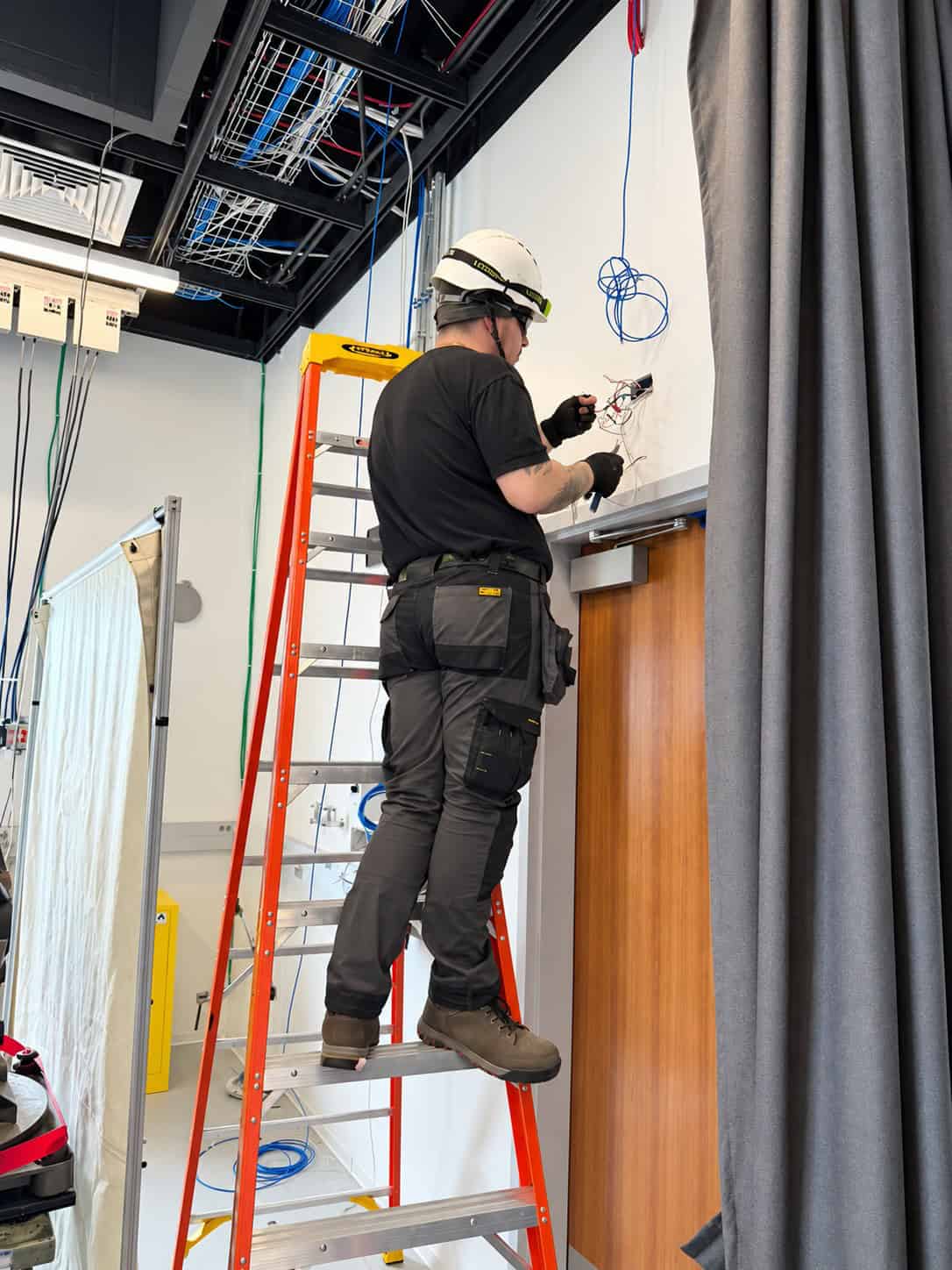
Before installation begins, agree on the project scope, responsibilities, acceptance criteria, and handover documents with your supplier.
Commissioning should verify that the installed protective measures and safety functions operate as intended before the facility is released for routine use. Handover should give the people operating and maintaining the system the information and instruction they need.
Questions to discuss:
Sharing future plans early helps the project team consider how the facility may need to adapt. Changes should be reviewed before implementation to determine whether the existing protective measures remain suitable.
Plan Your Laser Safety Installation with Lasermet
Early planning brings together your laser specifications, workspace layout, protective measures, and operating procedures. It gives your team and suppliers a clear basis for making decisions before installation begins.
Lasermet designs, manufactures, installs, and commissions laser safety systems for manufacturing, research, healthcare, and other applications. Our consultancy, risk assessment, and training services help customers develop safety arrangements suited to their facilities.
Planning a new laser-controlled area or upgrading an existing facility?
Contact Lasermet to discuss your project and laser safety requirements.
Click the button below to contact us and learn more.